


Archives: Collezione
Una Collezione al museo
Anatomy of machines
Leonardo’s investigation of machine elements reveals his extraordinary mechanical and engineering expertise. His focus was on mechanisms and gears such as the worm screw, the toothed wheel, the spool, the pulley, and springs, which, when assembled in various ways, could give rise to an almost infinite series of more or less complex machines.
The system of breaking down machines into individual gears for better analysis is also referred to as the “anatomy of machines,” due to its close analogy with the method Leonardo adopted for studying the human body. Leonardo intended to dedicate an entire treatise to machine elements, as emerges from the Madrid Codex I, to analytically highlight the characteristics, the different possible applications, and the performance potential of the individual mechanisms.
In the section dedicated to digital reconstructions, these are paired with the wooden models on display in a comparison between real and virtual, which allows visitors to fully imagine and understand the functioning of the machines. An immersive application using the Oculus virtual reality headset enables visitors to go beyond the real visit experience to “touch,” operate, and even disassemble four gears designed by Leonardo.
Works of the collection
9 works belongs to this collection
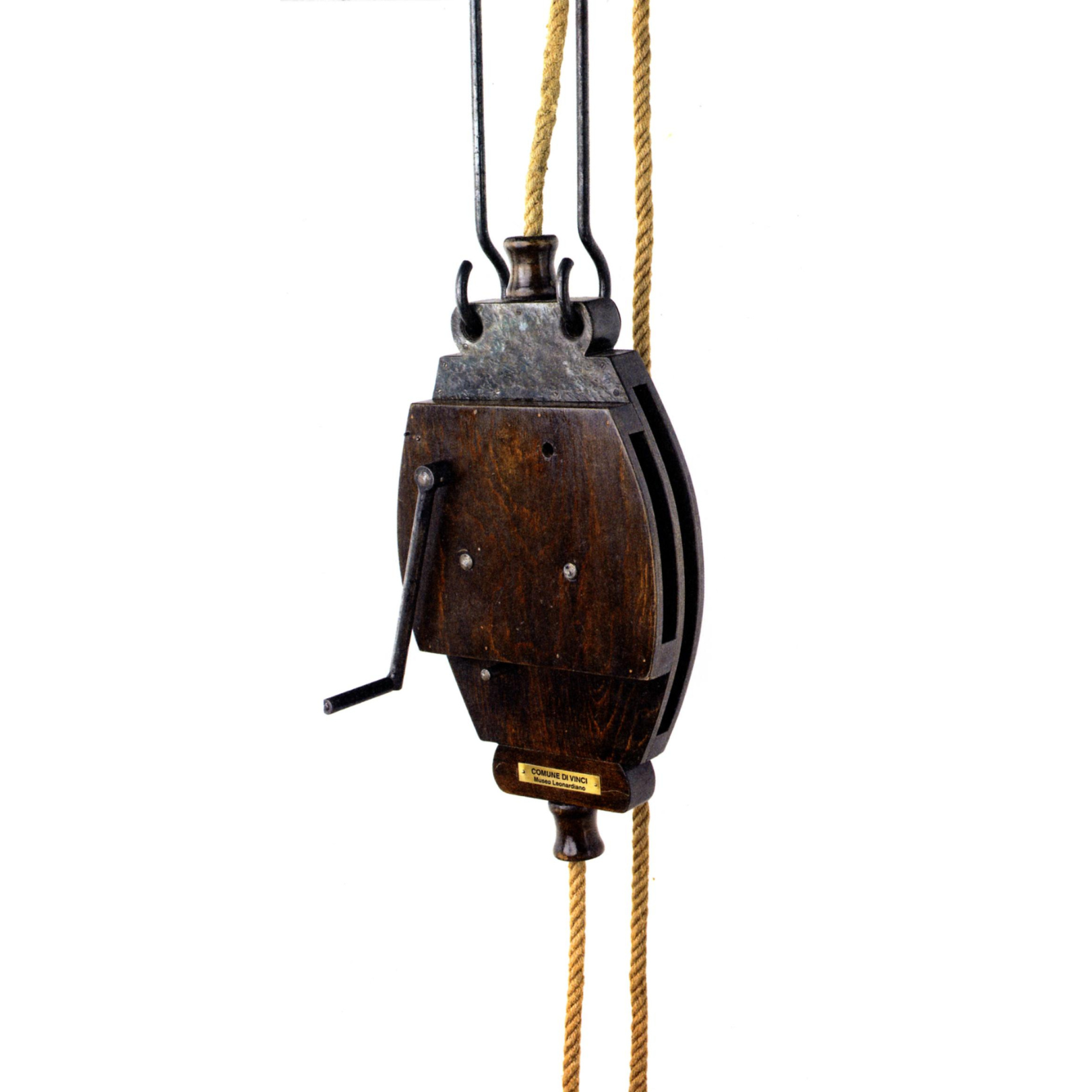
Crank-operated elevator
Luigi Boldetti
1980
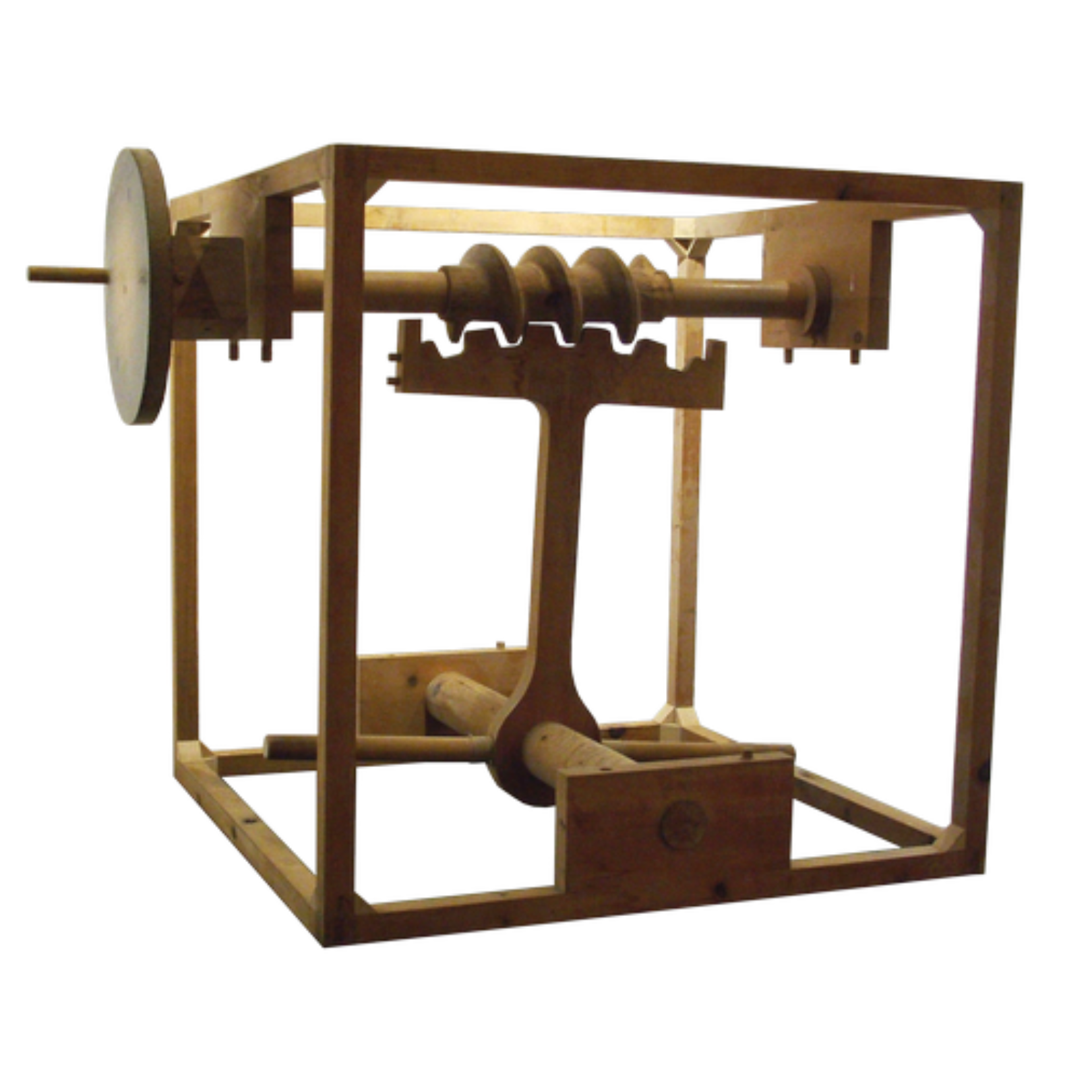
Worm screw on rack
Fausto Colombo, Giorgio Valentini, Giovanni Sacchi
1983
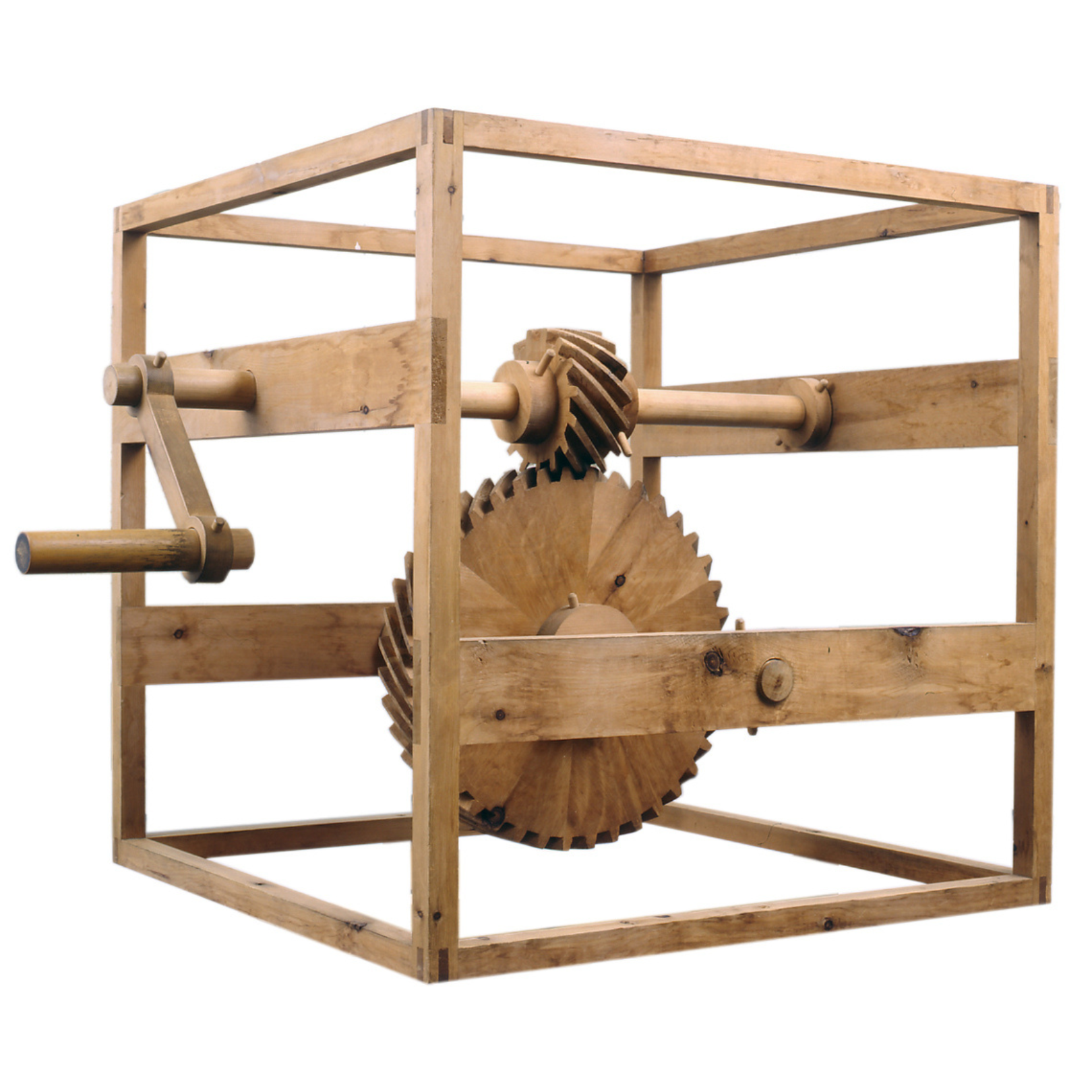
Wheel and pinion with helical teeth
Fausto Colombo, Giorgio Valentini, Giovanni Sacchi
1983
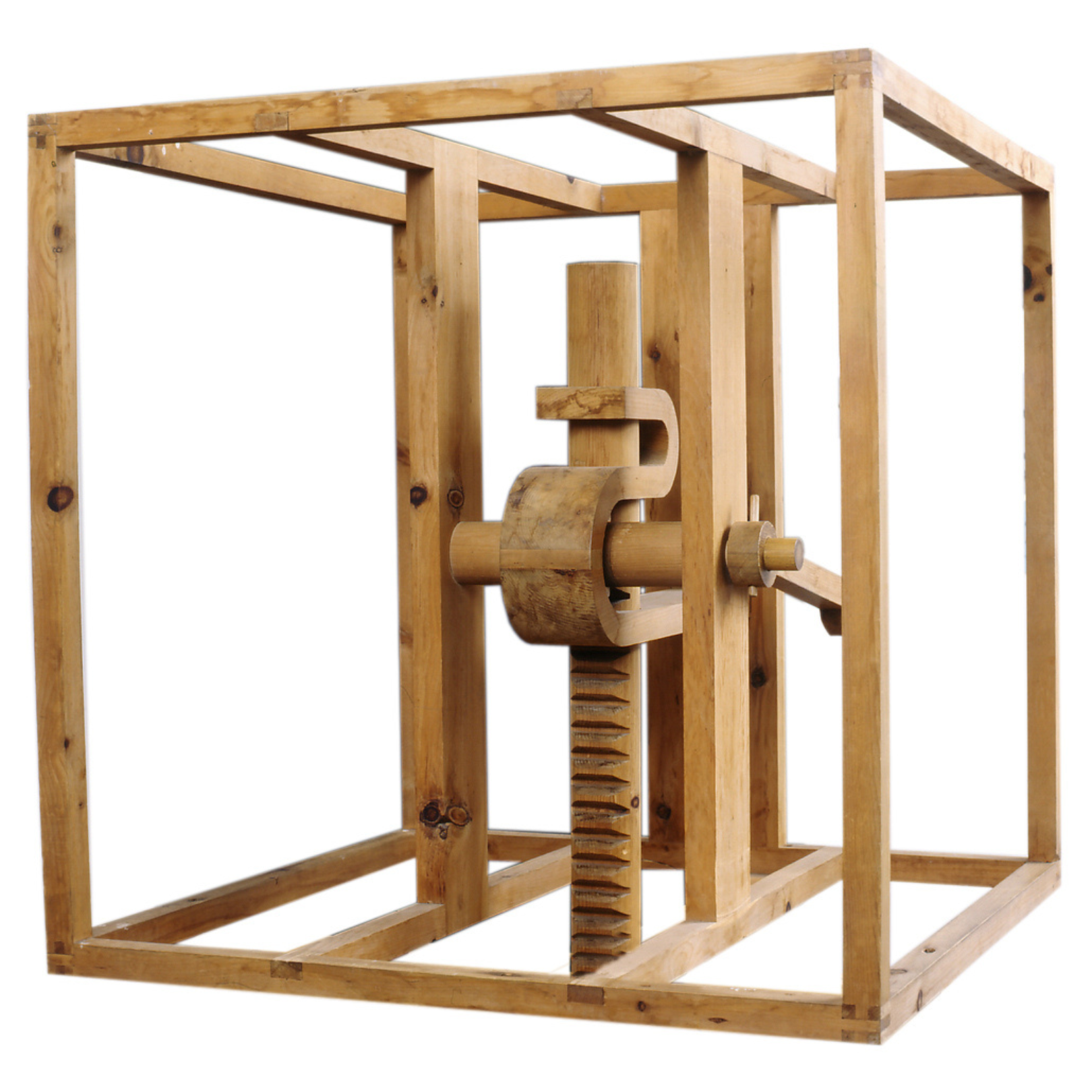
Rack and pinion
Fausto Colombo, Giovanni Sacchi, Giorgio Valentini
1983
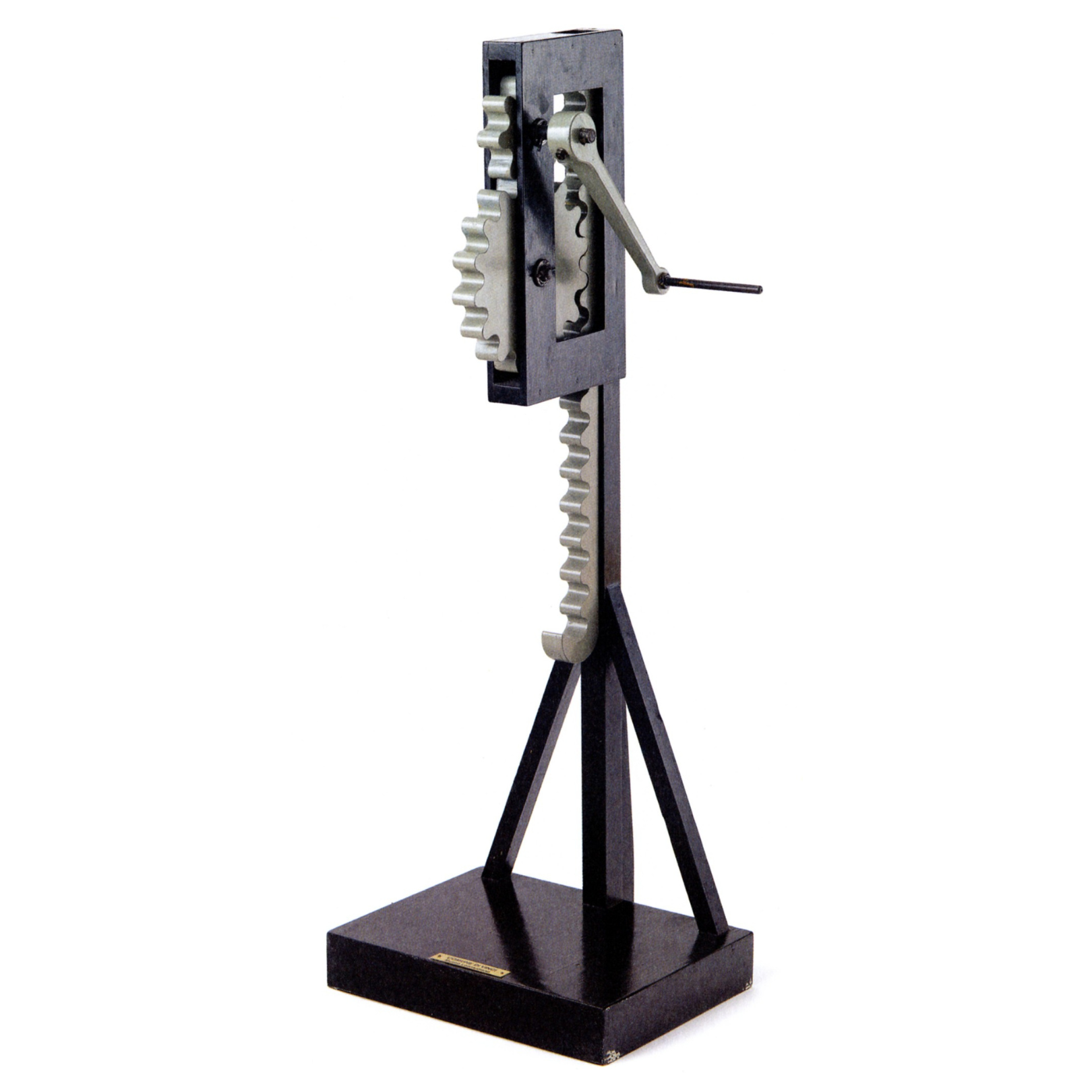
Jack
IBM Italia
1952
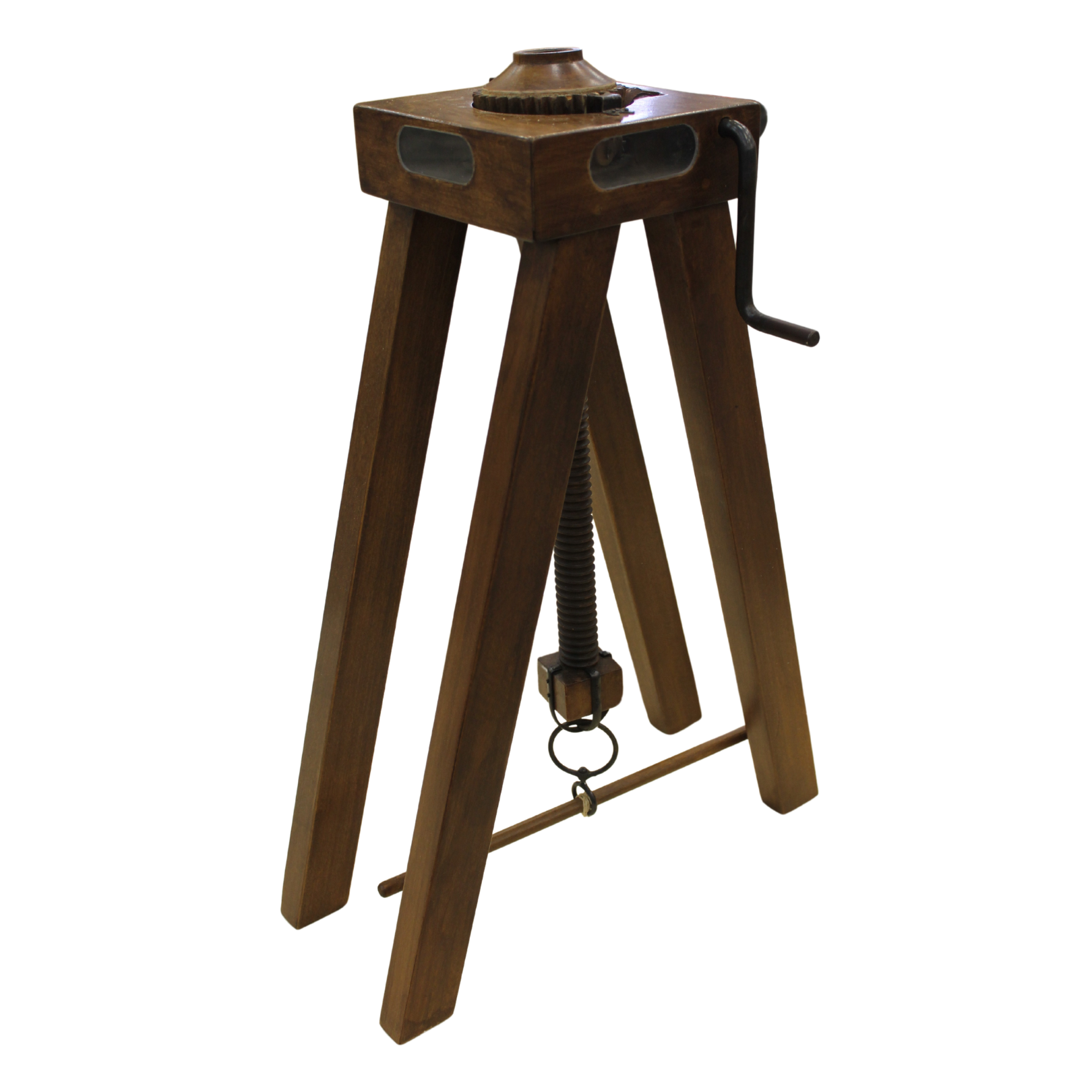
Endless screw elevator
Luigi Boldetti
1973
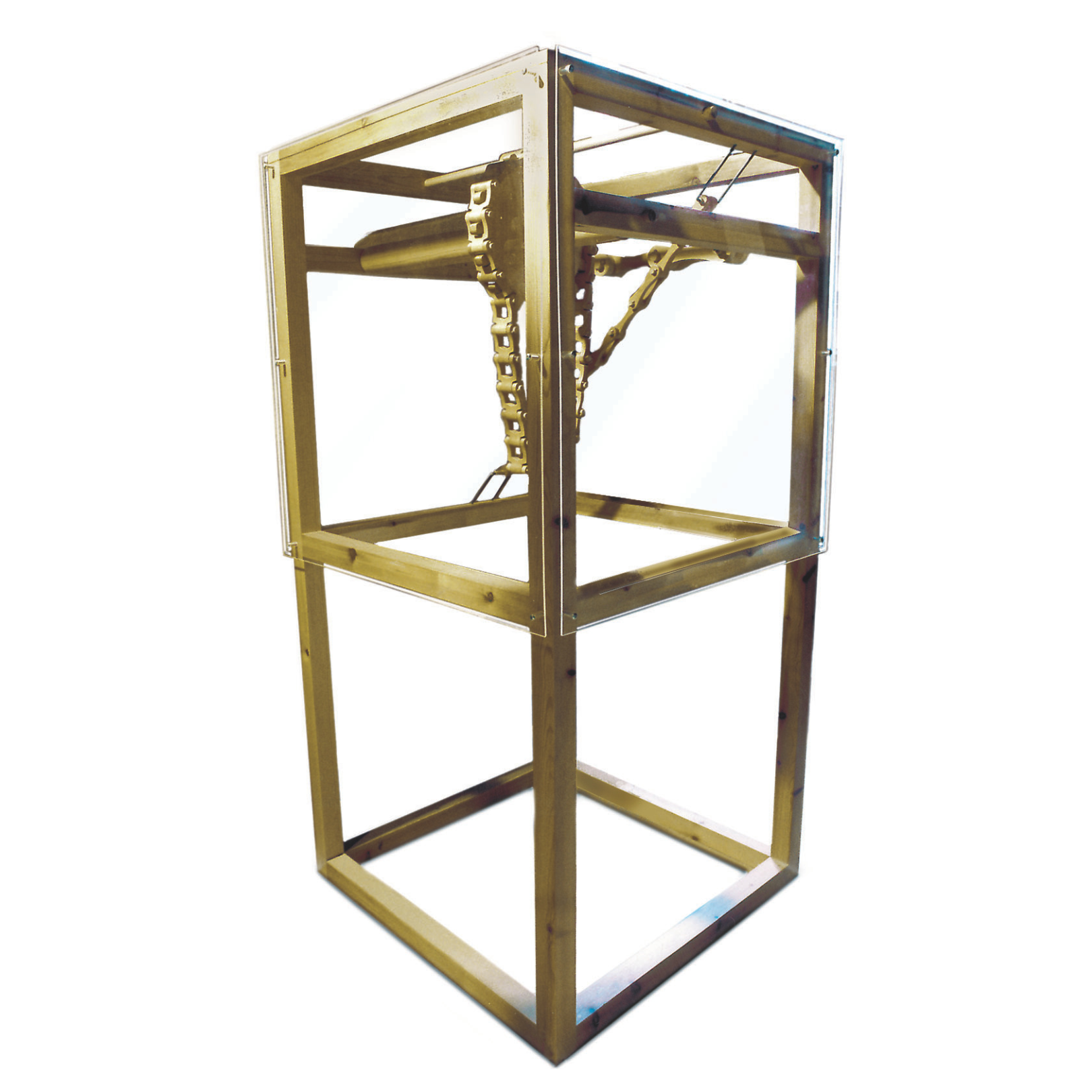
Chain element
Fausto Colombo, Giorgio Valentini
1991
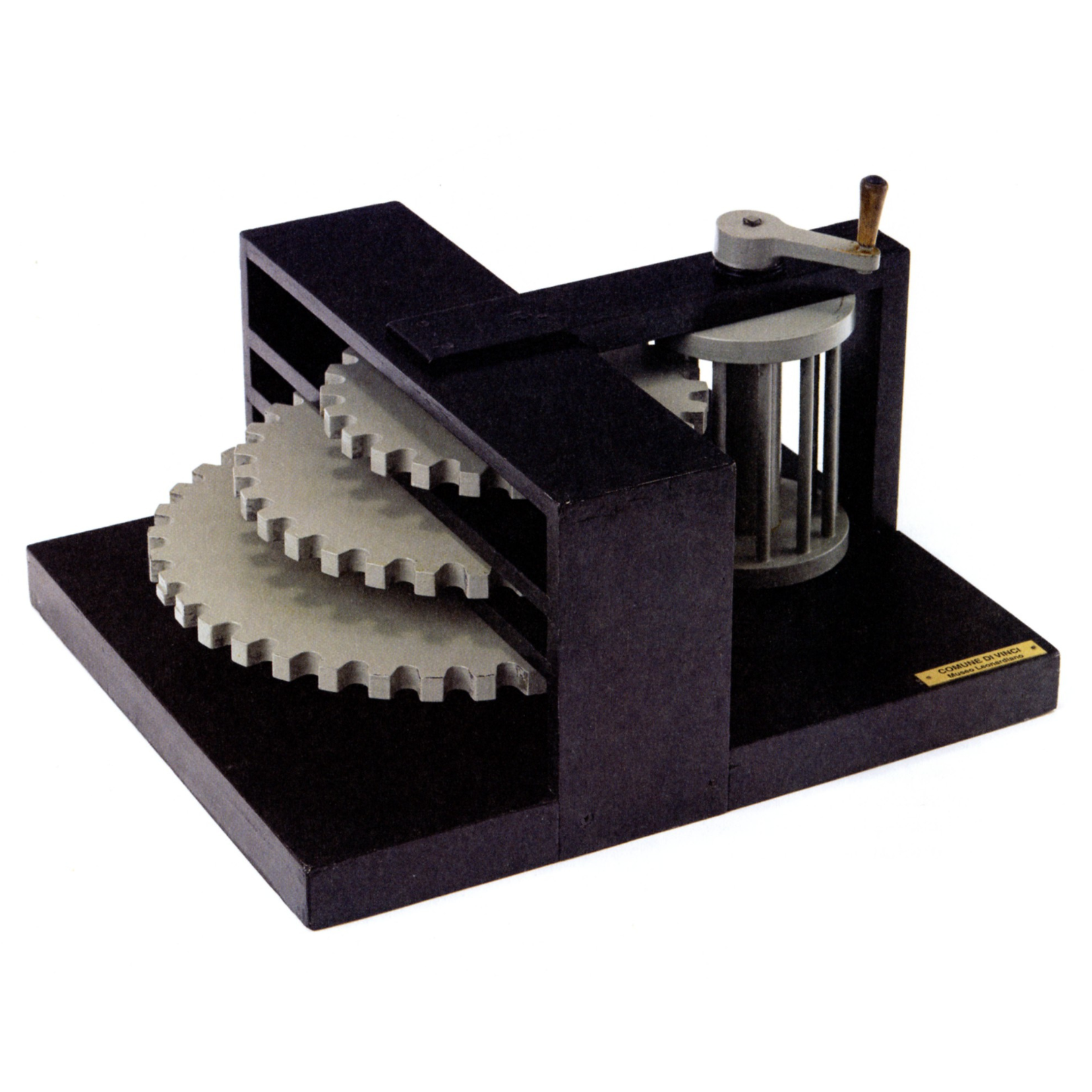
Bevel and spur gear speed changer
IBM Italia
1952, 1983
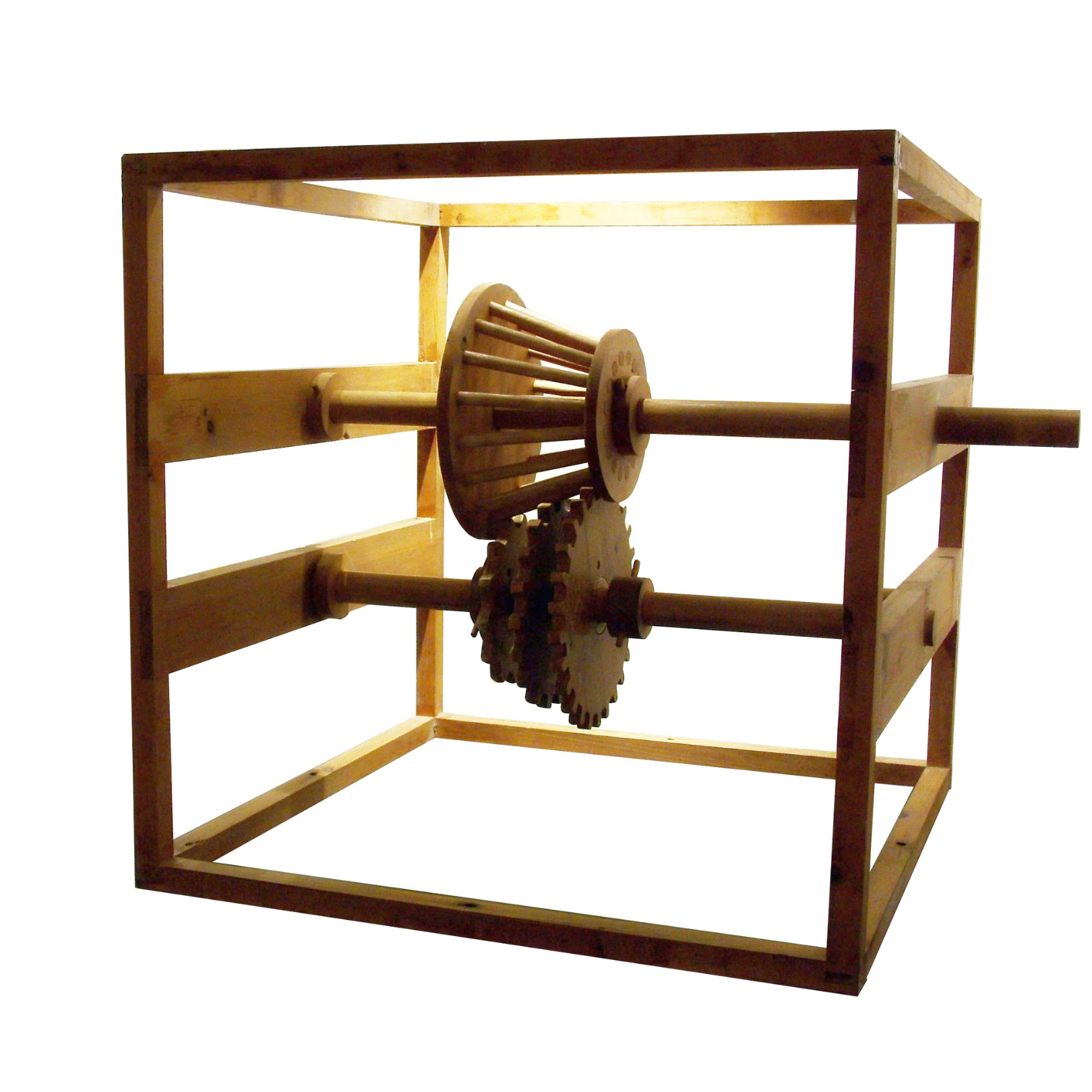
Three-speed gearbox
Fausto Colombo
1983
Anatomy
Leonardo thoroughly explored the human body, a machine that fascinated him and which he considered far more perfect than any created by man. He wanted to understand its functioning, composition, and the dynamics related to death. The master first approached anatomical studies to better represent the human figure in his art; but his scientific curiosity soon led him to deepen his research, moving from the surface (muscles, nerves, bones) to the study of internal organs.
Leonardo studied the human body throughout his life through direct observation and by practicing dissection. His investigations stemmed from the need to understand the human body for artistic representation, but also from a desire to carry out a true anatomical study.
The refined wax sculptures in the anatomy section of the Museum, created by artists from the Accademia di Brera, faithfully reproduce Leonardo’s anatomical drawings.
Works of the collection
6 works belongs to this collection
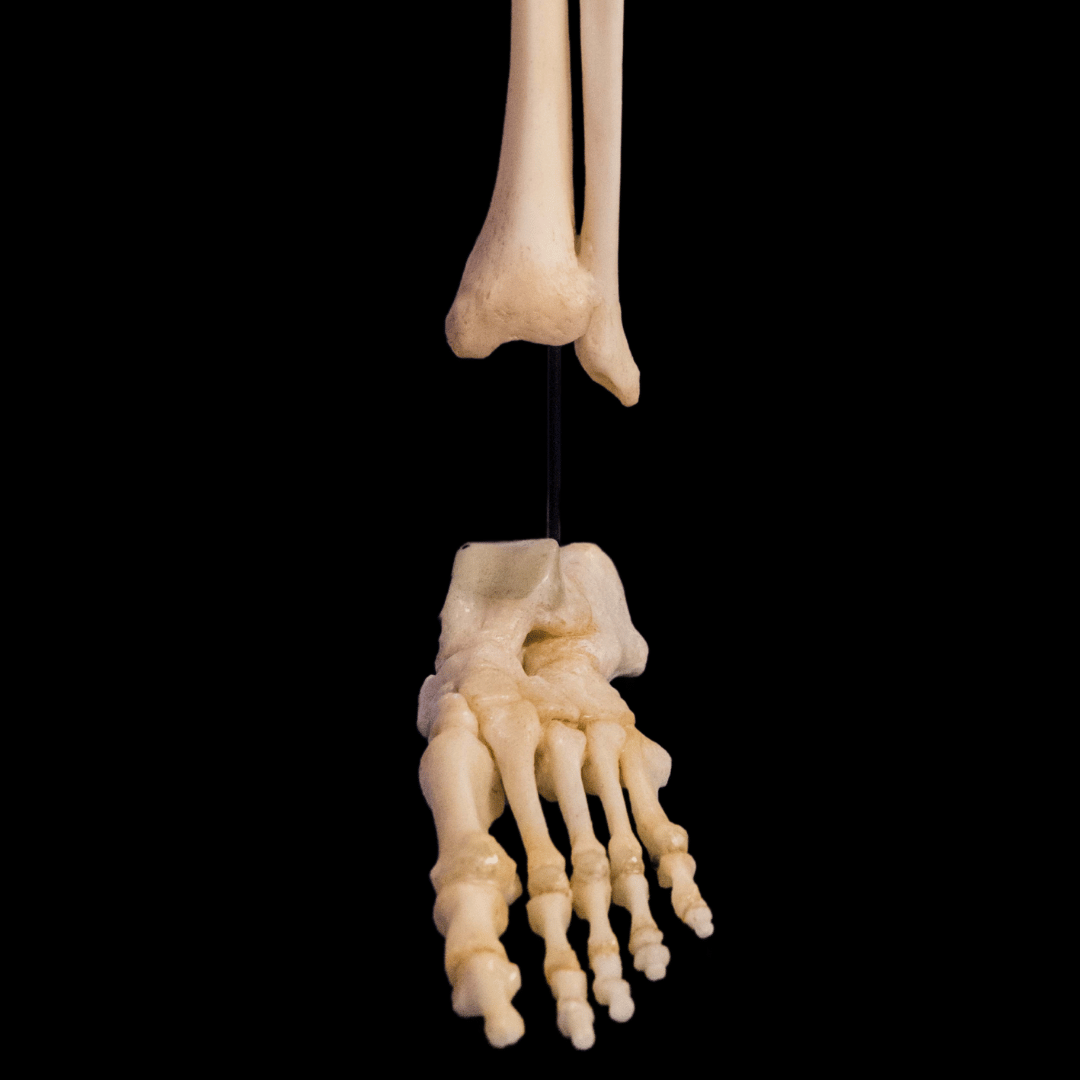
Studies of the joints of the foot
Paola Salvi, Moreno Vezzoli
2016
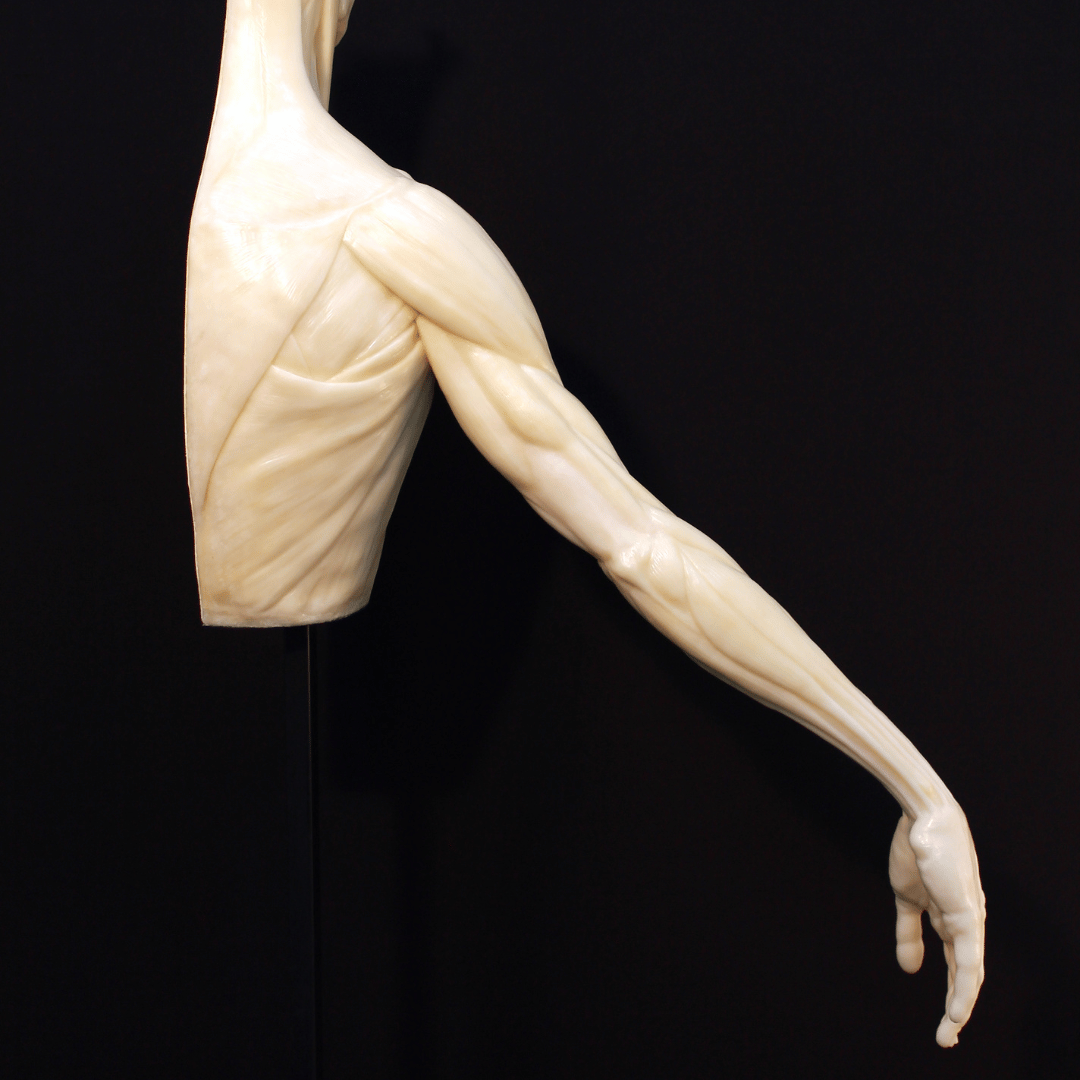
Studies of the upper limb
Paola Salvi, Moreno Vezzoli
2016
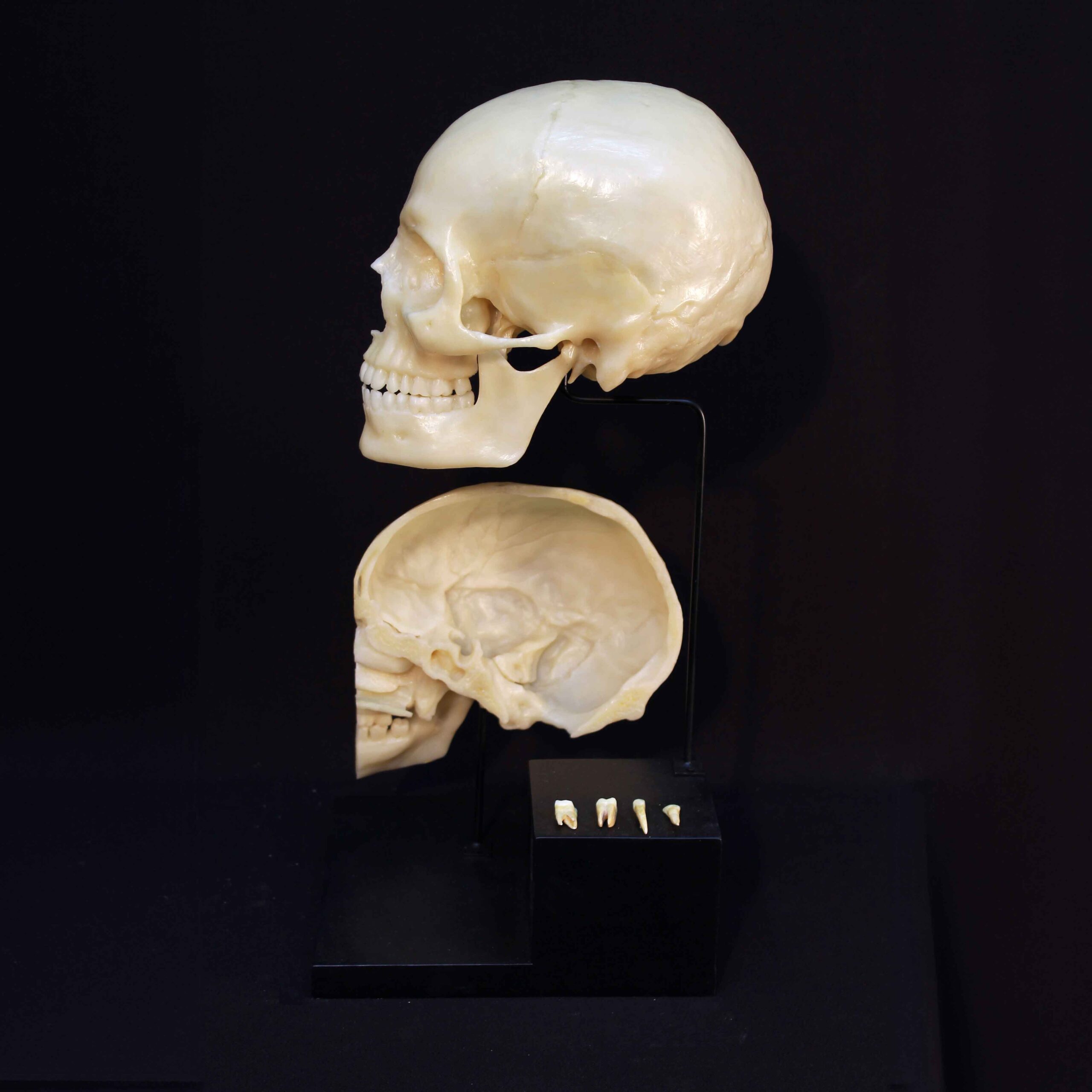
Studies of the cranium
Paola Salvi, Moreno Vezzoli
2016
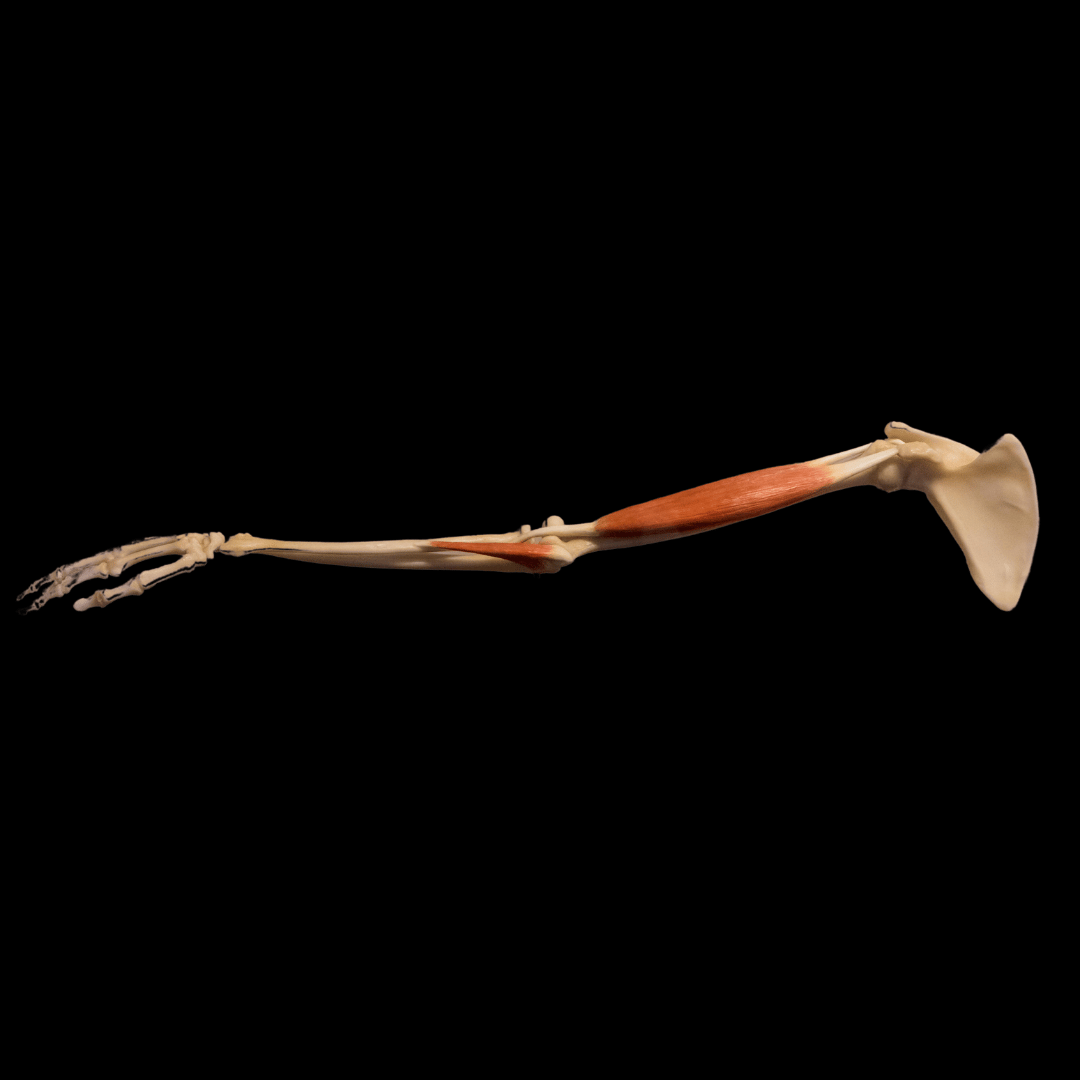
Studies of the upper limb in pronation-supination
Paola Salvi, Moreno Vezzoli
2016
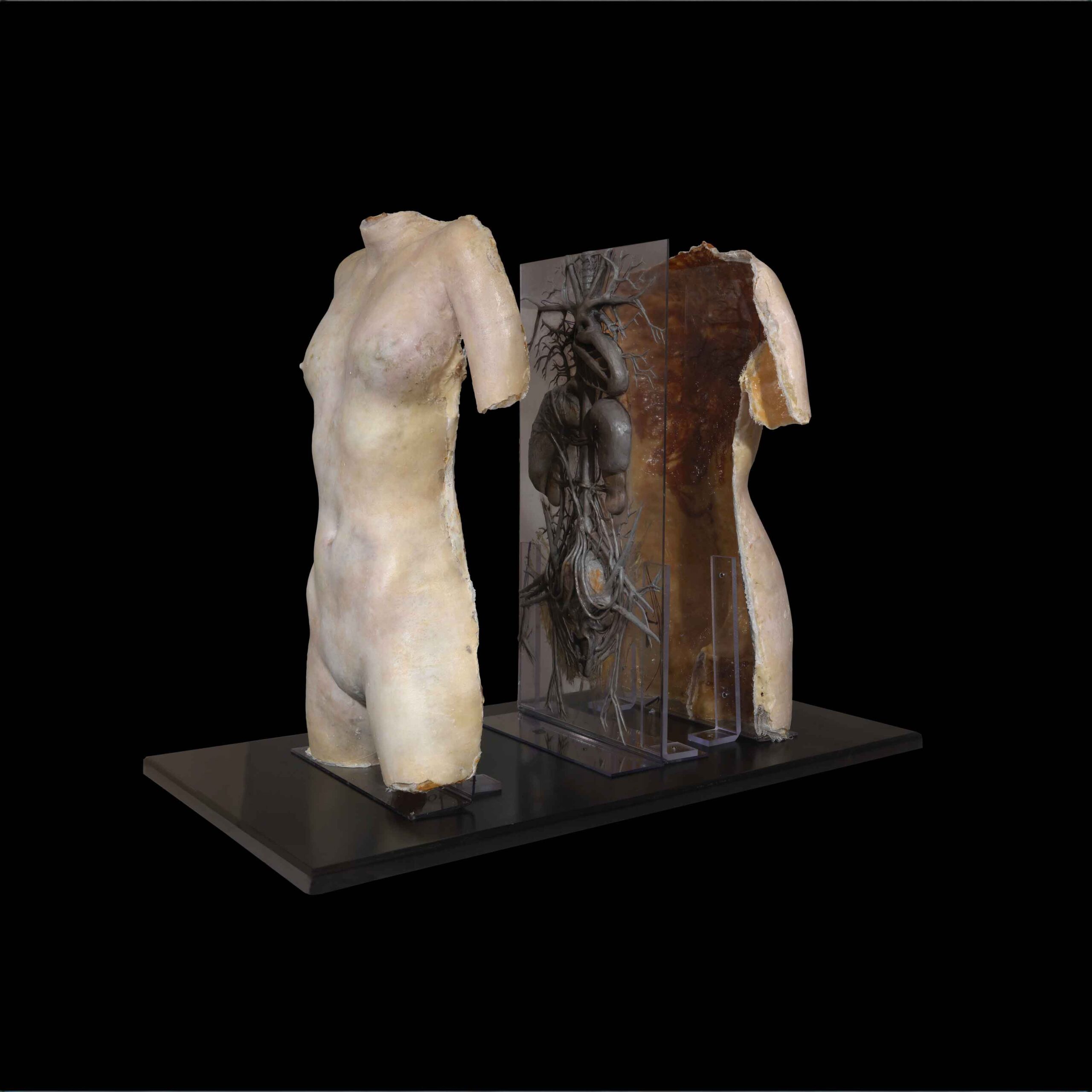
Situs viscerum in a female body
Annaklara Galli
2016
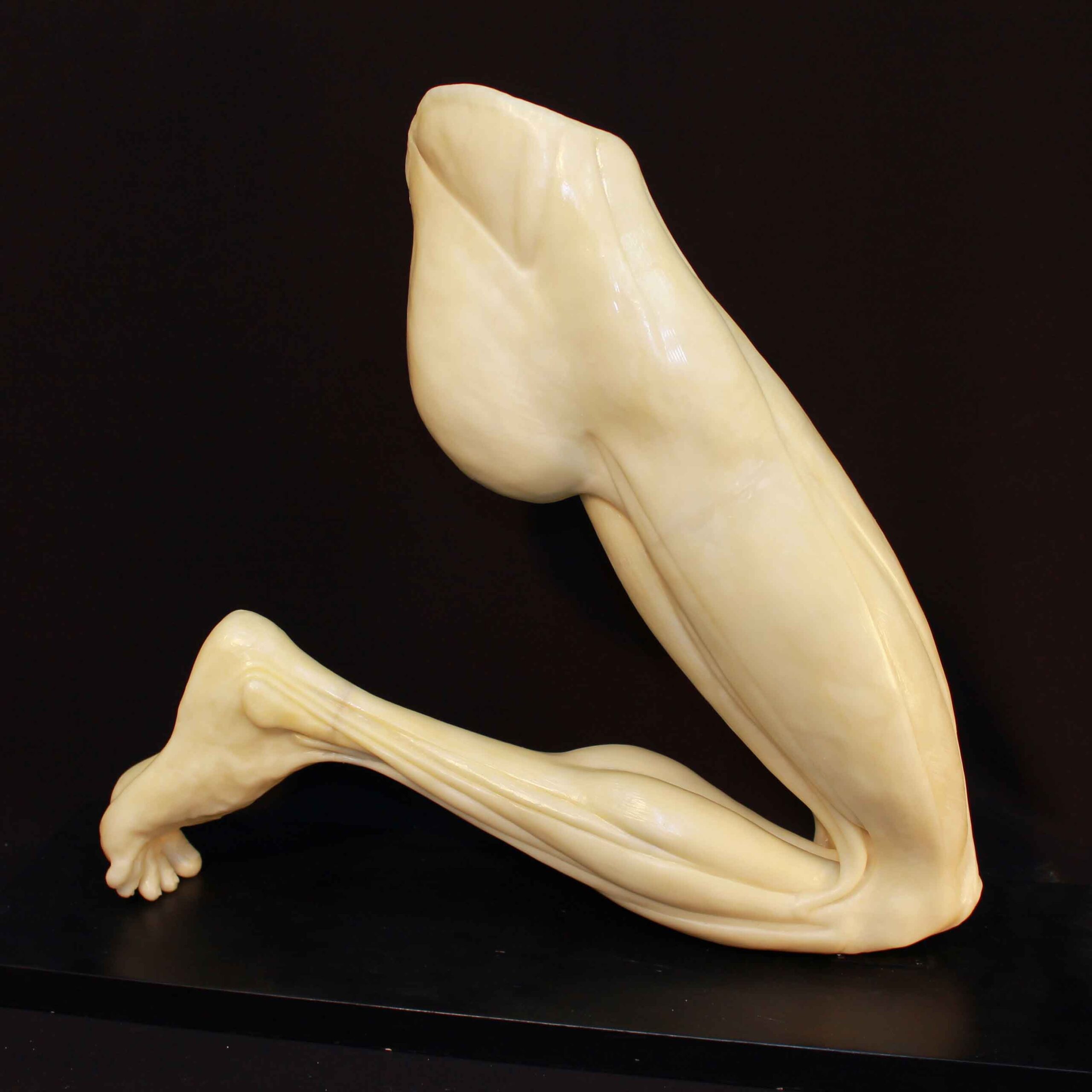
Lower limbs in kneeling position
Paola Salvi, Moreno Vezzoli
2016
Clocks
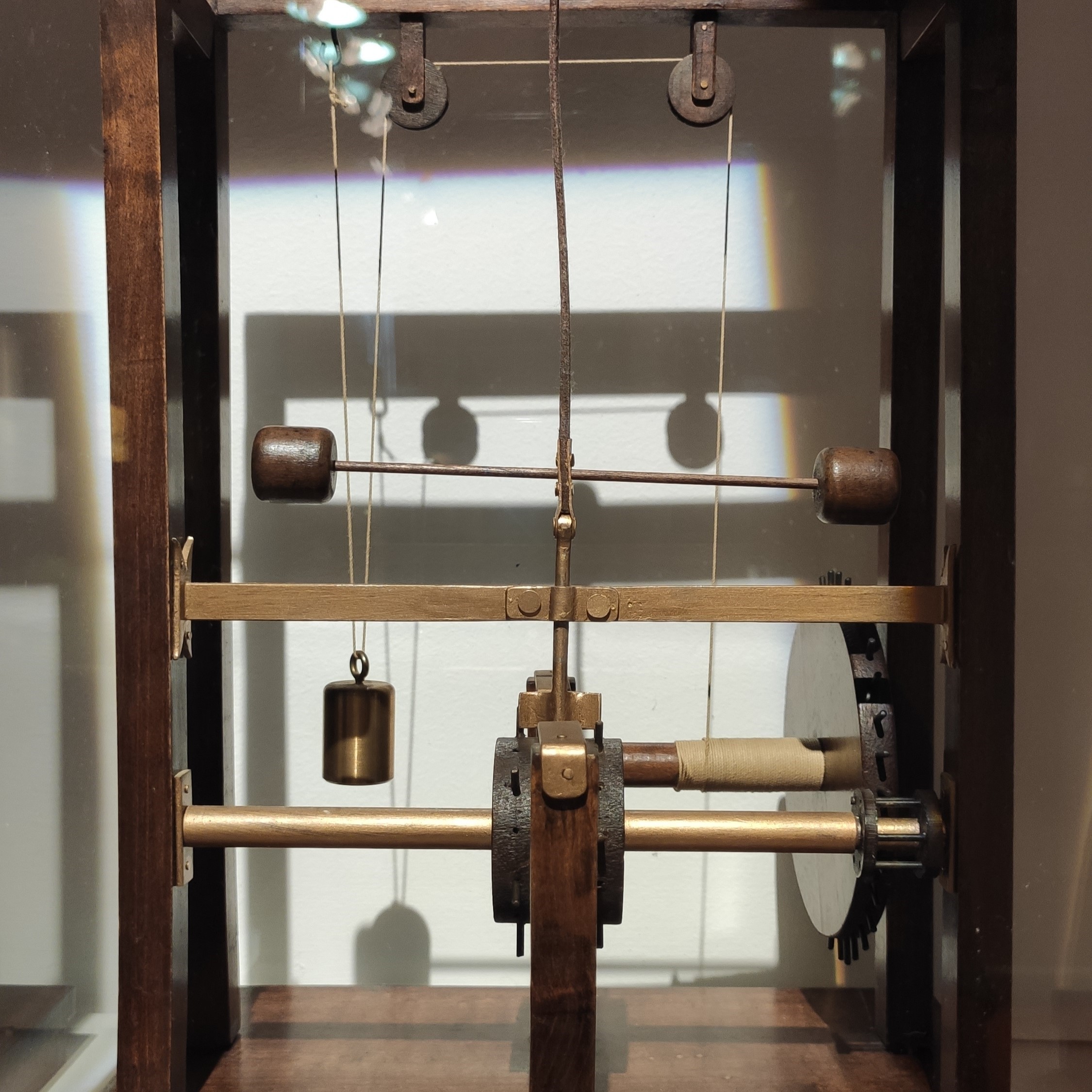
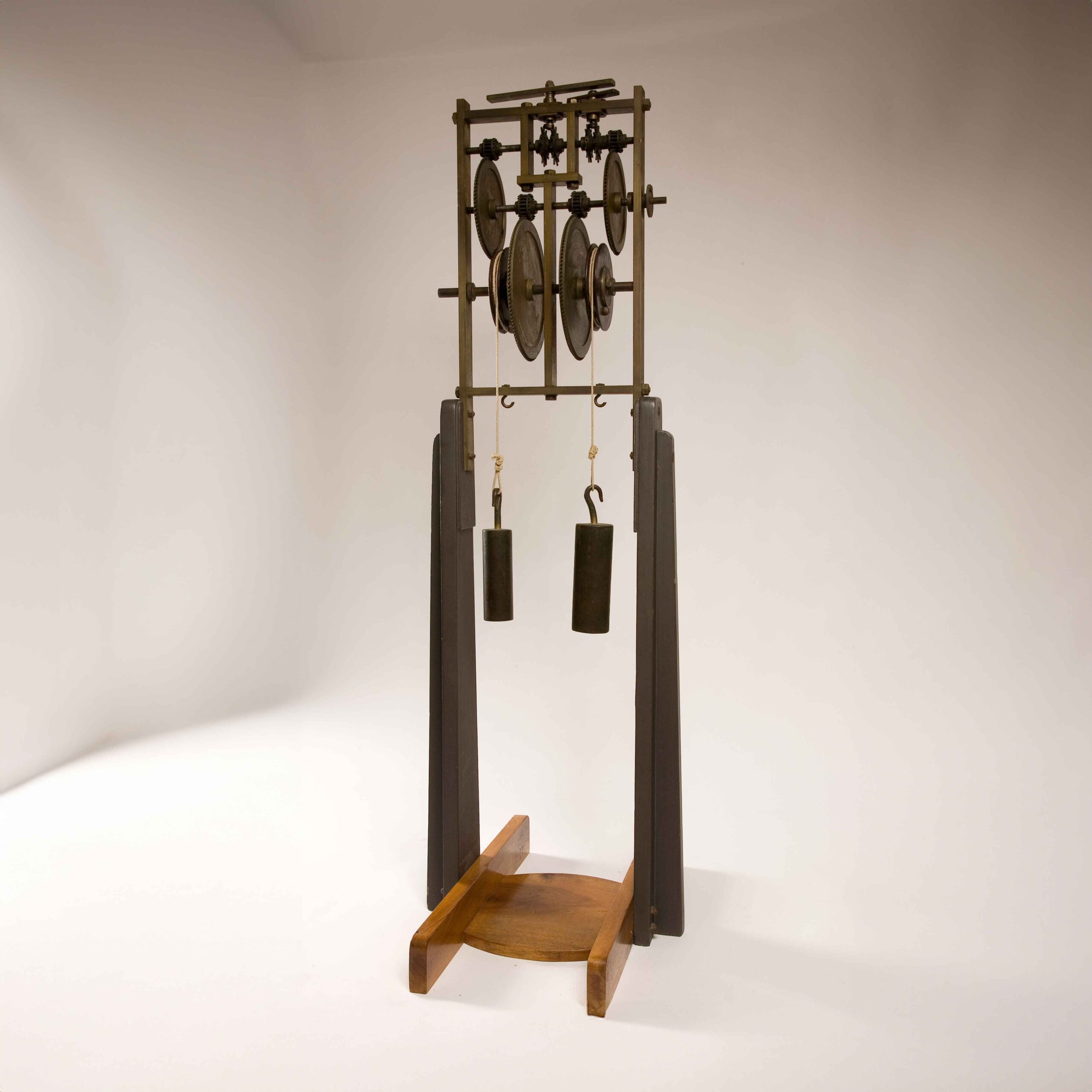
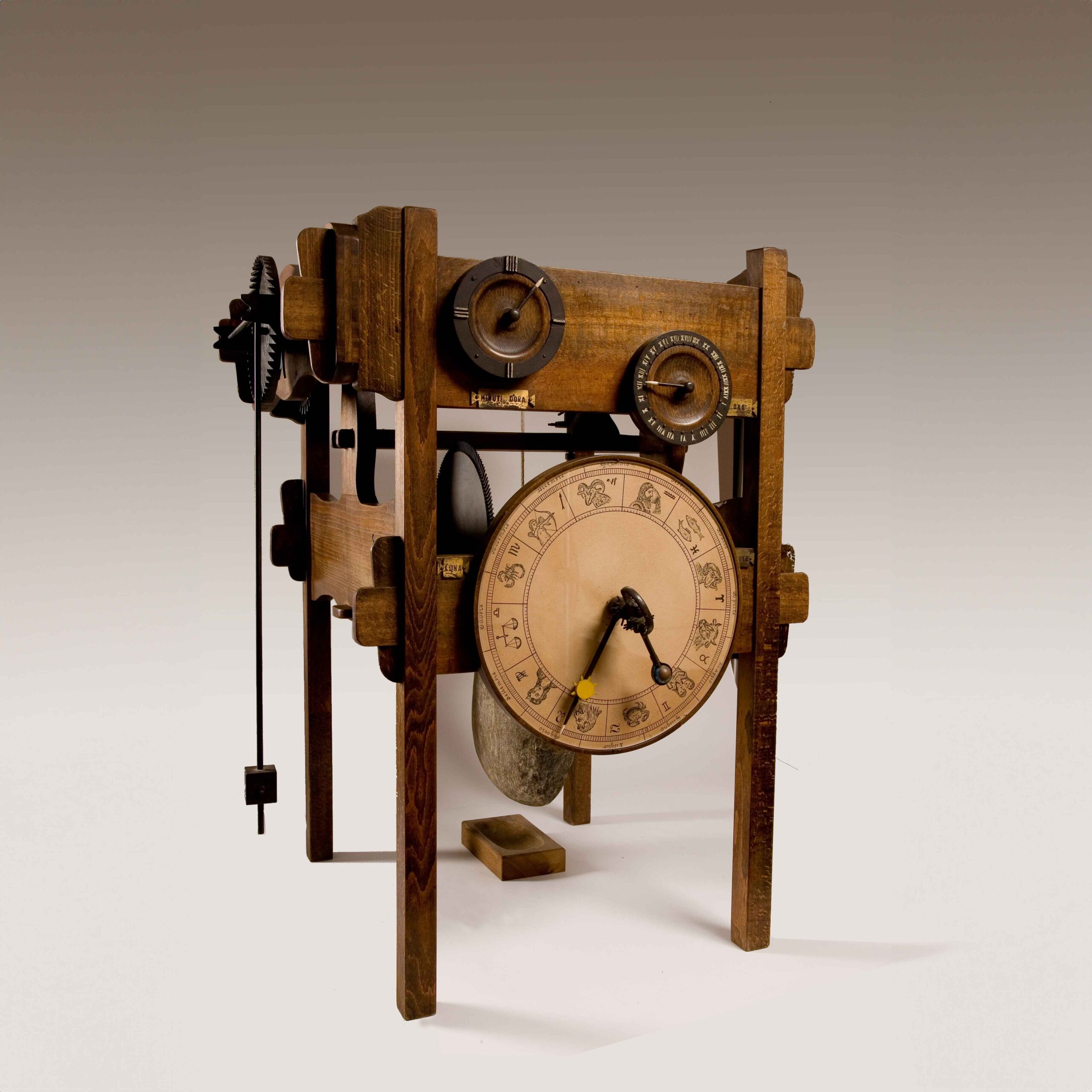
Fascinated by all the mechanical elements inside clocks that ensure the transmission of motion, Leonardo showed particular interest in instruments designed to measure time. He conducted a sort of anatomical dissection of these devices, continuously searching for solutions to achieve increasingly sophisticated levels of automation.
As his studies in mechanics progressed, he focused on the escapement mechanism, intuiting that similar devices could also be used for textile manufacturing machines.
In his manuscripts, Leonardo depicted some clocks of his time, such as the planetary clock of the Abbey of Chiaravalle near Milan and Giovanni Dondi’s astrarium for the Visconti Palace in Pavia.
Works of the collection
4 works belongs to this collection
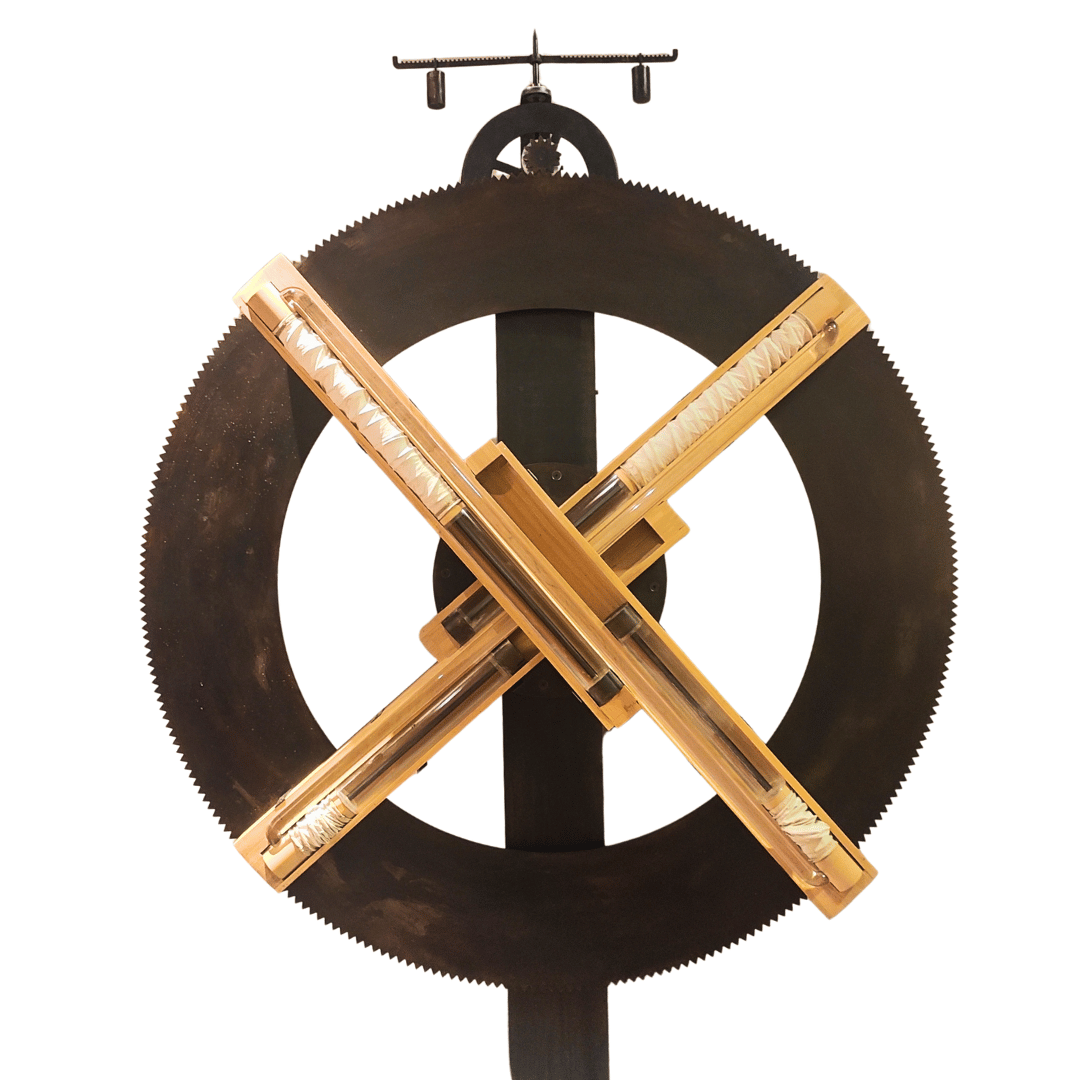
Textile machinery
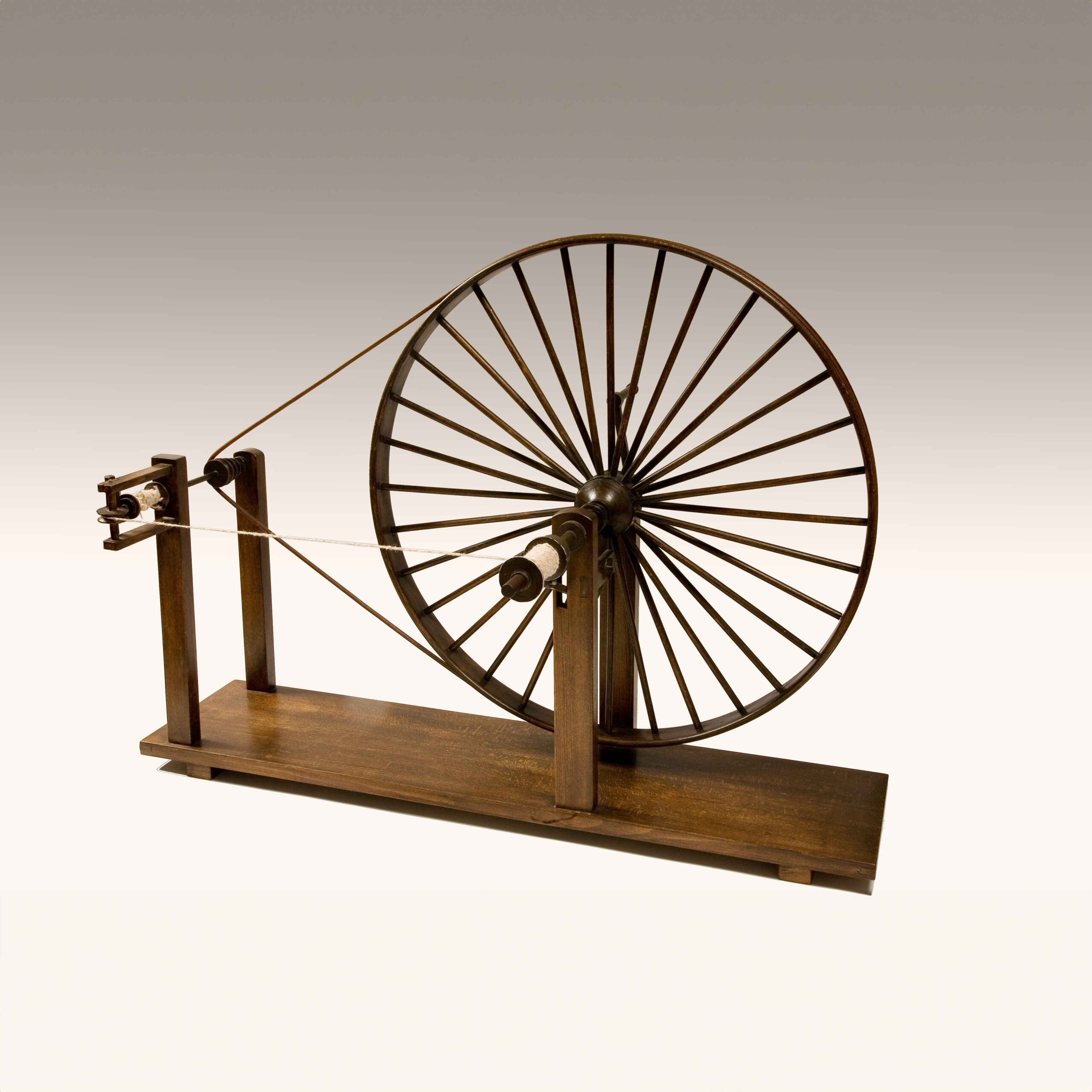
Leonardo devoted great attention to the study of the complex and articulated production cycle of the textile industry, designing machines for twisting and winding thread, for spinning and weaving. His projects are sometimes precise improvements aimed at the partial or complete mechanization of the main phases of the manufacturing cycle, while other times they boldly anticipate the factory system and mass production.
Also interested in the various finishing operations of fabrics, Leonardo designed machines for raising and shearing cloth; the automatic beating machine (battiloro) is an original invention to automate the process of beating precious metals used in the production of gold and silk threads and fabrics.
Works of the collection
7 works belongs to this collection

From gold to brocade
Giusto Manetti Battiloro
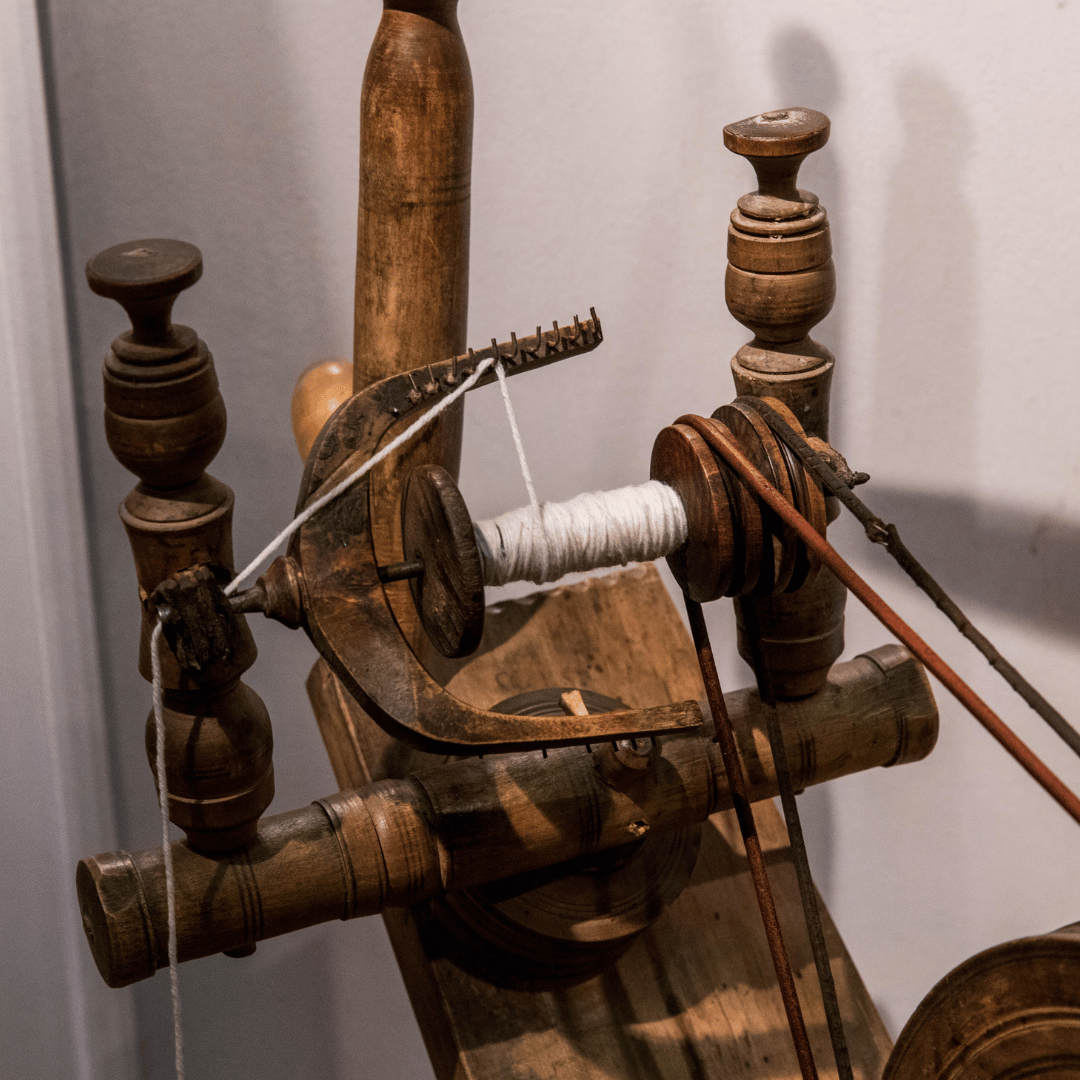
Spinning wheel with flyer-driven spindle
Manifattura lucchese
fine XIX° secolo
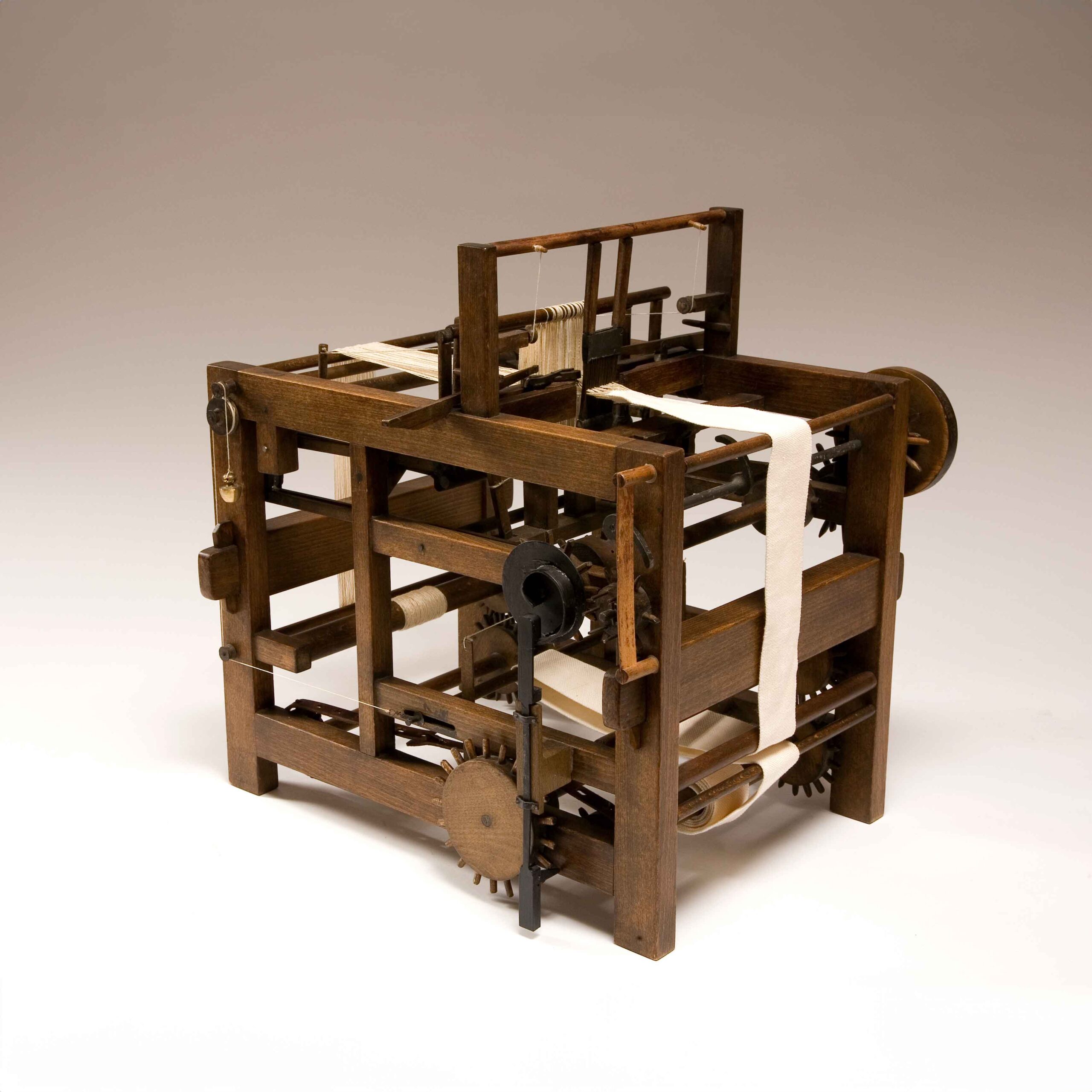
Automatic weaving loom
Luigi Boldetti
1954
Crank-operated thread-twisting machine
Luigi Boldetti
1969
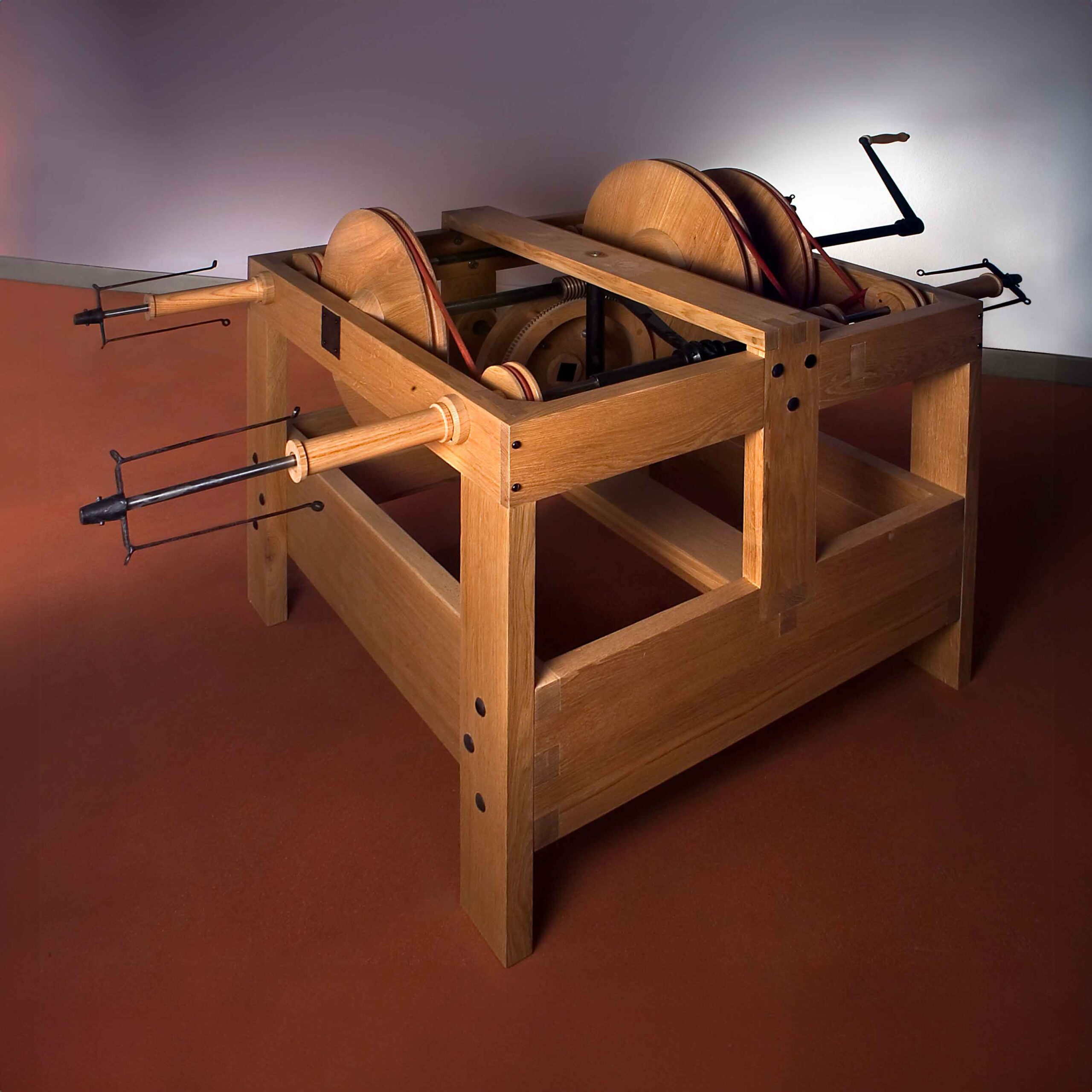
Four-spindle continuous spinning machine
Università di Firenze, Facoltà di Ingegneria, Dipartimento di Meccanica e Tecnologie industriali
2004
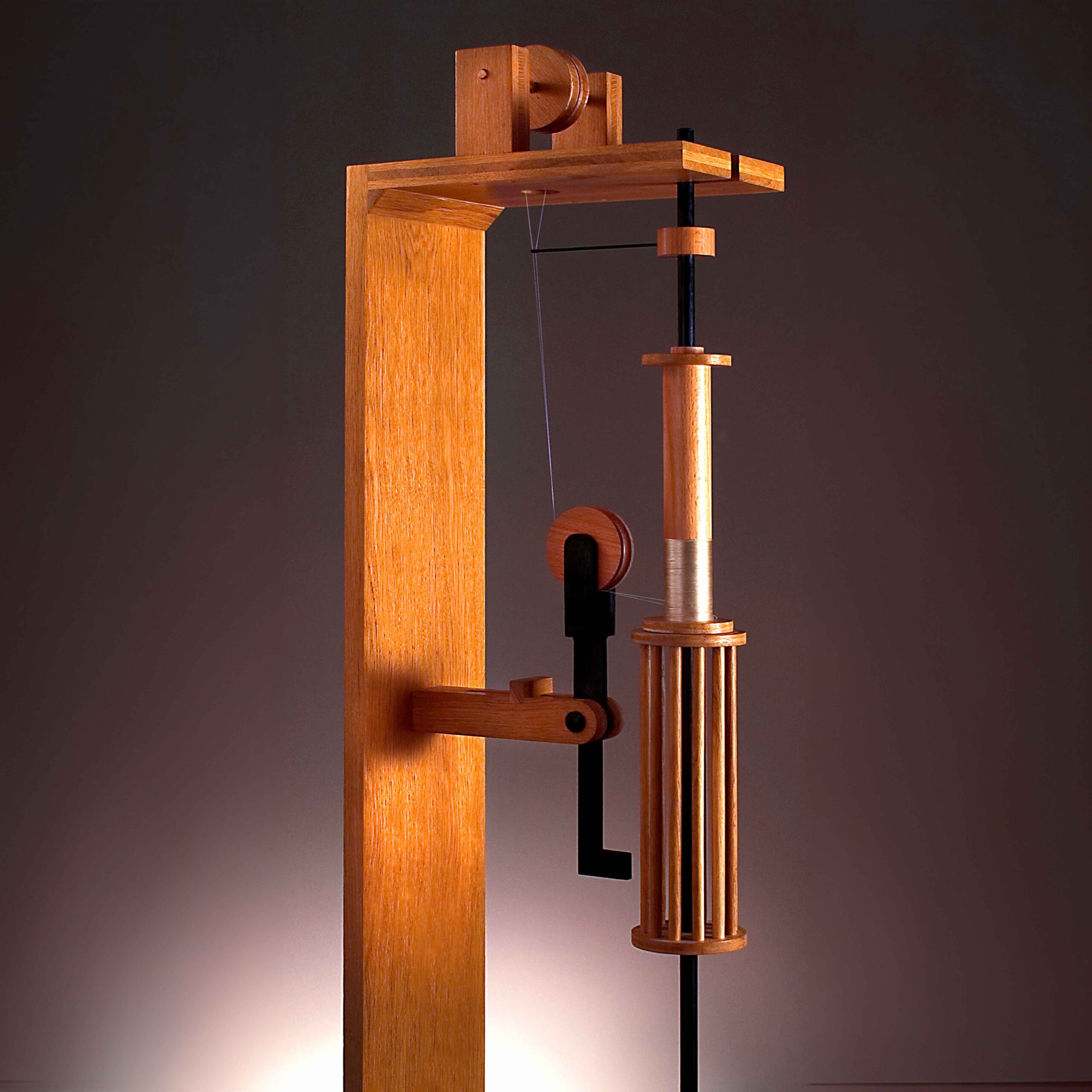
Stop device for automatic silk thread doubling mechanism
Università di Firenze, Facoltà di Ingegneria, Dipartimento di Meccanica e Tecnologie industriali
2003
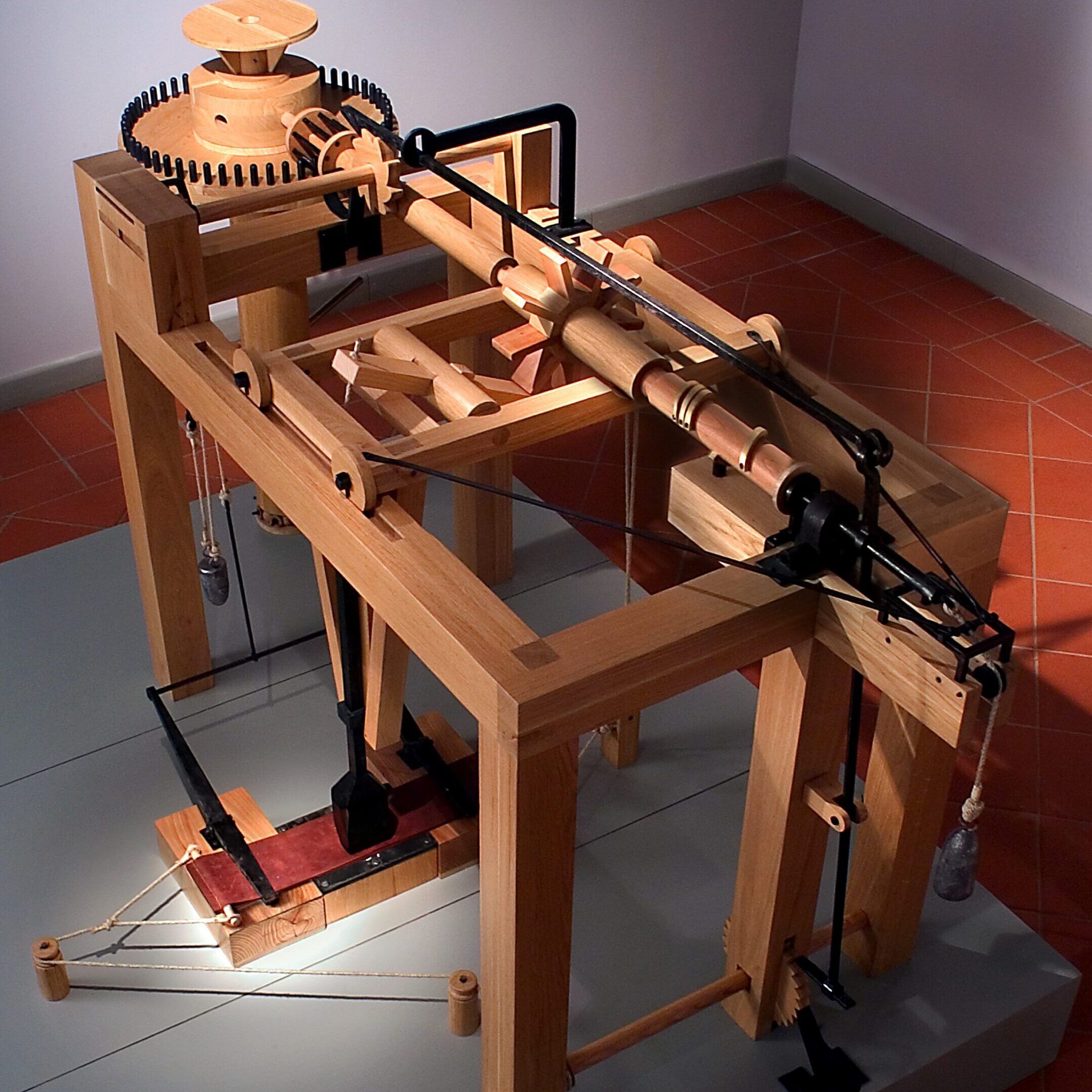
Gold beater
Università di Firenze, Facoltà di Ingegneria, Dipartimento di Meccanica e Tecnologie industriali
2003
Construction site machinery
In 1420, Filippo Brunelleschi began what would become one of the most significant feats of the Italian Renaissance: the construction of the dome of Florence Cathedral.
The hoists and cranes he designed to lift and precisely position enormous weights—reaching nearly one hundred meters above the ground—had a profound influence on the young Leonardo and other artist-engineers of his time, such as Mariano di Iacopo, Francesco di Giorgio, Buonaccorso Ghiberti, and Giuliano da San Gallo. Thanks to them, the memory of these devices has been preserved in their notebooks, ensuring that these innovations—representing a crucial leap forward in construction machinery—would not be forgotten.
Leonardo’s experience at the construction site of Florence Cathedral is presented in the video on display in the room. The short film outlines the historical and artistic context in which this great endeavor took place: 15th-century Florence, where renowned artists such as Brunelleschi were engaged in creating grand works meant to celebrate the prestige of their patrons—often wealthy members of the so-called Arti, the guilds that played a vital role in the city’s extraordinary economic development.
Works of the collection
7 works belongs to this collection
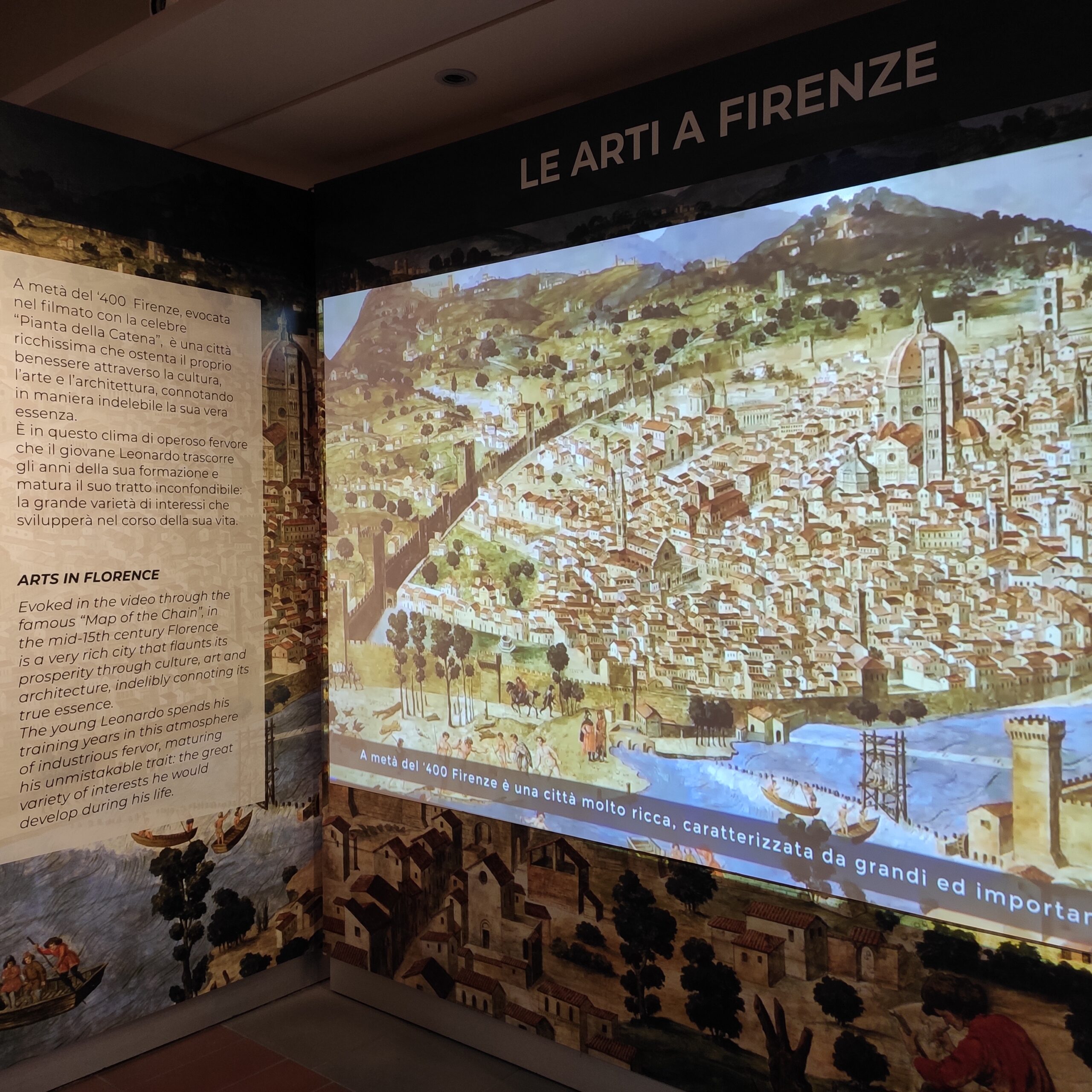
The Arts in Florence
Università Sant’Anna di Pisa, Istituto di intelligenza meccanica, Alexander Neuwahl
2022
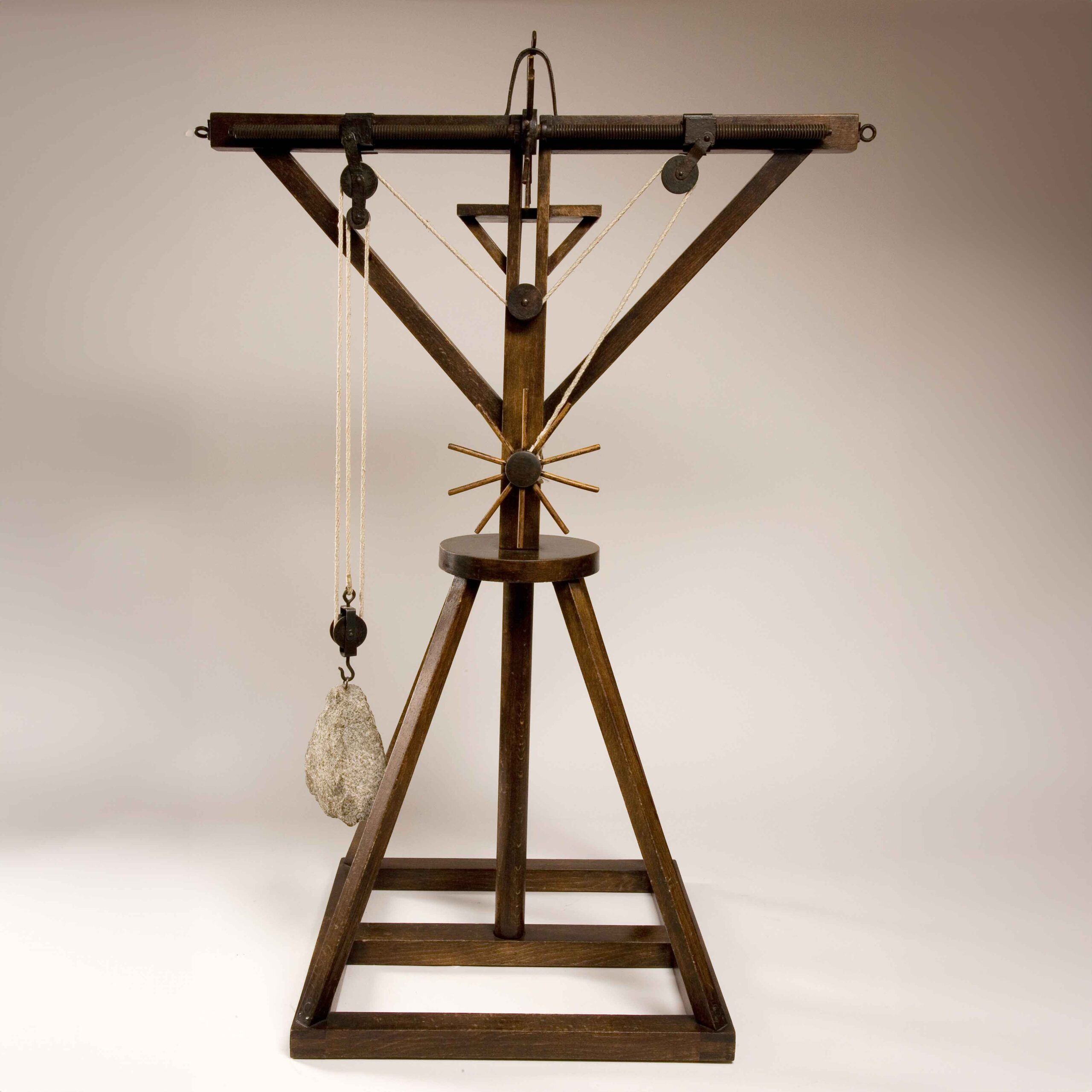
Swivel crane
Luigi Boldetti
1966
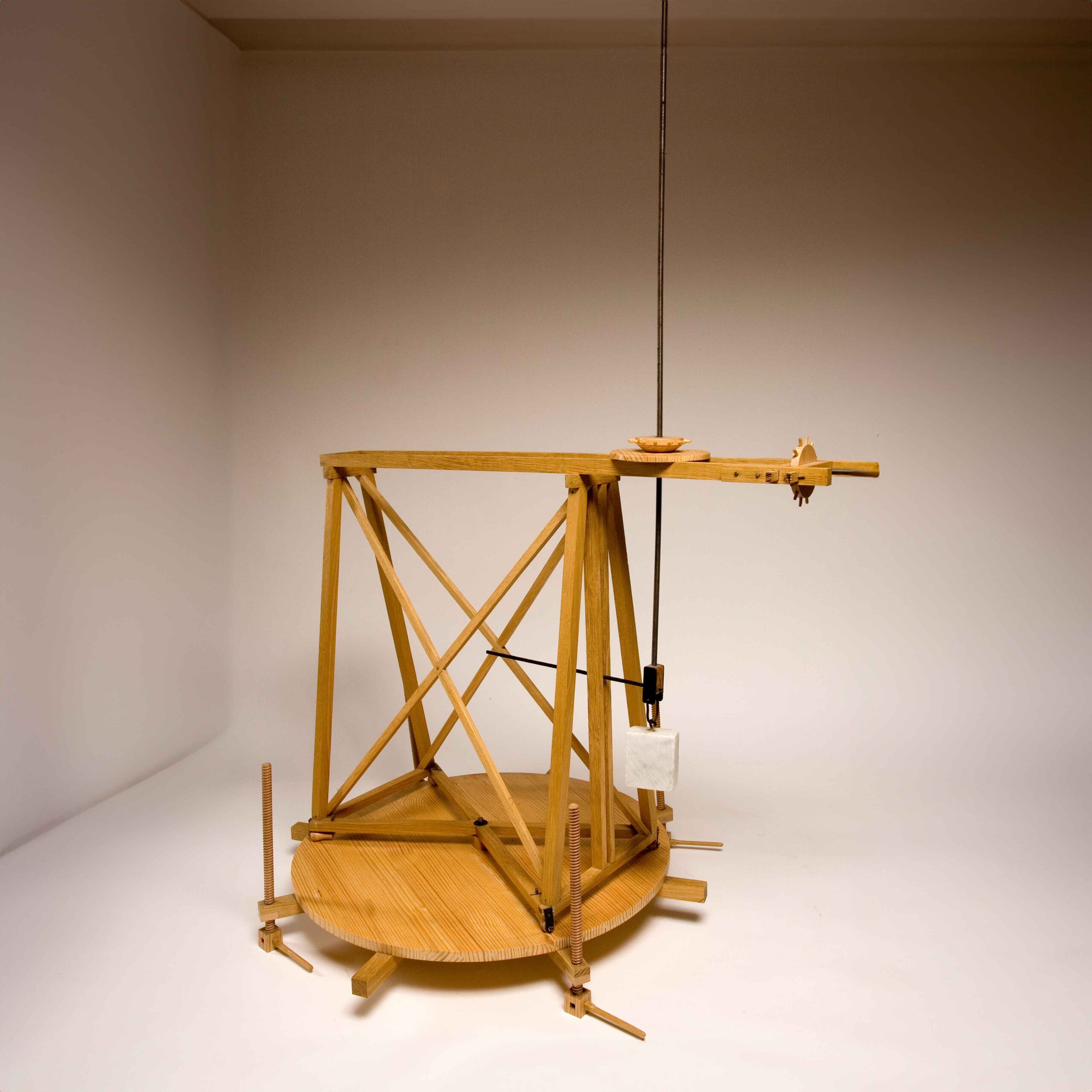
Rotating central-fulcrum crane for the cathedral lantern
Università di Firenze, Facoltà di Ingegneria, Dipartimento di Meccanica e Tecnologie industriali
2004
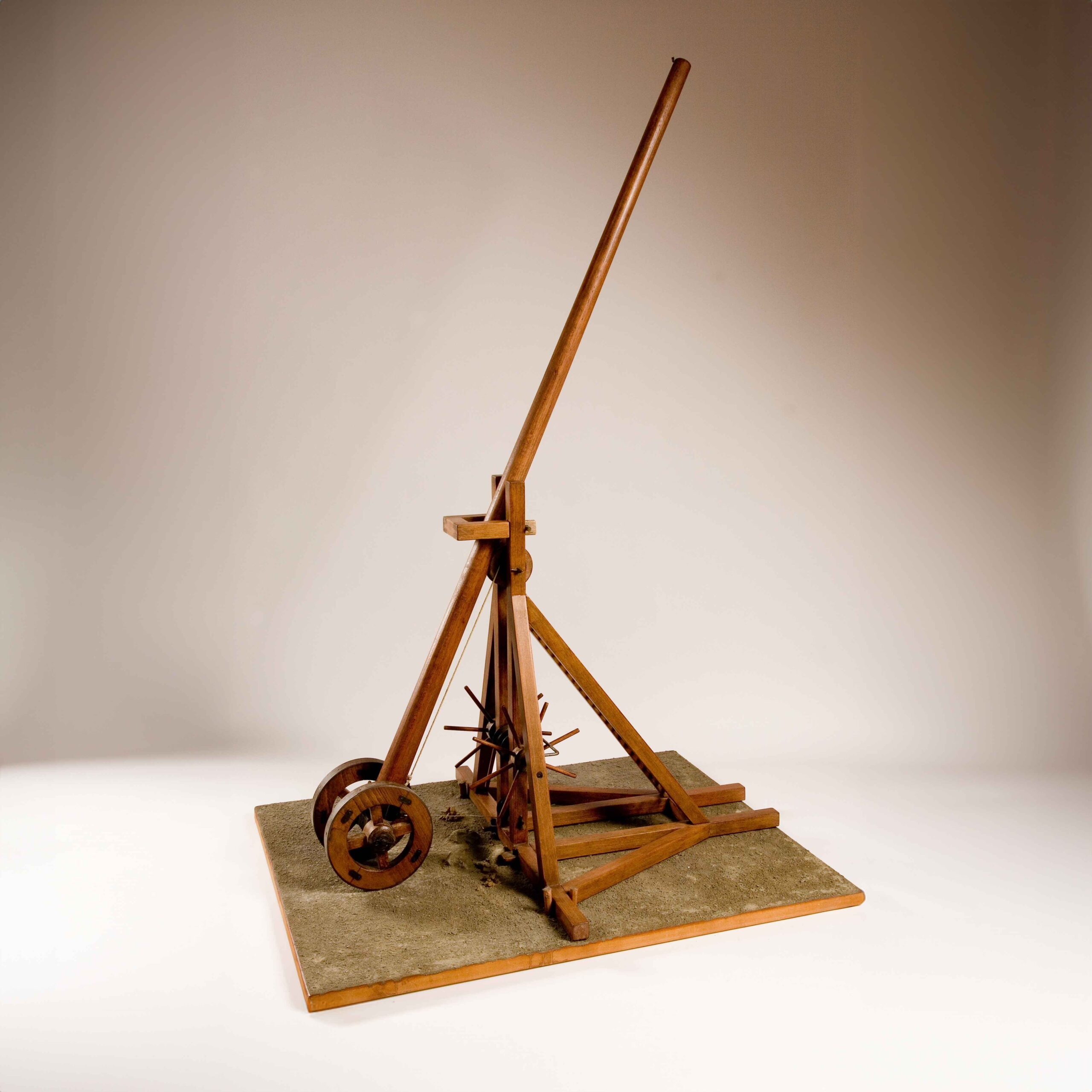
Device for raising poles or posts
Luigi Boldetti
1978
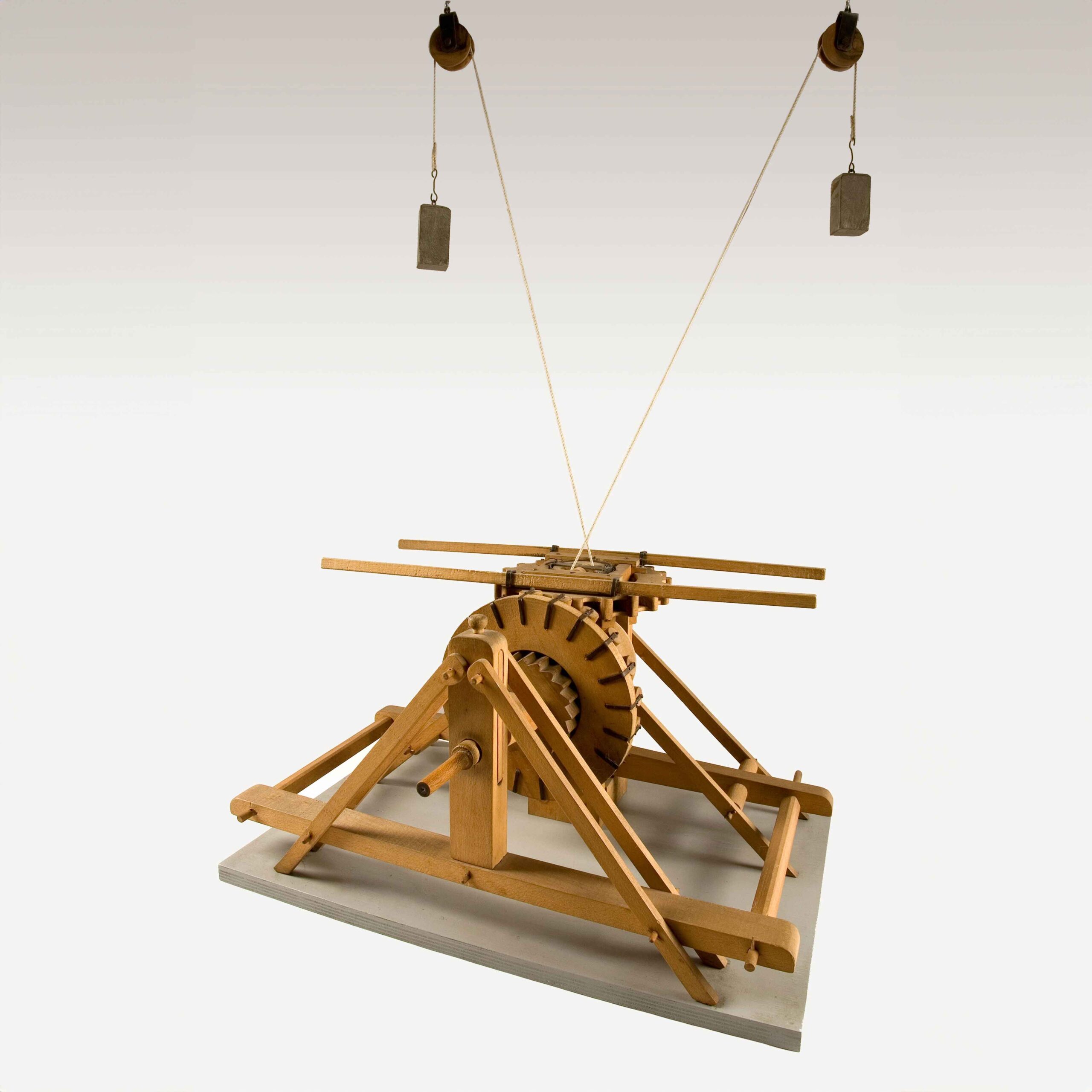
Lightweight winch
Ladislao Reti, Federico Antonello, Nino Terreni
1964
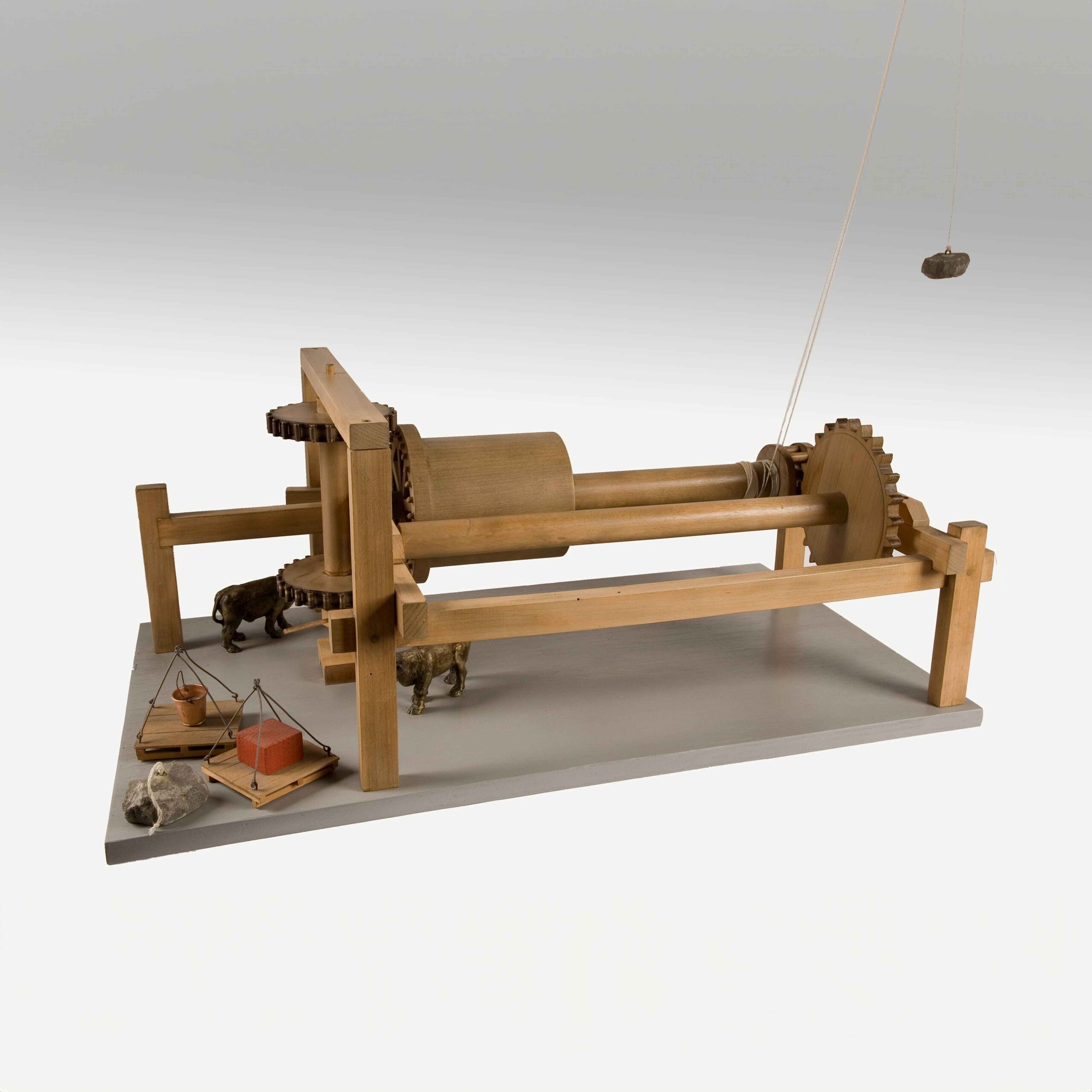
Three-speed winch
Ladislao Reti, Nino Terreni, Federico Antonello
1964
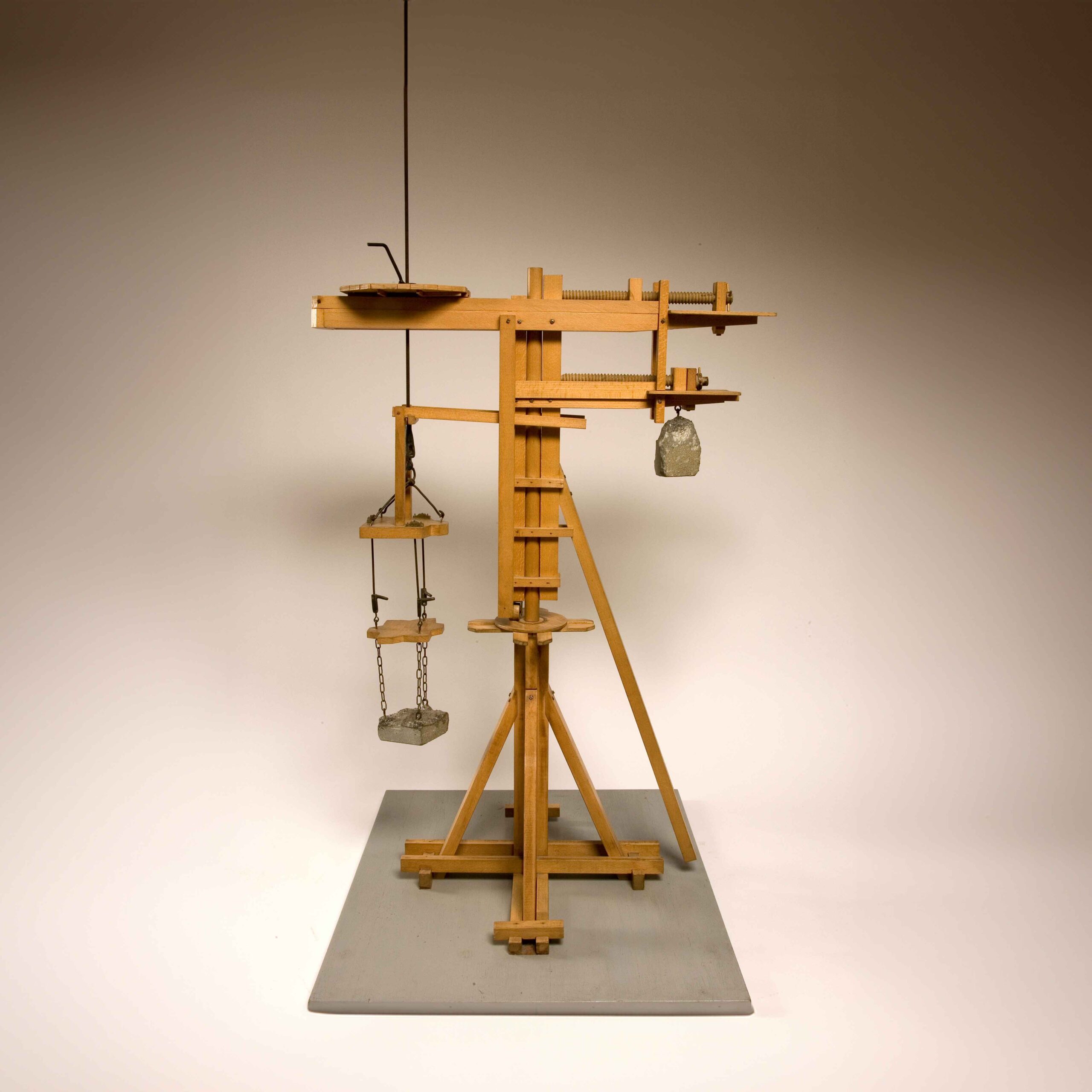
Counterweighted swivel crane
Università di Firenze, Facoltà di Architettura
1987