

Archives: Collezione
Una Collezione al museo
Podestà’s Hall
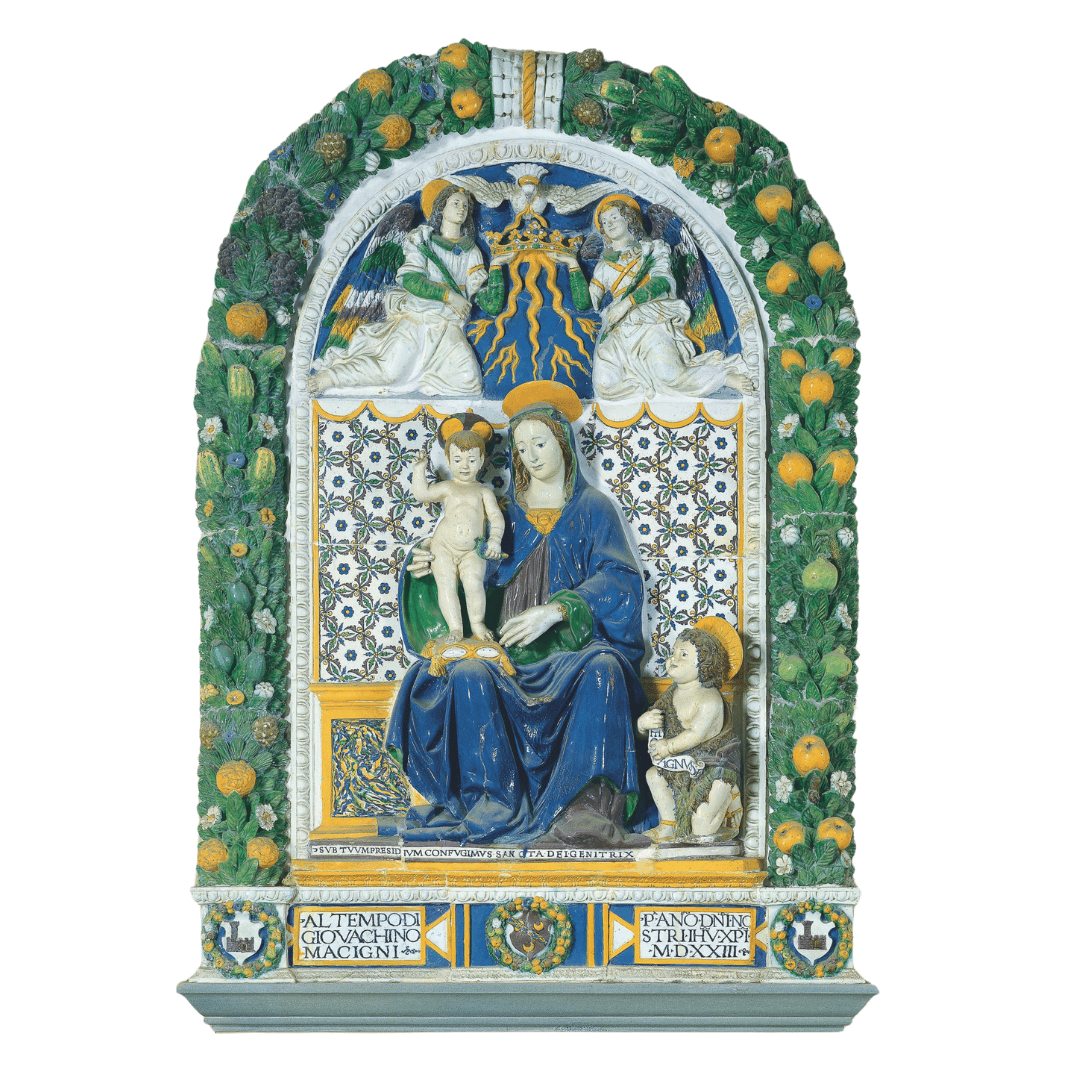
On the eastern side stands the large Renaissance fireplace made of pietra serena stone, commissioned by the podestà Neri Ventura in 1478, while on the northern side stands out the glazed terracotta Madonna and Child with Saint John the Baptist by Giovanni della Robbia. On the western wall, a small opening testifies to the ancient passage that until the 13th century allowed access to the tower via a staircase 13 meters long.
In this hall, on May 3, 1478, Leonardo was present at the signing of a contract through which his uncle Francesco and his father Ser Piero obtained the perpetual lease of a mill located below the castle walls. A special clause added to the contract at his uncle’s initiative would have allowed Leonardo to enjoy the lease in case of extinction of the legitimate lineage.
Works of the collection
1 work belongs to this collection
Ebbe nome Lionardo
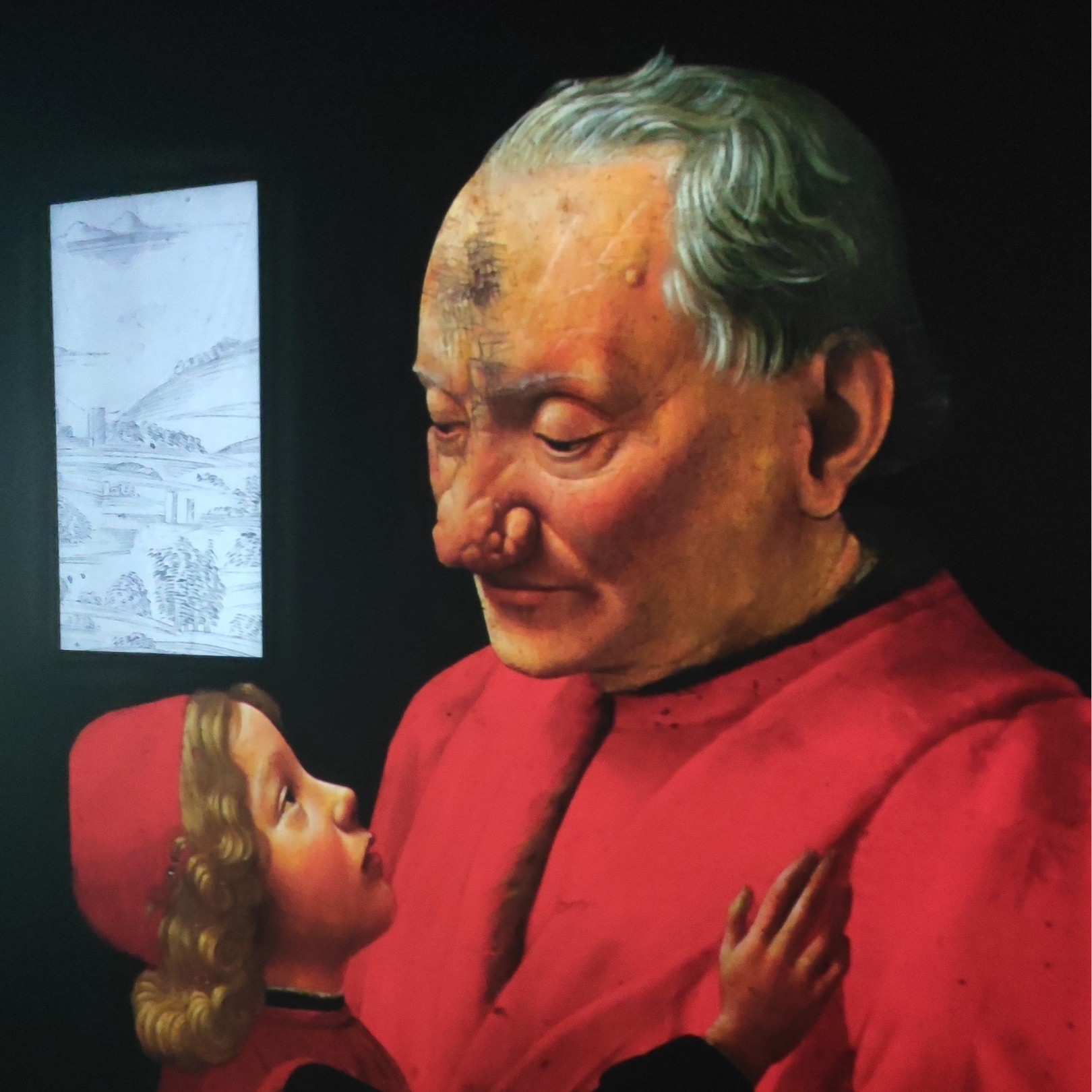
Starting from the impressions conveyed by archival documents, through an installation that masterfully combines sounds, images, and words, the events that testify to Leonardo’s presence in Vinci are retraced.
The video installation tells the story of the da Vinci family, the hypotheses about the identity of his mother Caterina, his relationship with his uncle Francesco, and his first studies of the abacus, reconstructing in a novel way a still little-known period of Leonardo’s life.
Works of the collection
1 work belongs to this collection
The mechanics of Leonardo
The theme to which the museum is dedicated—Leonardo as a technologist, scientist, and engineer—is introduced in the entrance hall of the Palazzina Uzielli through an immersive video projection.
“Force is nothing but a spiritual virtue, an invisible power, which is created and infused by accidental violence from sentient bodies into insentient ones, giving these bodies a semblance of life; a life capable of marvelous operations […]”
As these words from the Codex Atlanticus remind us, for Leonardo motion is the key element that gives both natural and artificial bodies a “semblance of life.” In the projection, some of the mechanical elements from Leonardo’s projects are brought to life with graphic and sound effects that evoke their movement.
Leonardo’s multifaceted activity finds its primary tool in drawing—as a means of investigation, reflection, invention, and design. No other contemporary of his achieved anything comparable. His machine drawings, so modern, relevant, and effective, still astonish and captivate to this day.
Works of the collection
1 work belongs to this collection
Leonardo in Vinci
Leonardo devoted much of his thinking to mechanics and the study of the basic components of machines, analyzing their principles and operating criteria. In his drawings, individual machine elements such as the screw, the toothed or pinion wheel, the spool, the pulley, and springs combine to create mechanisms and tools capable of performing more or less complex operations.
His study of movement and its transmission led Leonardo to conceive pulley systems for lifting heavy loads, mechanisms for motion transformation, and methods to eliminate or reduce friction.
Works of the collection
5 works belongs to this collection
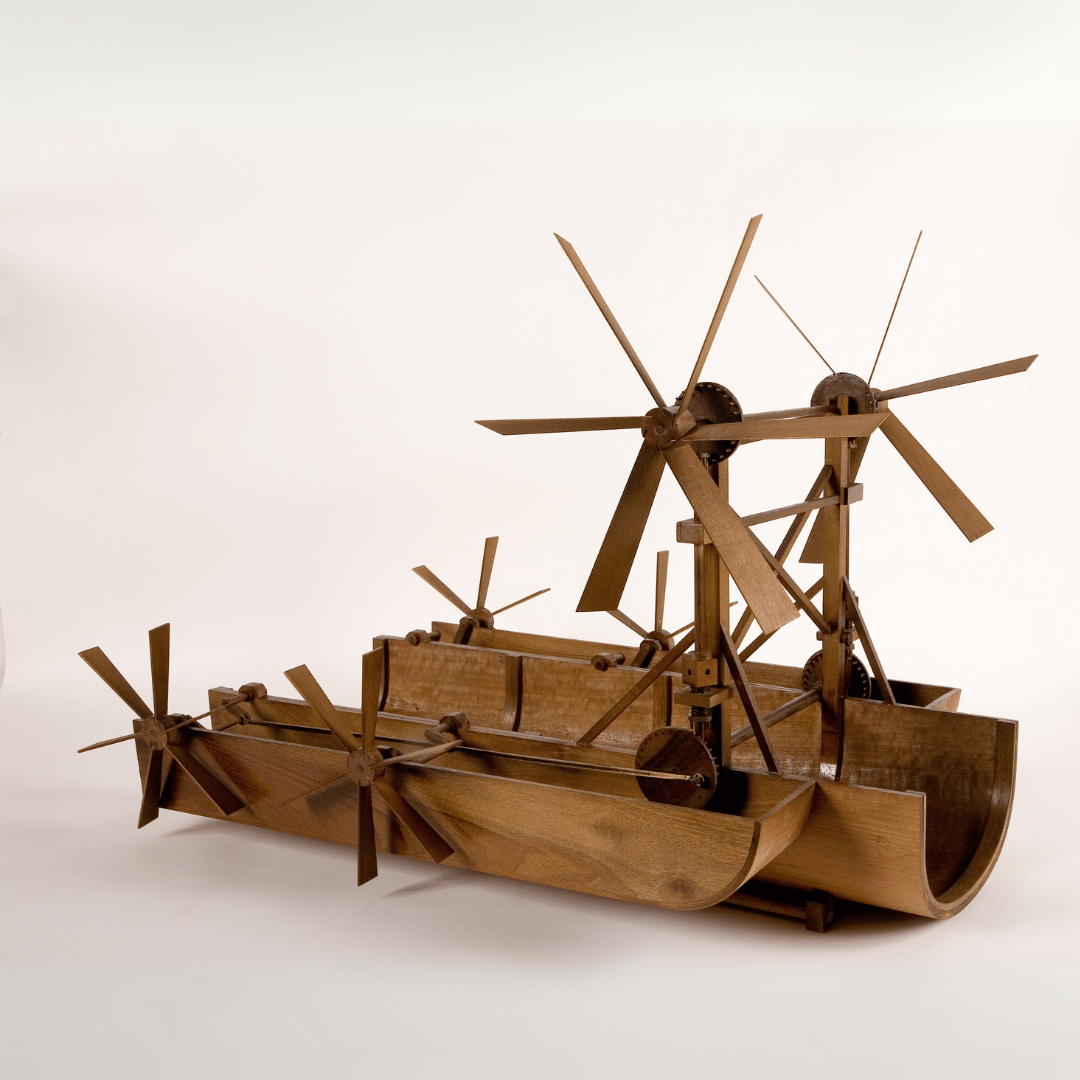
Watercraft with paddle wheels and wind blade system
Università di Firenze, Facoltà di Ingegneria, Dipartimento di Meccanica e Tecnologie industriali, Etruria Musei
2010
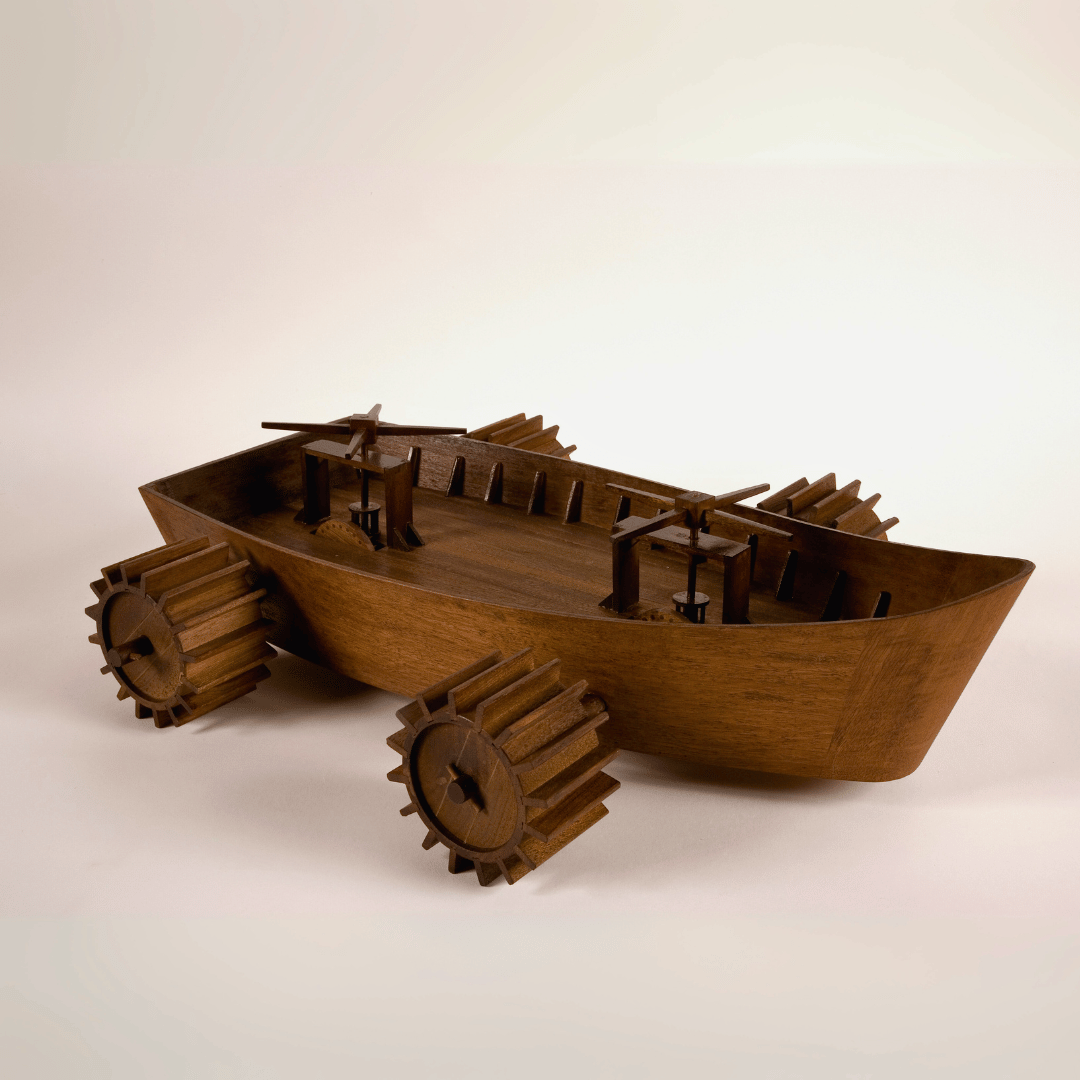
Amphibious vessel with treaded wheels
Università di Firenze, Facoltà di Ingegneria, Dipartimento di Meccanica e Tecnologie industriali, Etruria Musei
2010
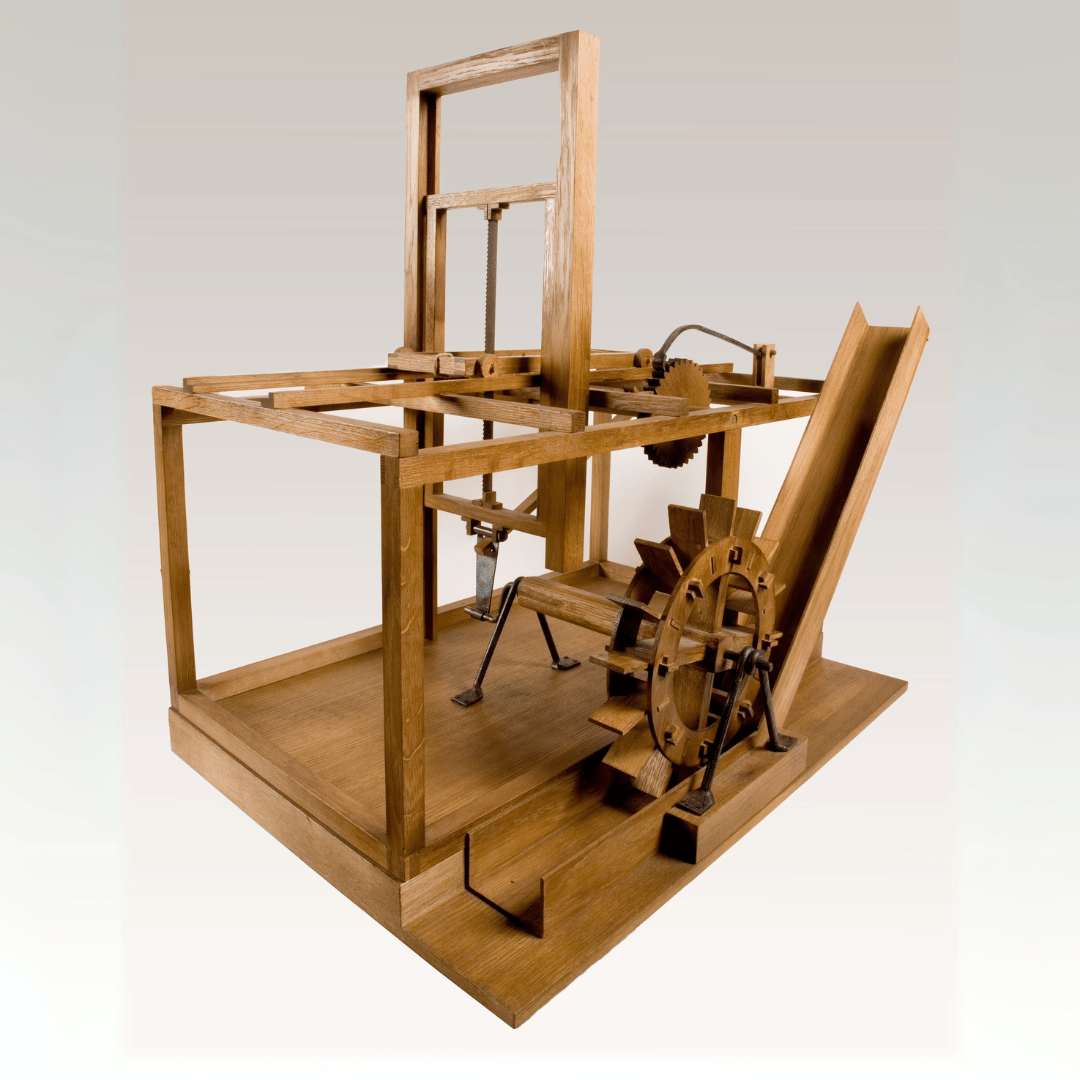
Hydraulic saw
Università di Firenze, Facoltà di Ingegneria, Dipartimento di Meccanica e Tecnologie industriali, Etruria Musei
2010
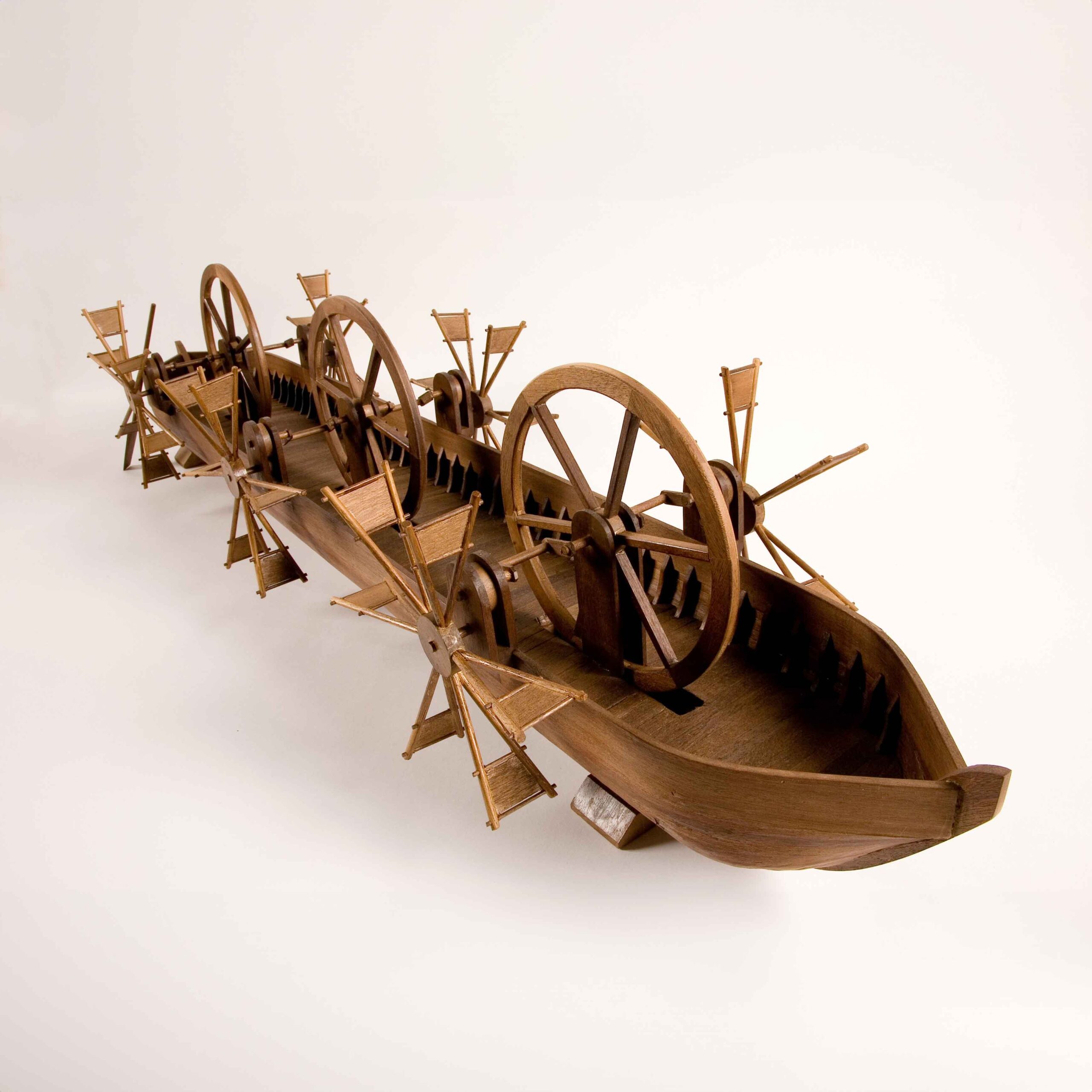
Boat with paddle-wheel propulsion system
Università di Firenze, Facoltà di Ingegneria, Dipartimento di Meccanica e Tecnologie industriali, Etruria Musei
2010
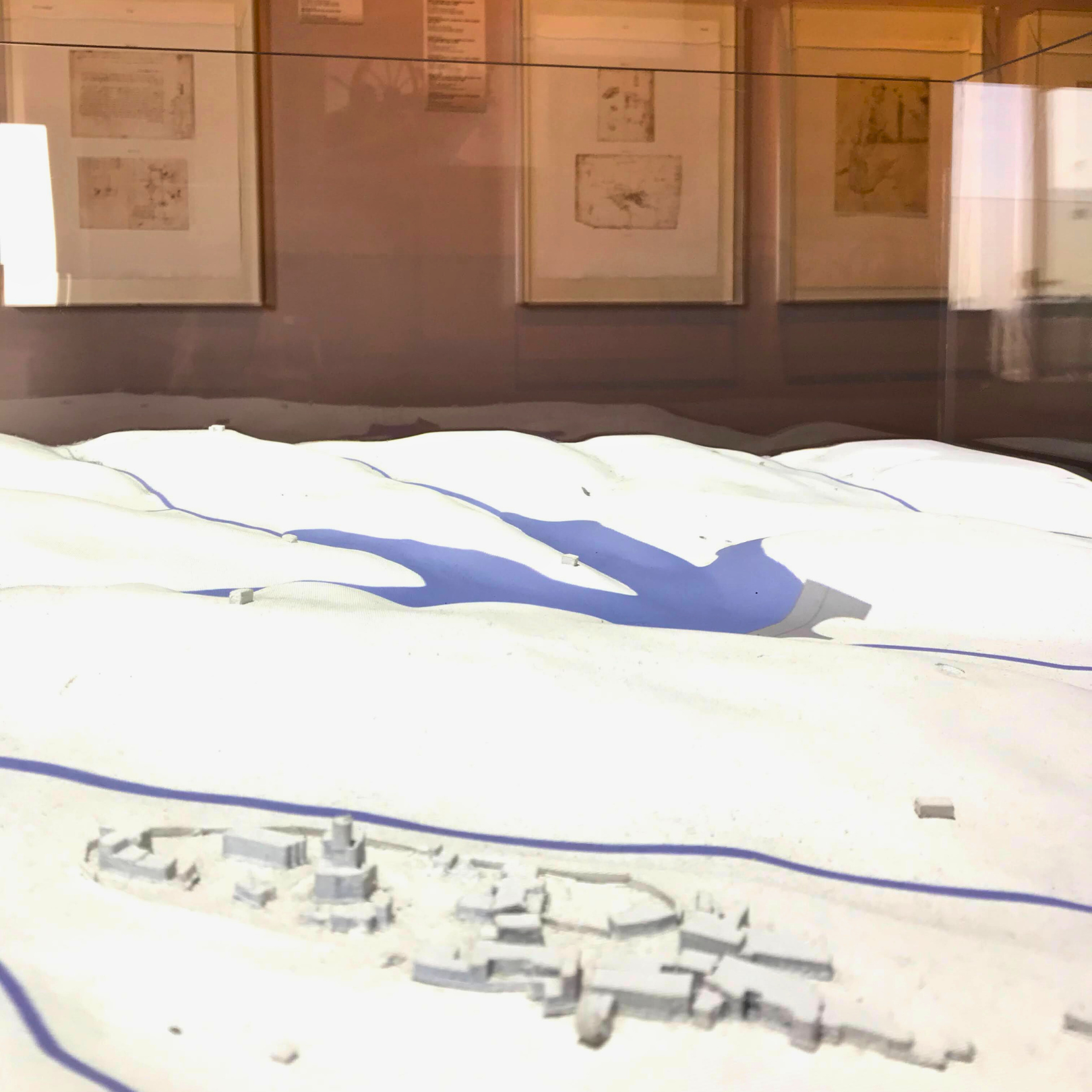
Water storage basin in Vinci
Alexander Neuwahl
2019
Flight studies
During his first stay in Milan, Leonardo dedicated himself to designing flapping-wing flying machines capable of imitating the structure and propulsive movement of a bird’s wings. He observed birds closely, studying their flight techniques and body structure. However, since humans cannot generate enough energy to move wings mechanically, flapping-wing flight was not feasible. He then turned to gliding or soaring flight, where propulsion relies entirely on air currents. This led to the creation of the delta-winged apparatus and the flying sphere.
Leonardo also designed some scientific instruments, such as the hygrometer and the anemometer. For aerial navigation, he used an inclinometer. His study of flight led him to investigate the behavioral analogies between air and water.
Works of the collection
11 works belongs to this collection
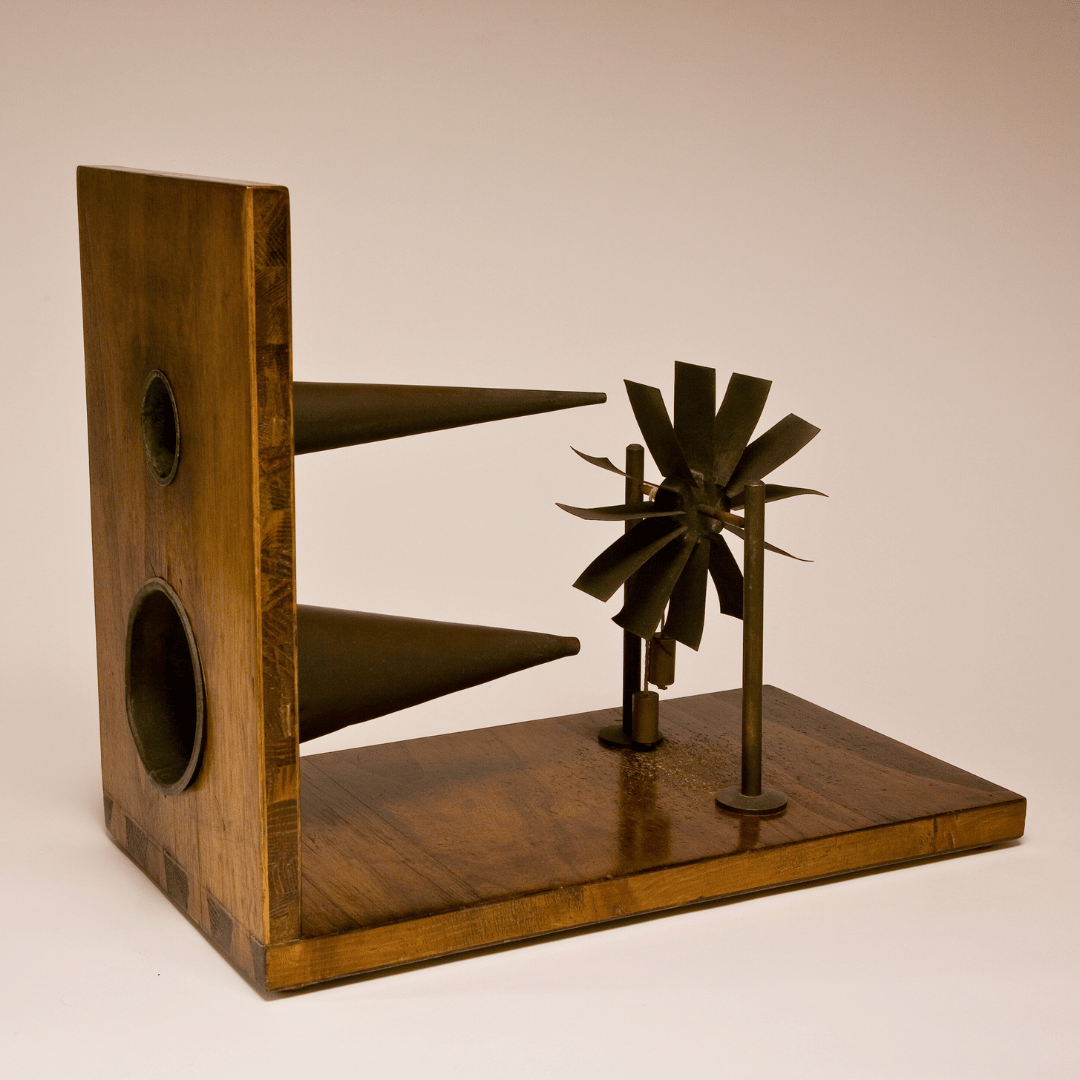
Device for measuring wind or water speed
IBM Italia
1952
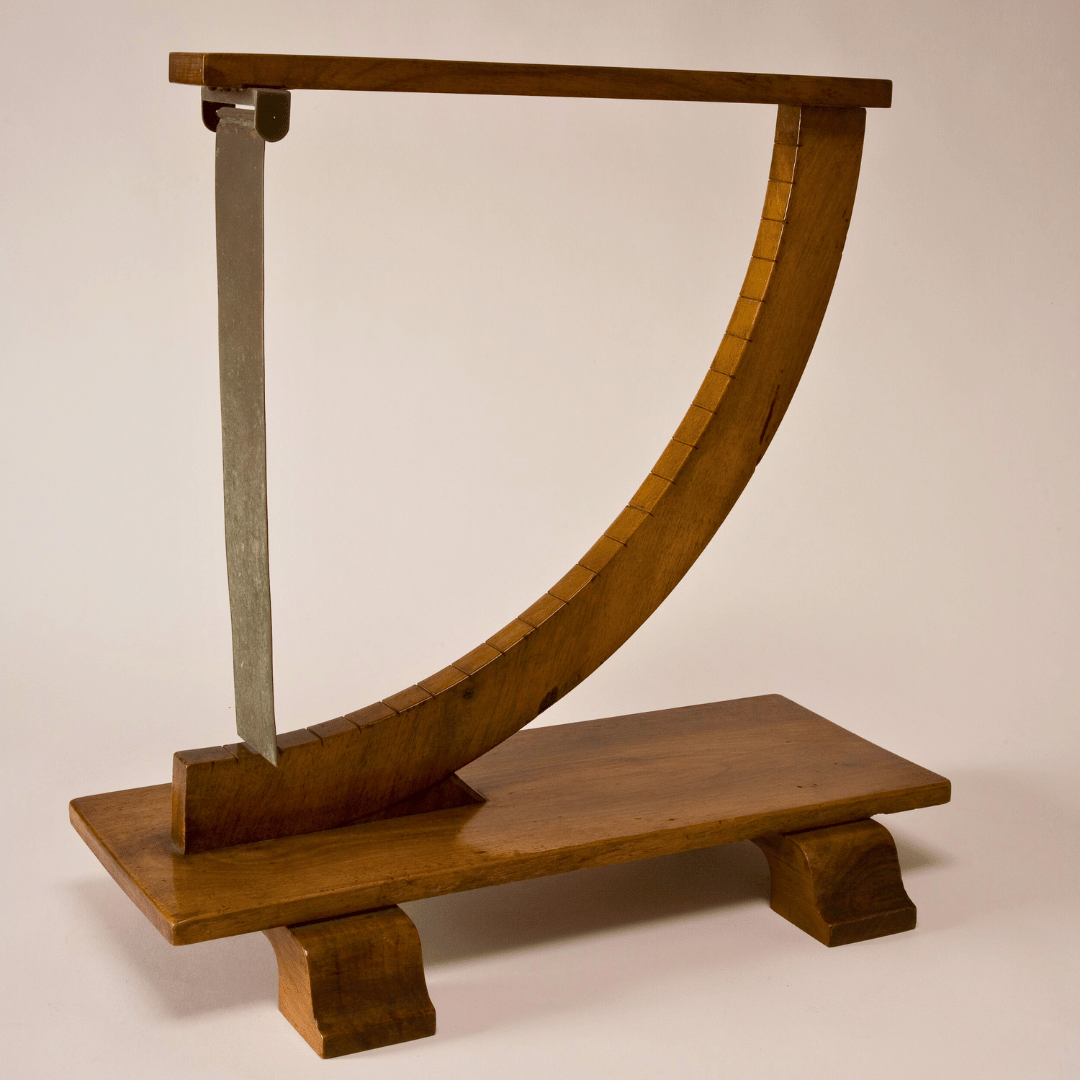
Propeller anemometer
IBM Italia
1952
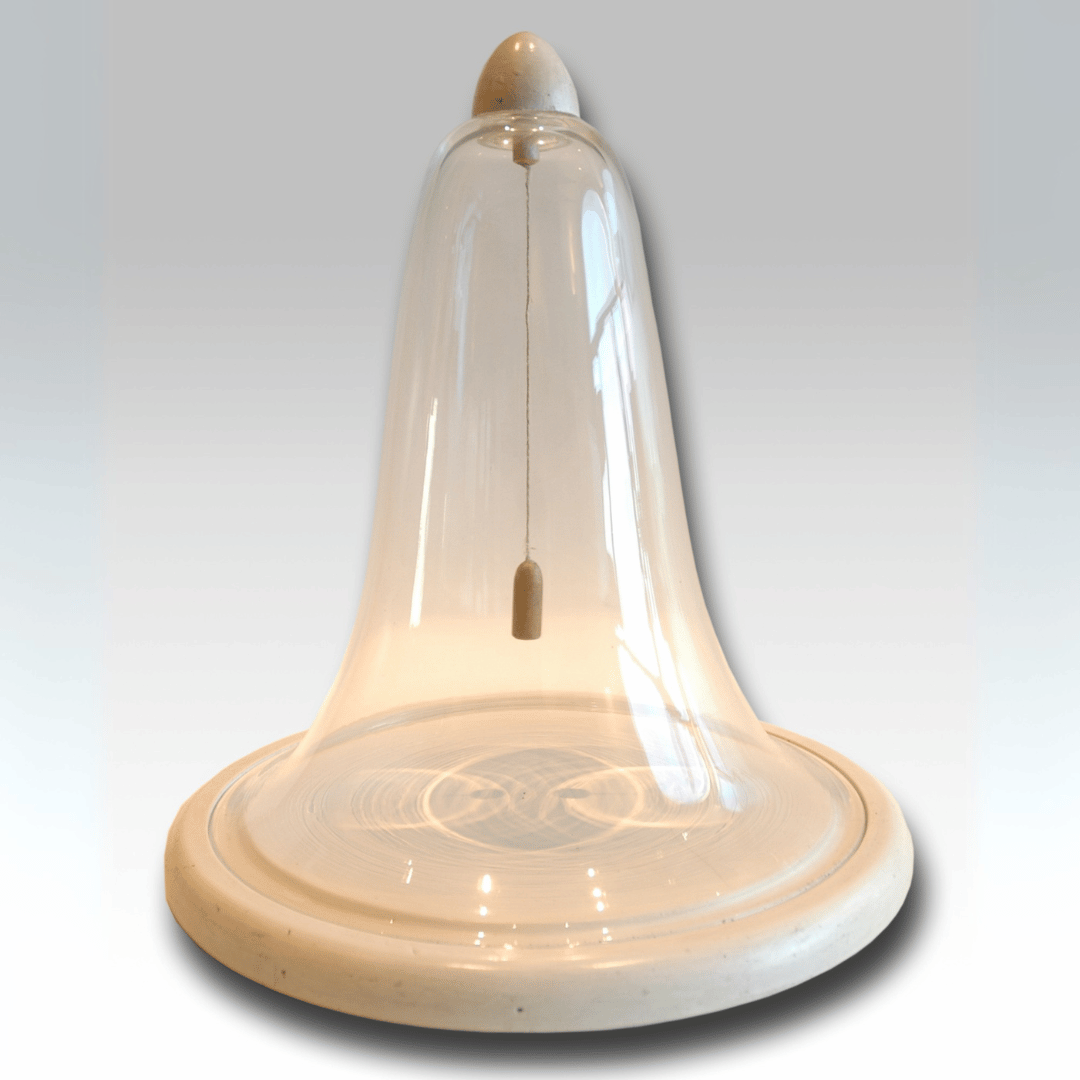
Inclinometer
IBM Italia
1952
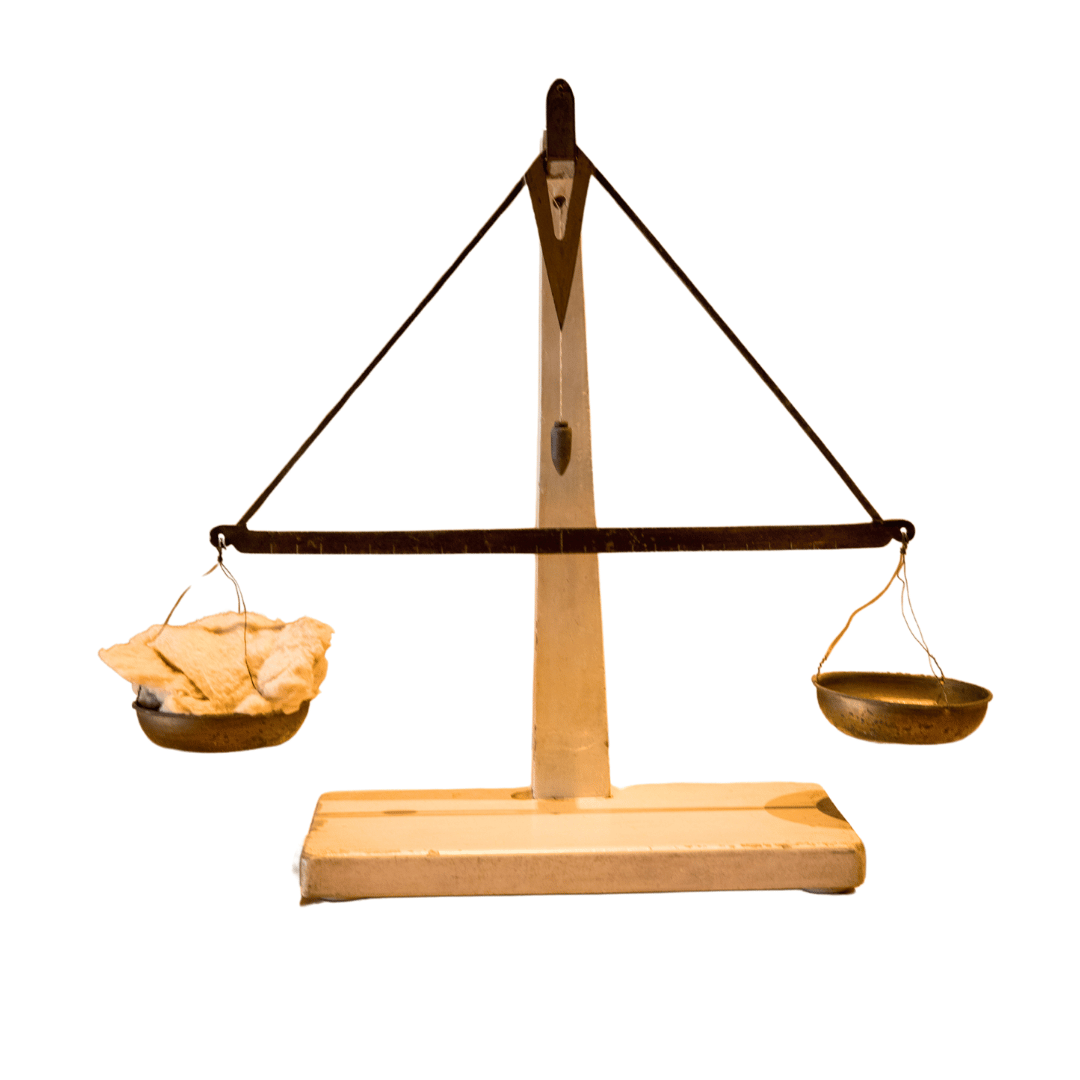
Hygrometer
IBM Italia
1952
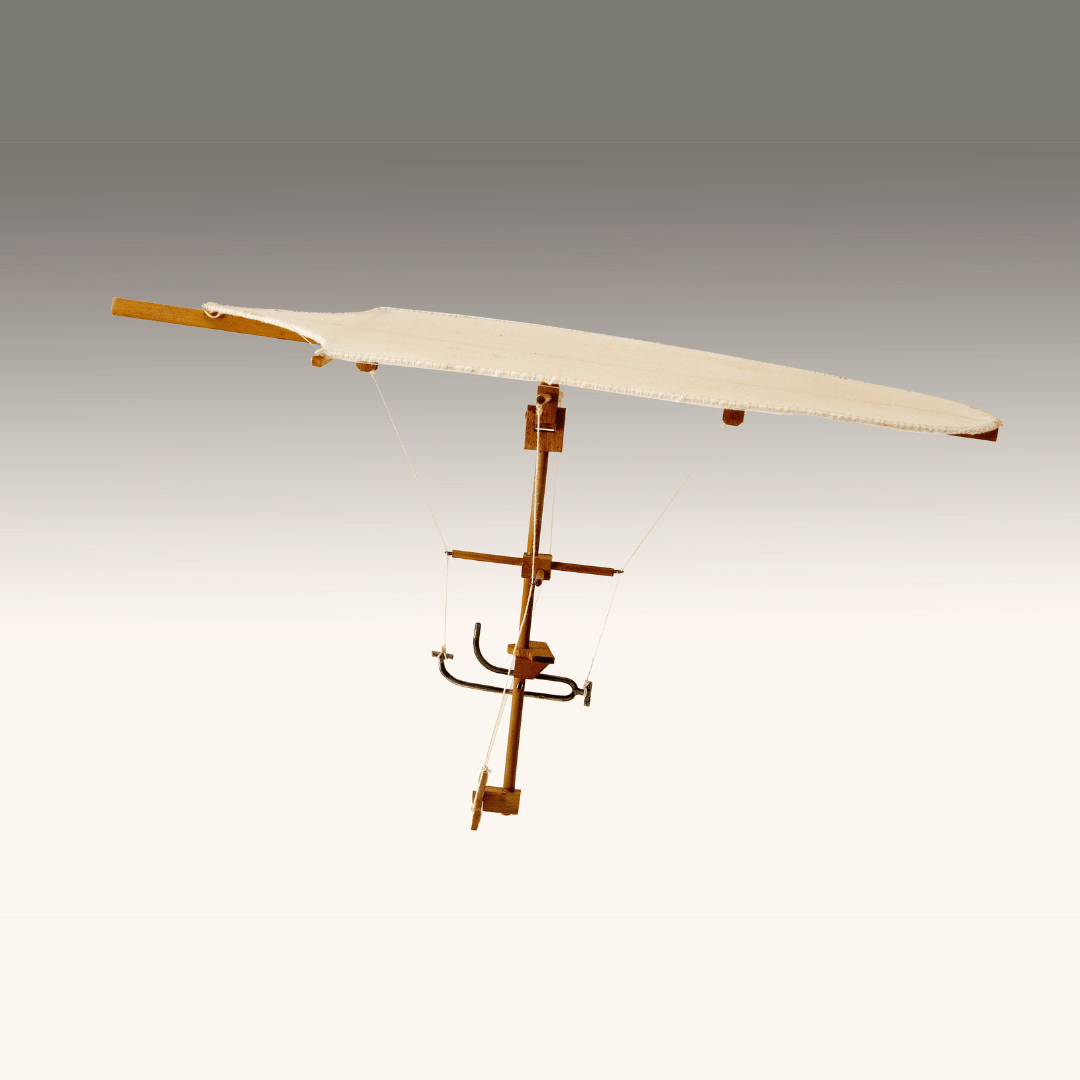
Delta-wing apparatus
Università di Firenze, Facoltà di Ingegneria, Dipartimento di Meccanica e Tecnologie industriali, Etruria Musei
2010
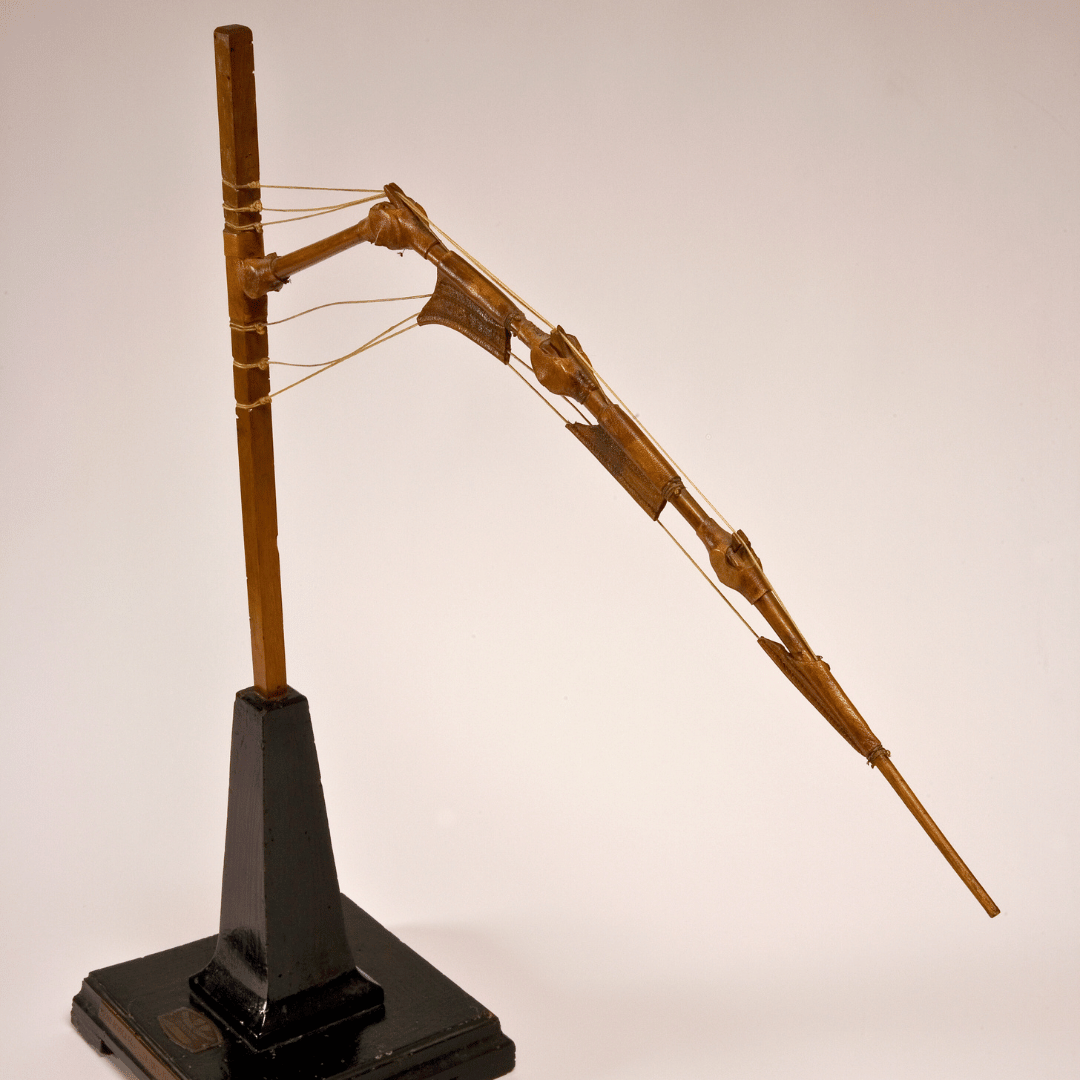
Detail of a mechanical wing
Istituto Tecnico Professionale “Leonardo da Vinci” di Firenze
1929
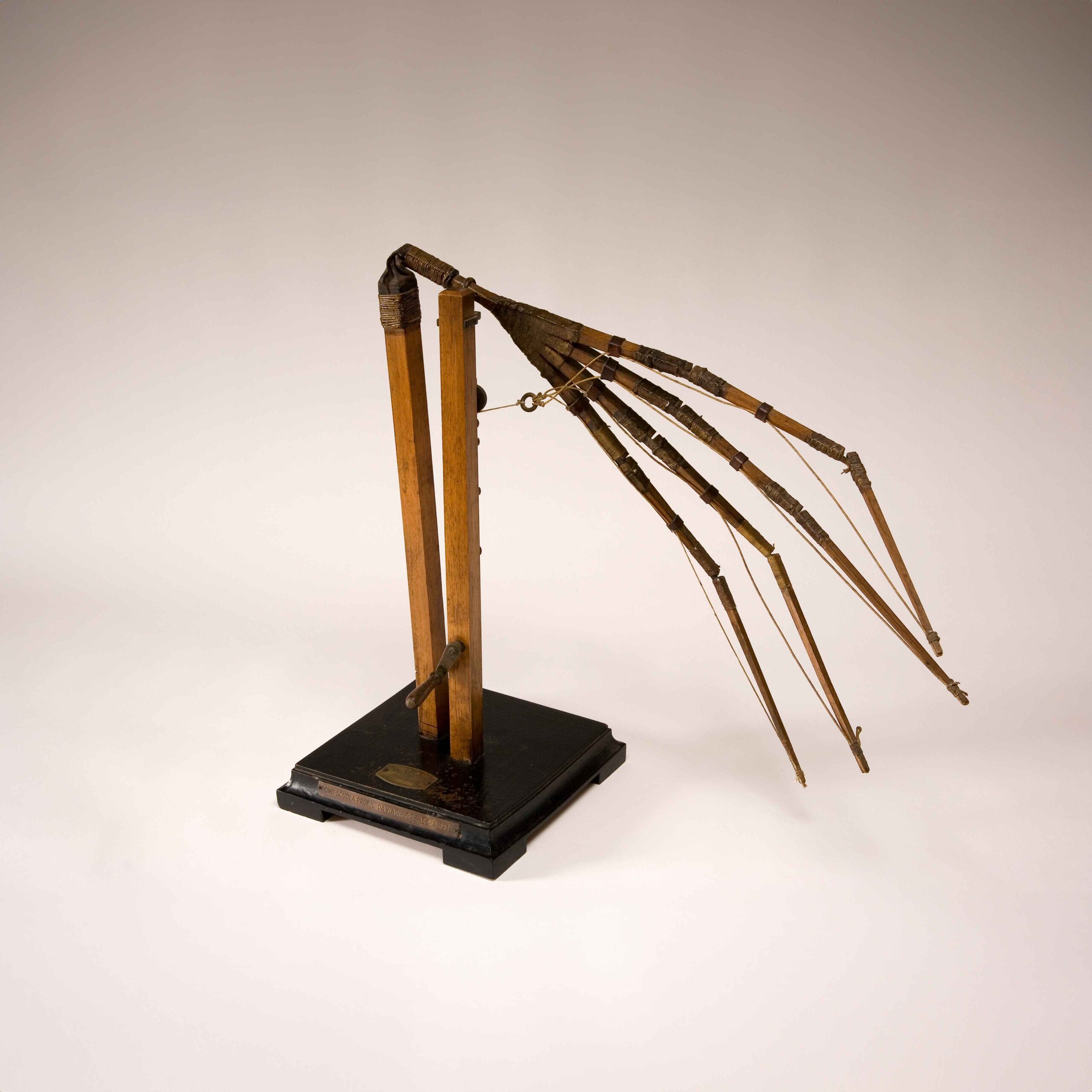
Study of a beating wing
Istituto Tecnico Professionale “Leonardo da Vinci” di Firenze
1929
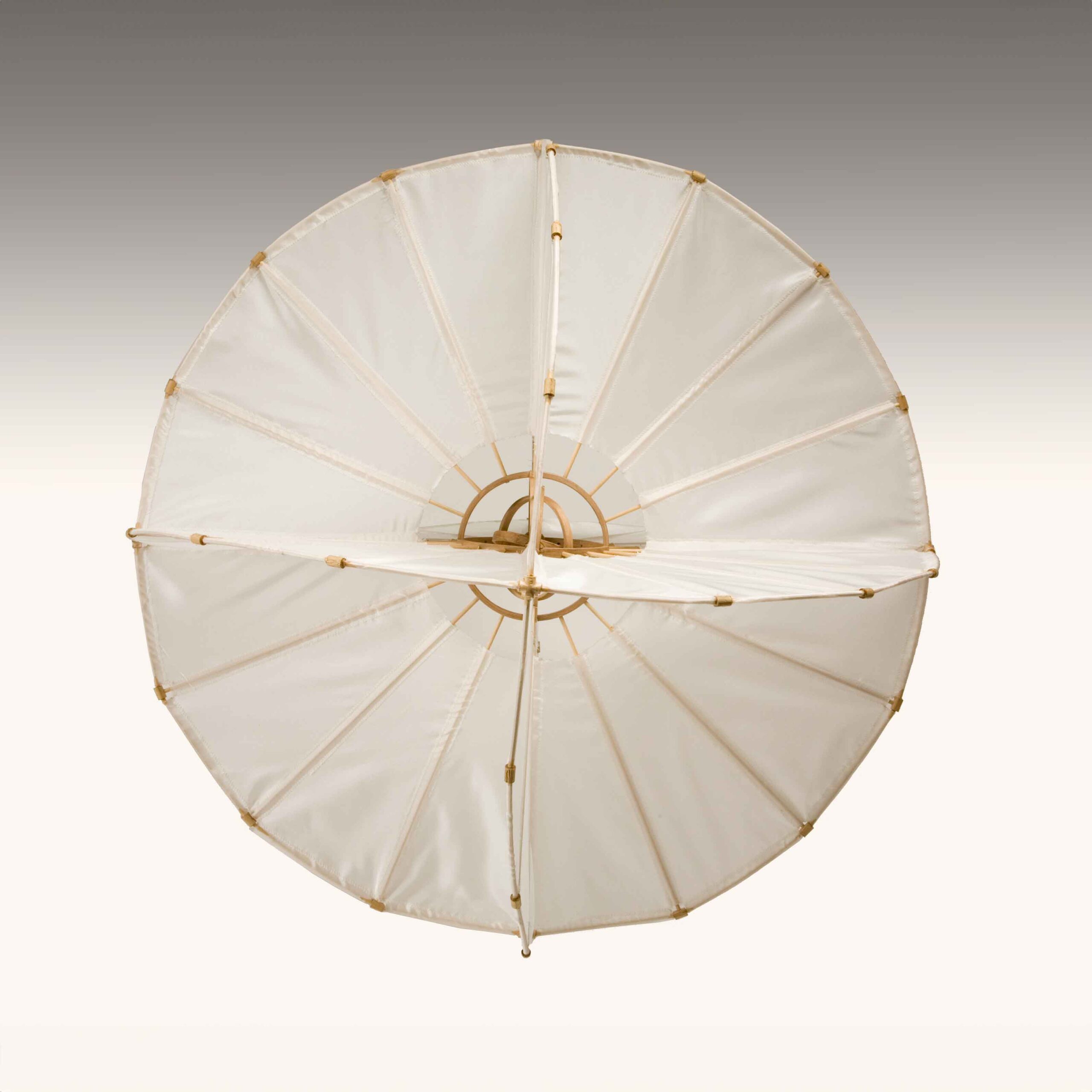
Flying sphere
Università di Firenze, Facoltà di Ingegneria, Dipartimento di Meccanica e Tecnologie industriali, Etruria Musei
2010
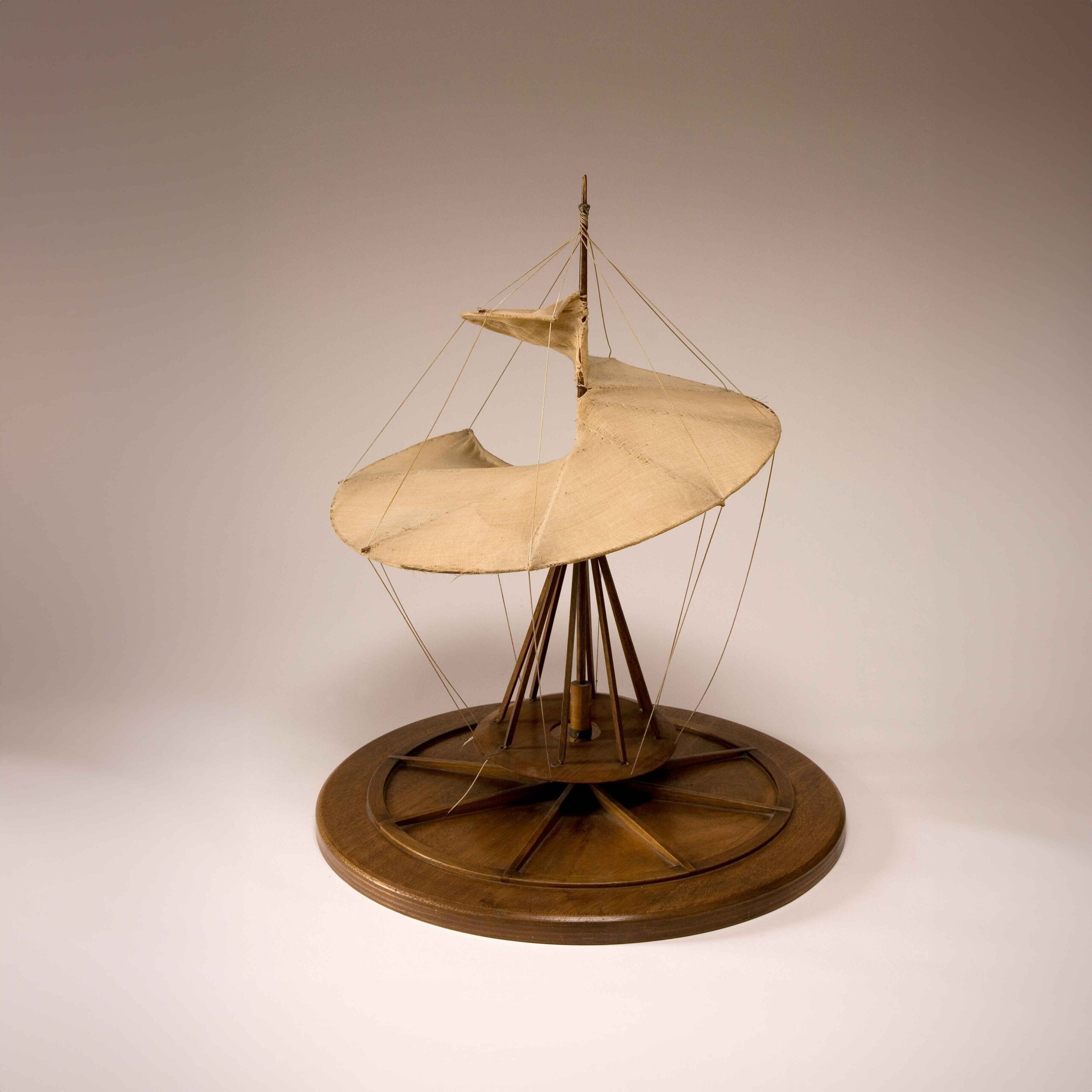
Aerial screw
Scuola di Costruzioni ed Esperienze Aeronautiche di Guidonia
1938
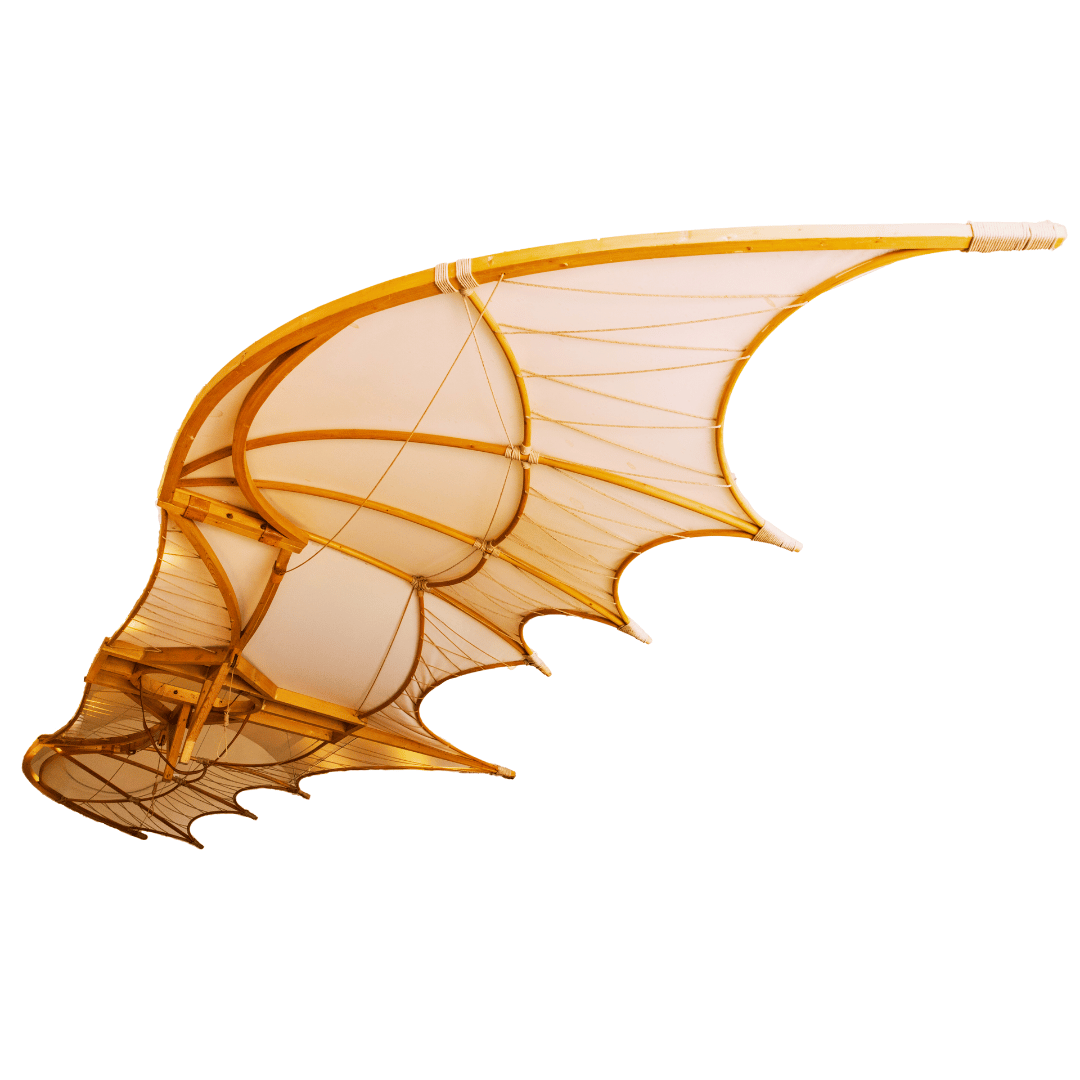
Large jointed wing
Fausto Colombo, IBM Italia, Giovanni Sacchi
1983
Mechanisms and instruments
In his drawings, the individual machine elements—such as the screw, the toothed or pinion wheel, the spool, the pulley, and the springs—combine with each other to create mechanisms and tools capable of performing more or less complex operations.
The study of motion and its transmission led Leonardo to conceive pulley systems for lifting heavy loads, mechanisms for motion transformation, and devices to eliminate or reduce friction.
Works of the collection
12 works belongs to this collection
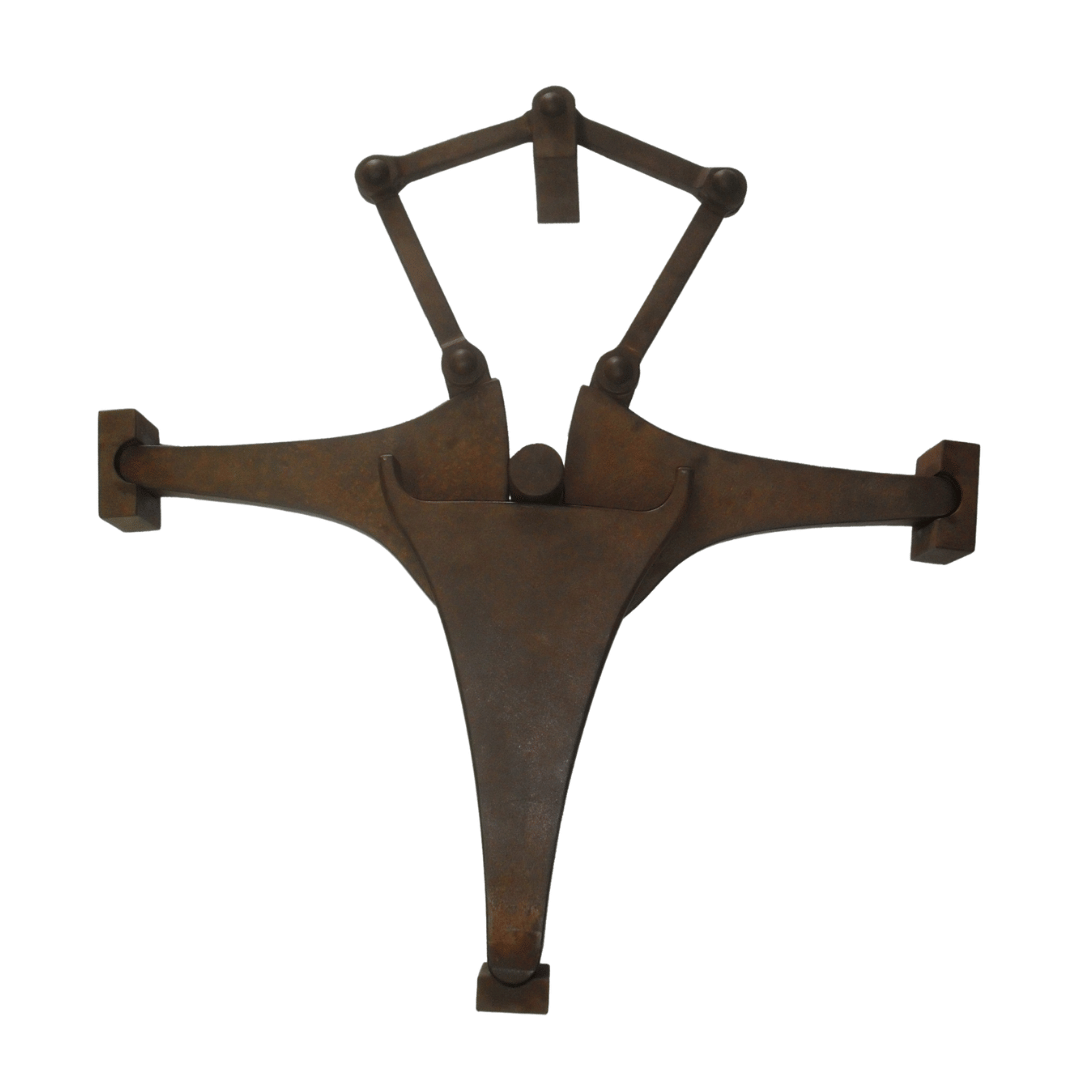
Anti-friction arrangement for the Mutte
Pascal Brioist, Alexander Neuwahl, Jean-Louis Pironio
2009
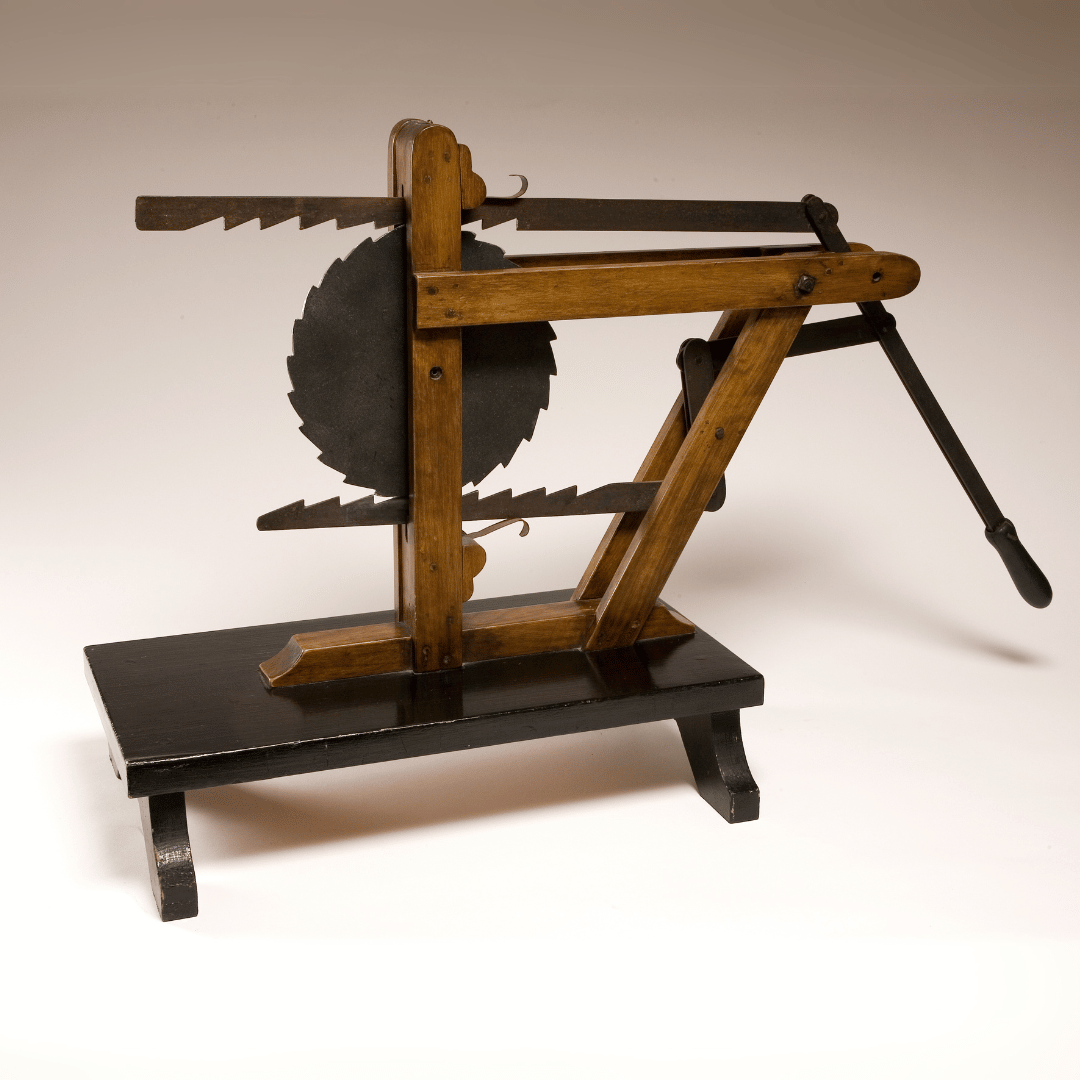
Transformation of alternating motion into circular motion
IBM Italia
1952
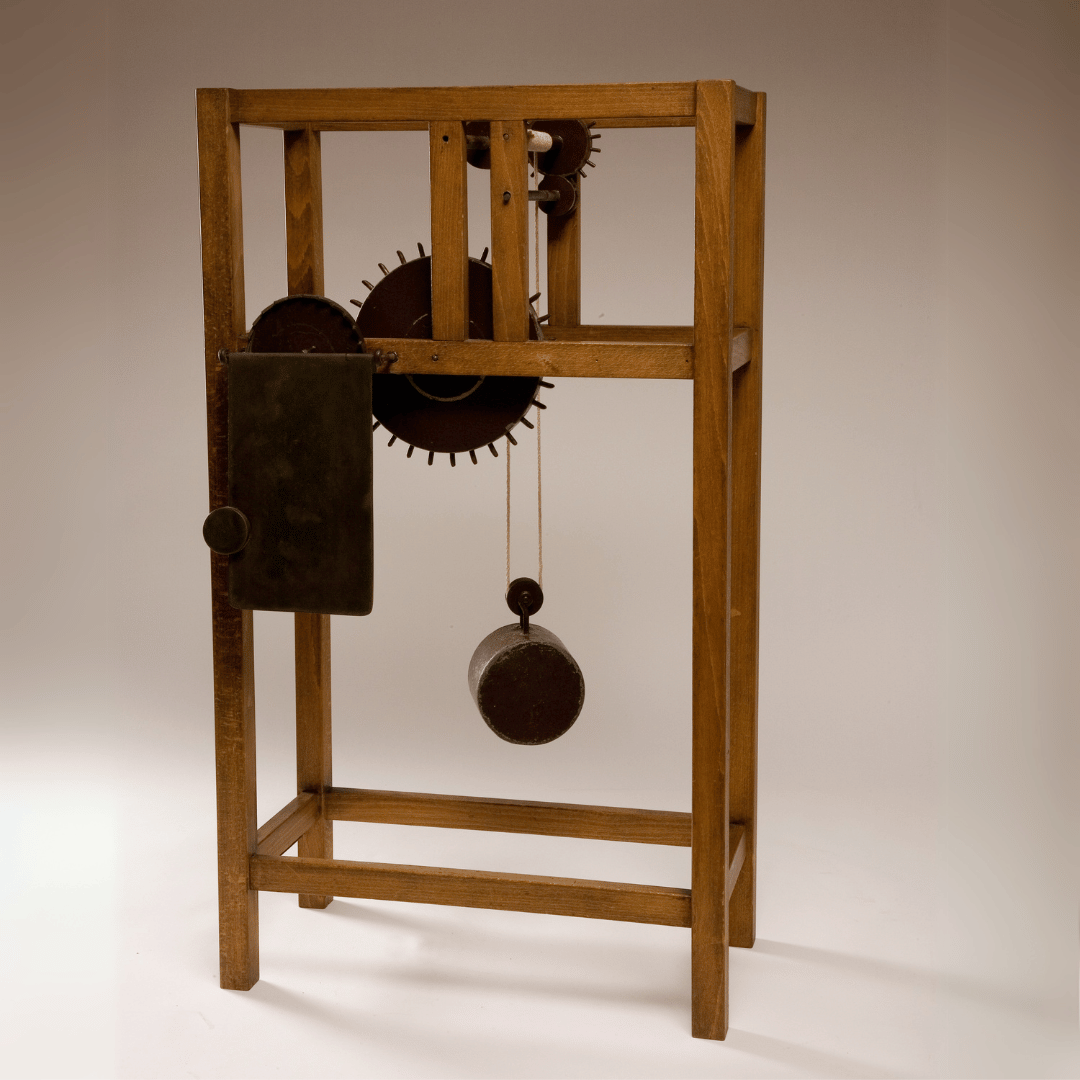
Fan
Luigi Boldetti
1964
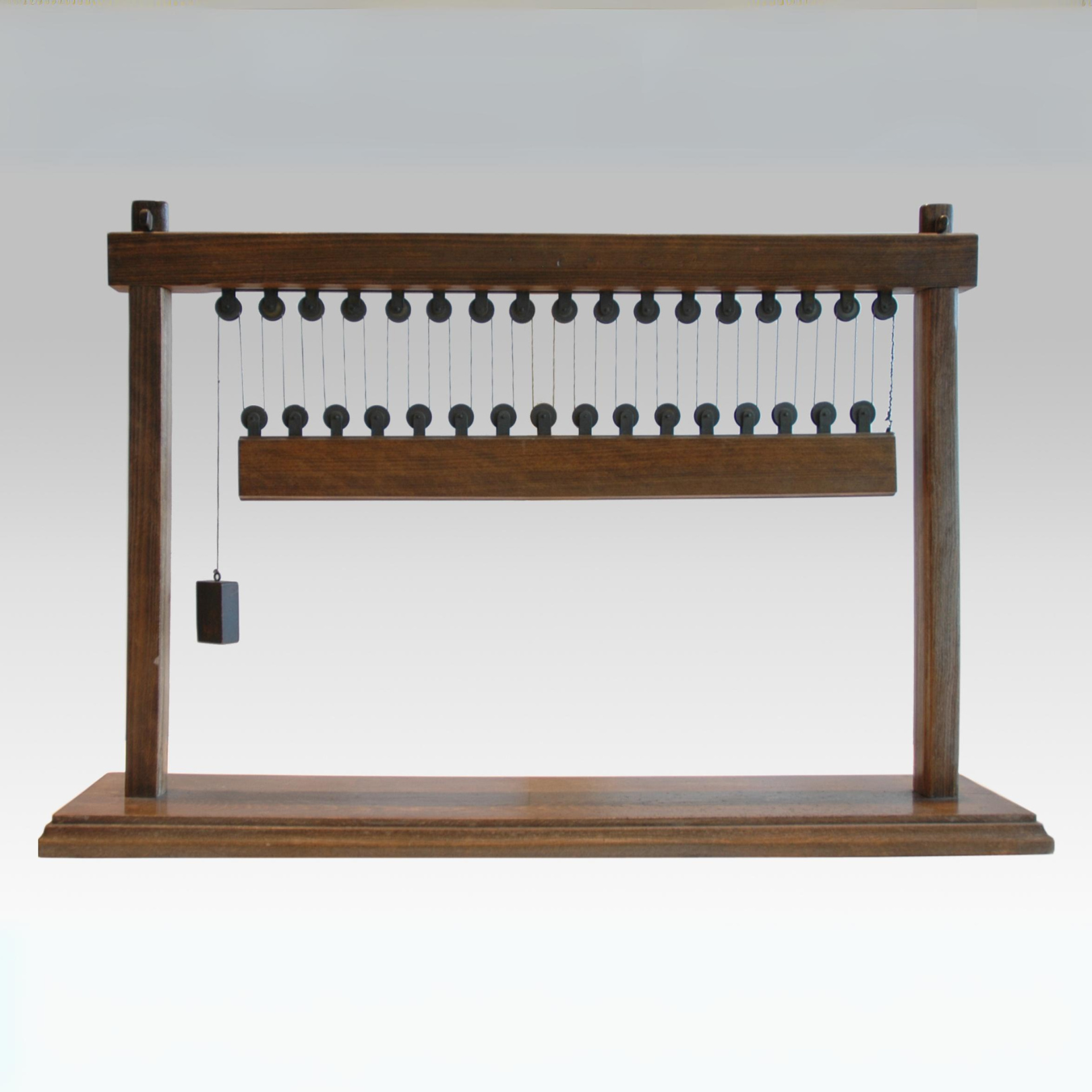
Composite pulling
Luigi Boldetti
1979
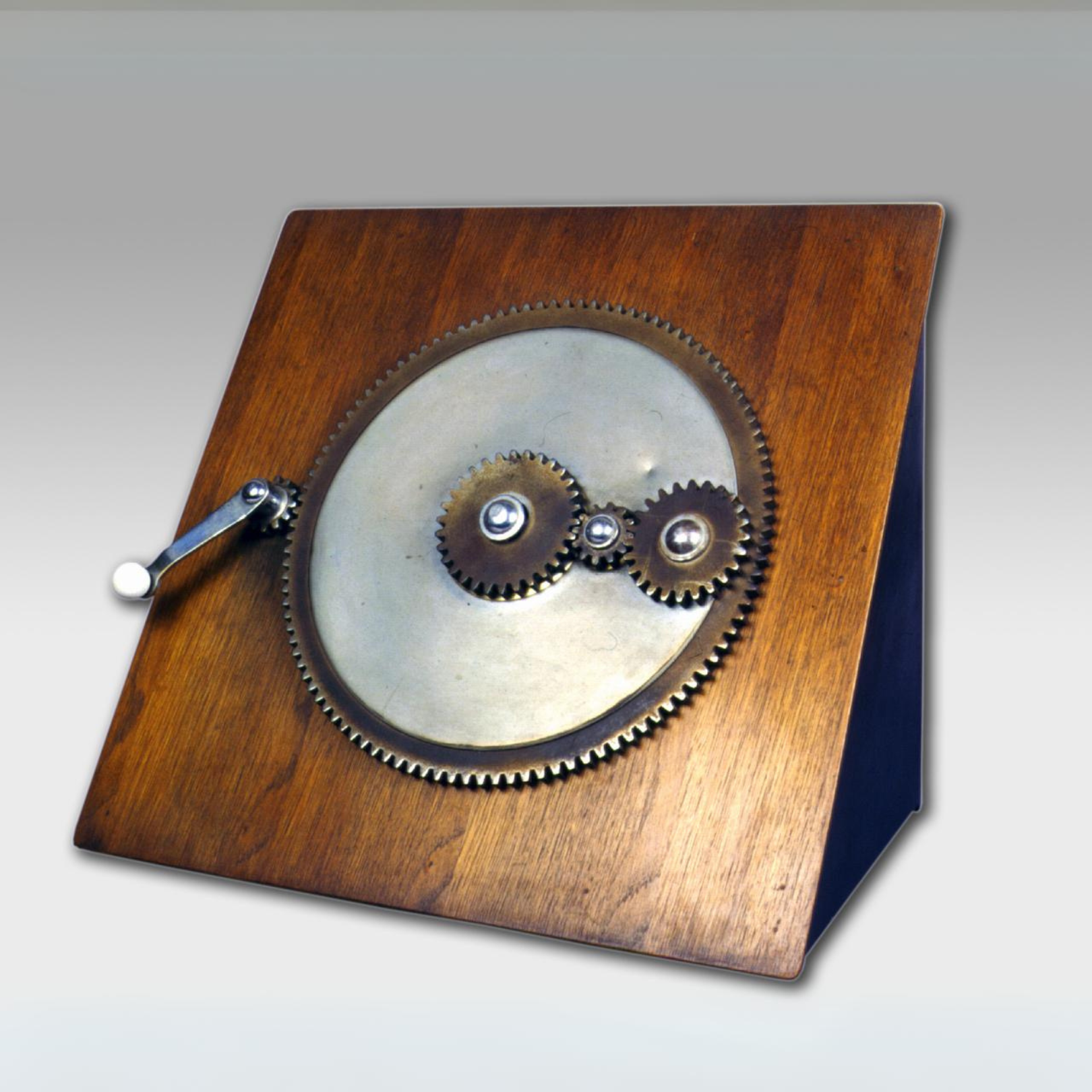
Study for an epicyclic gearing system
IBM Italia
1952
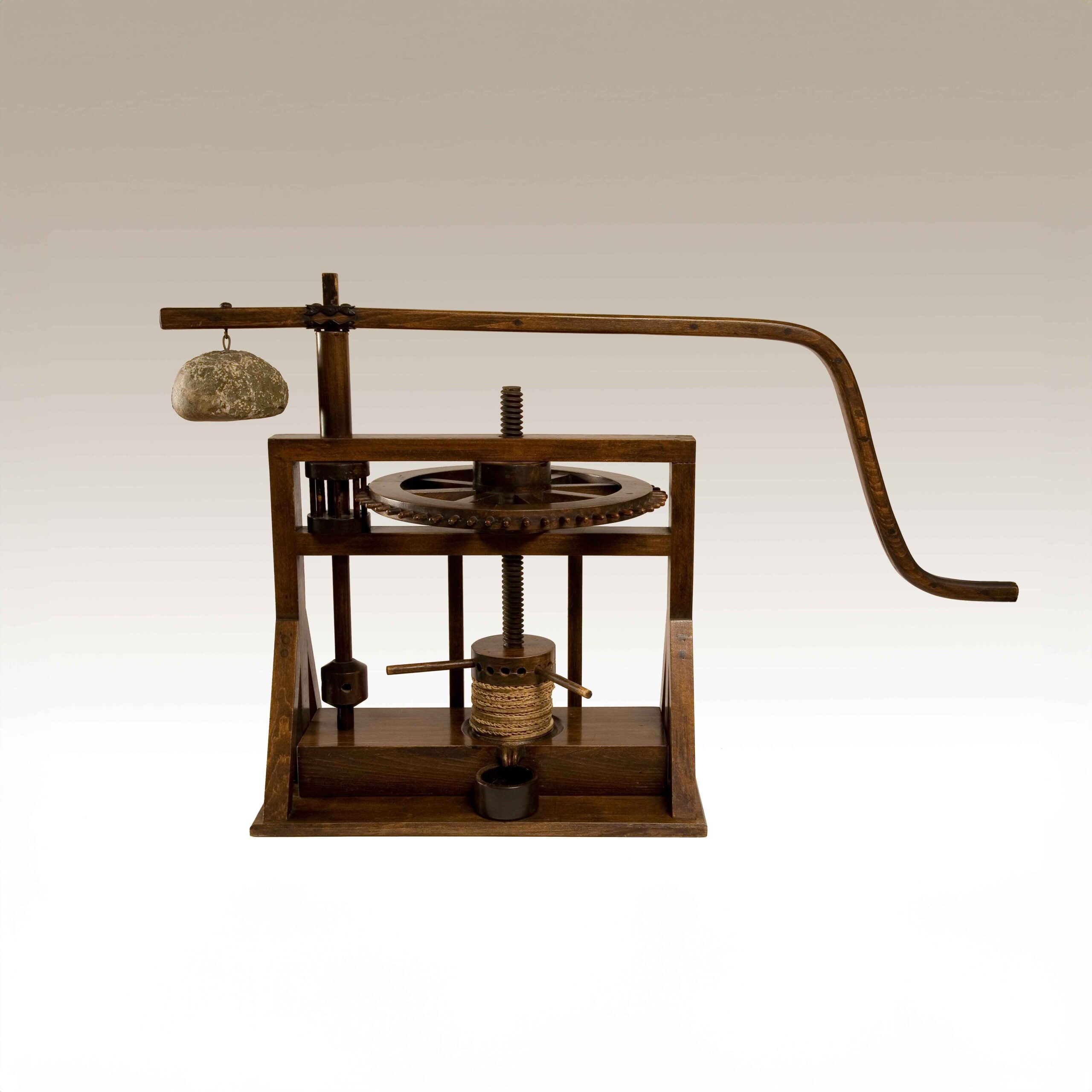
Olive oil press
Luigi Boldetti
1967
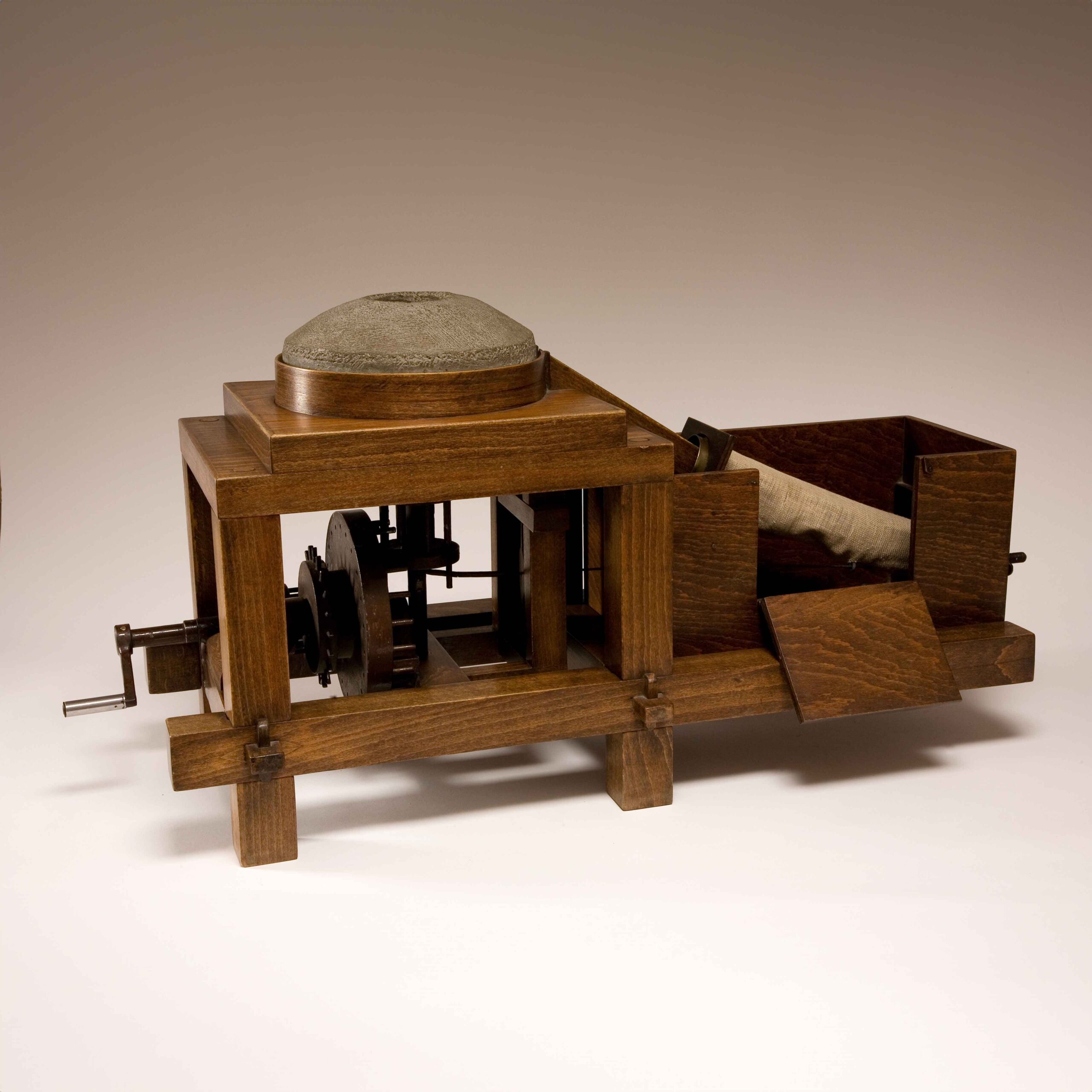
Mill with sifting sack
Luigi Boldetti
1972
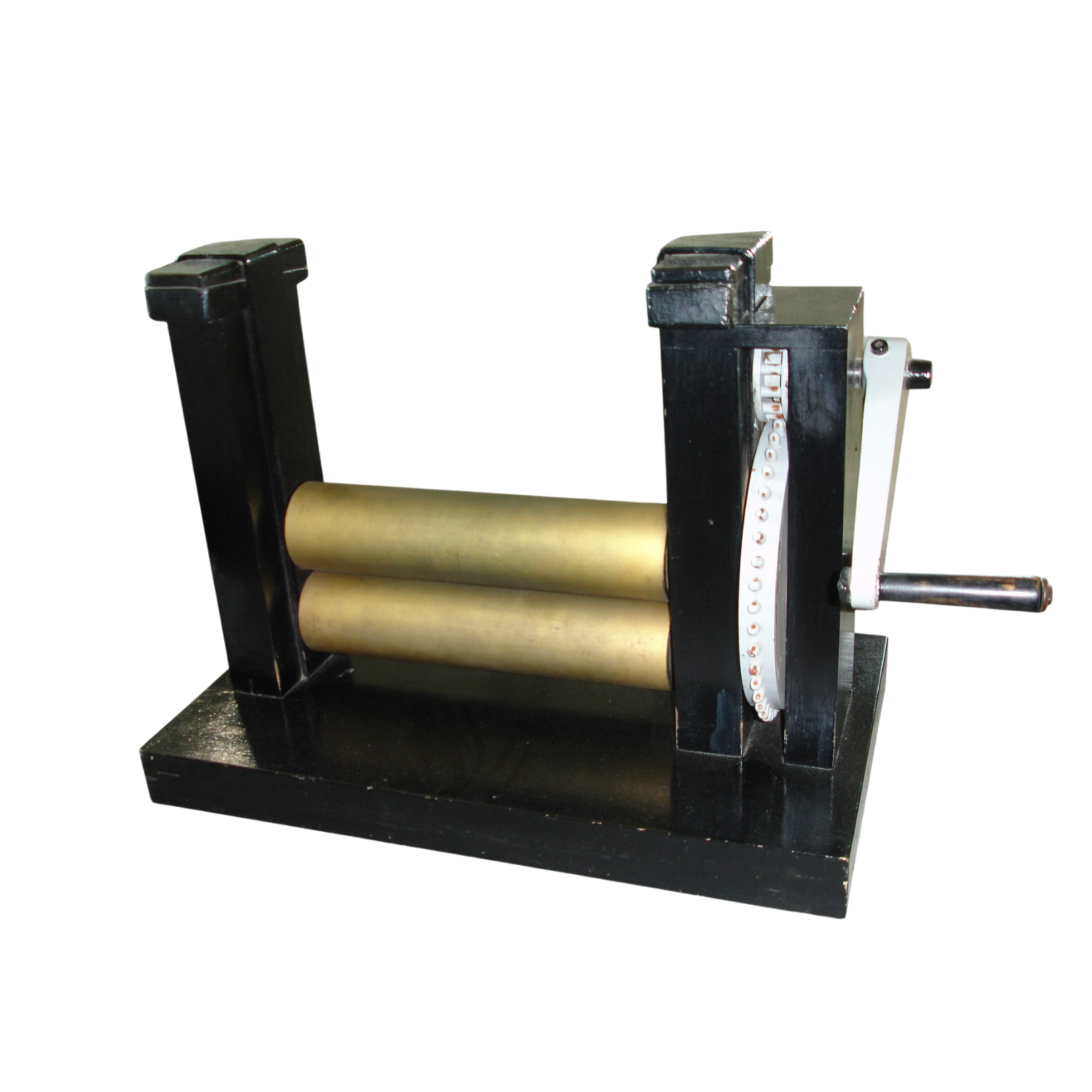
Rolling mill
IBM Italia
1952
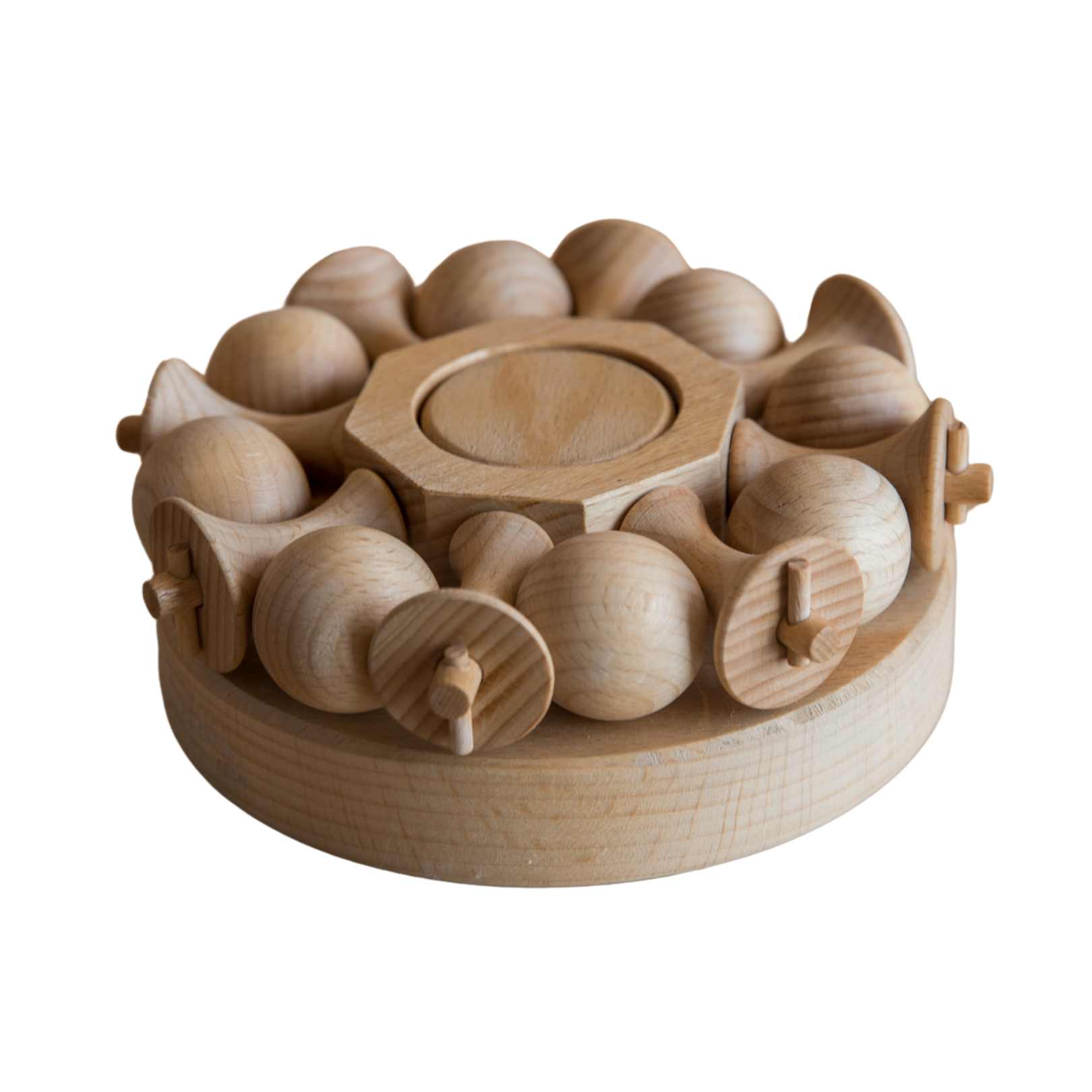
Revolving thrust bearings
Etruria Musei
2010
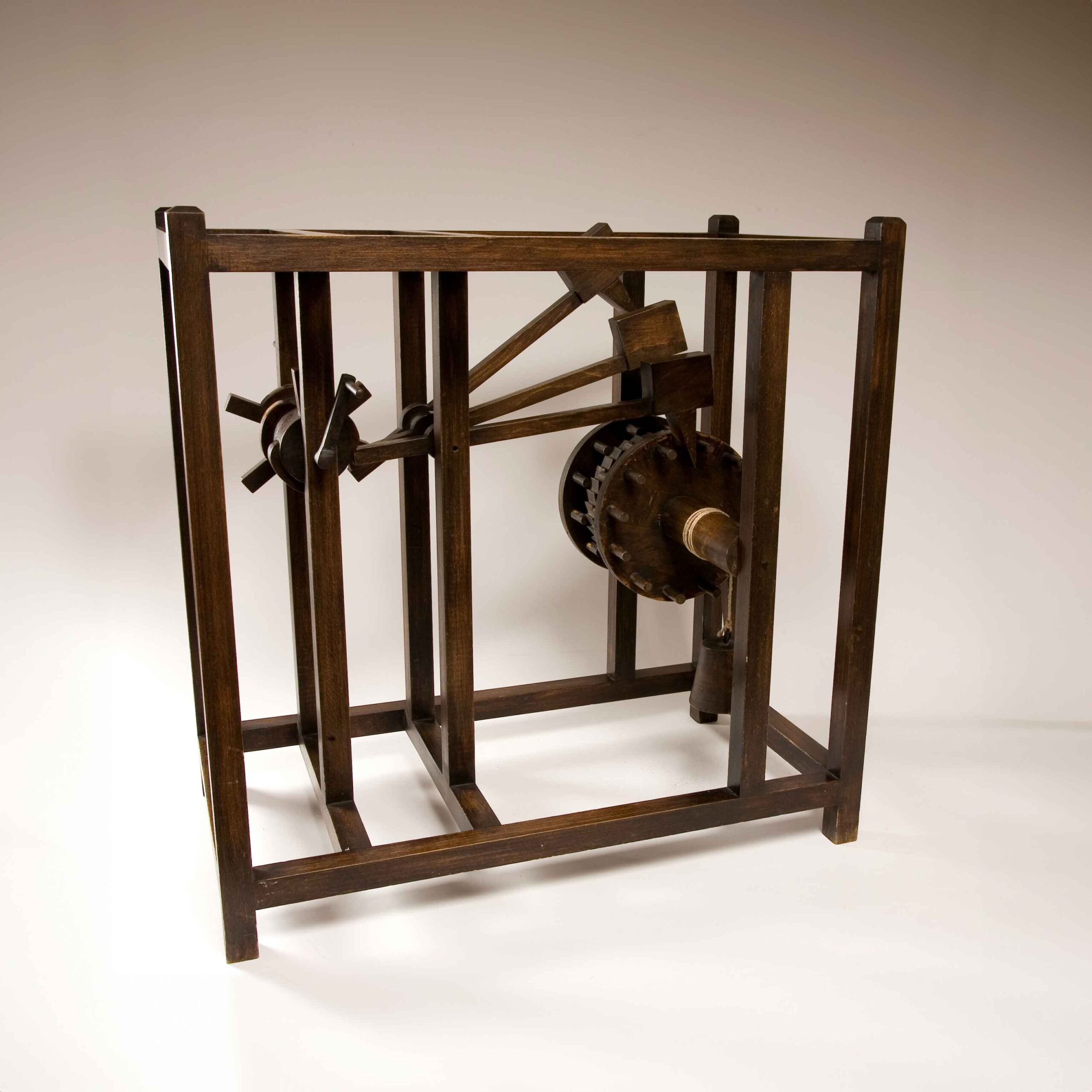
Hammer winch
Luigi Boldetti
1968
Bridges
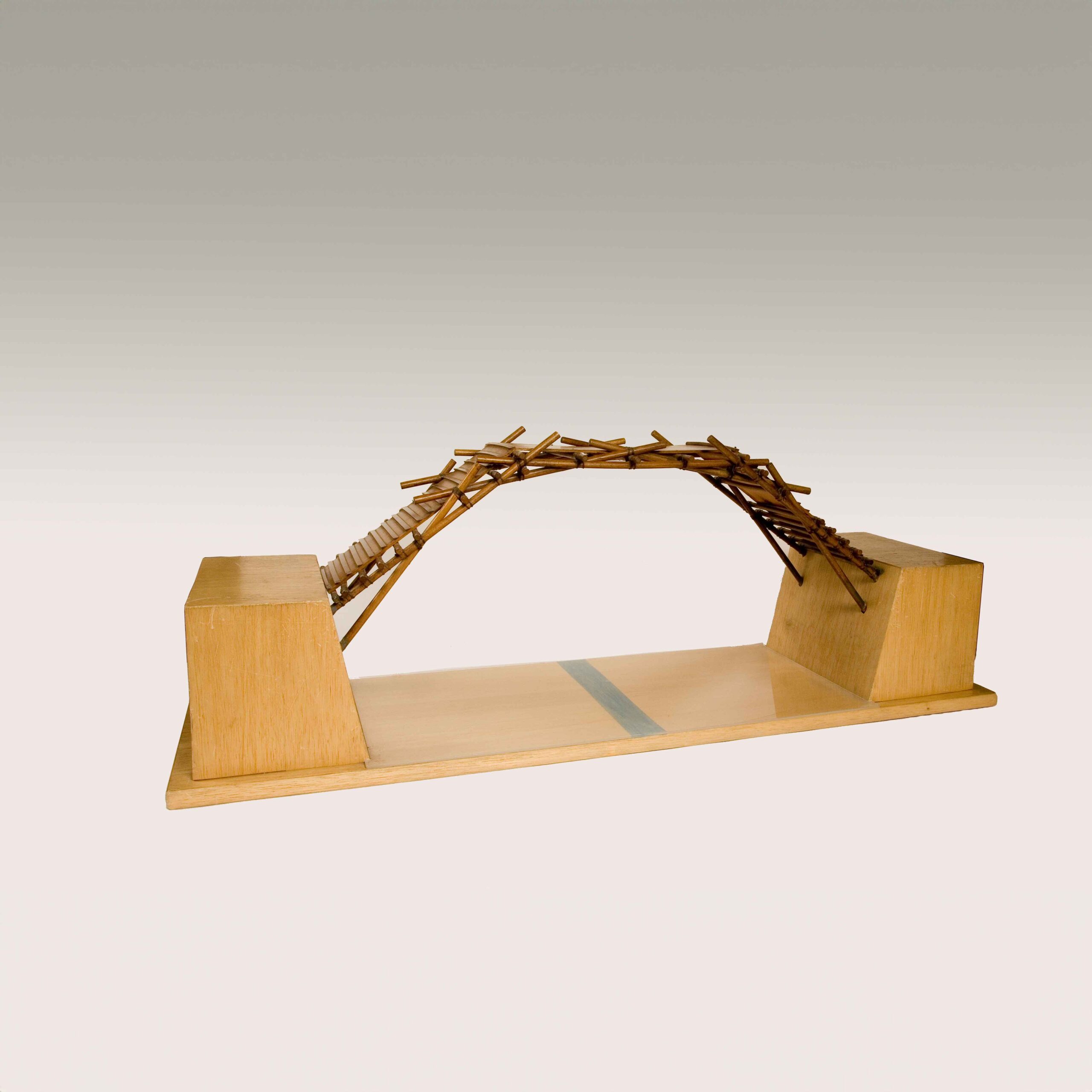
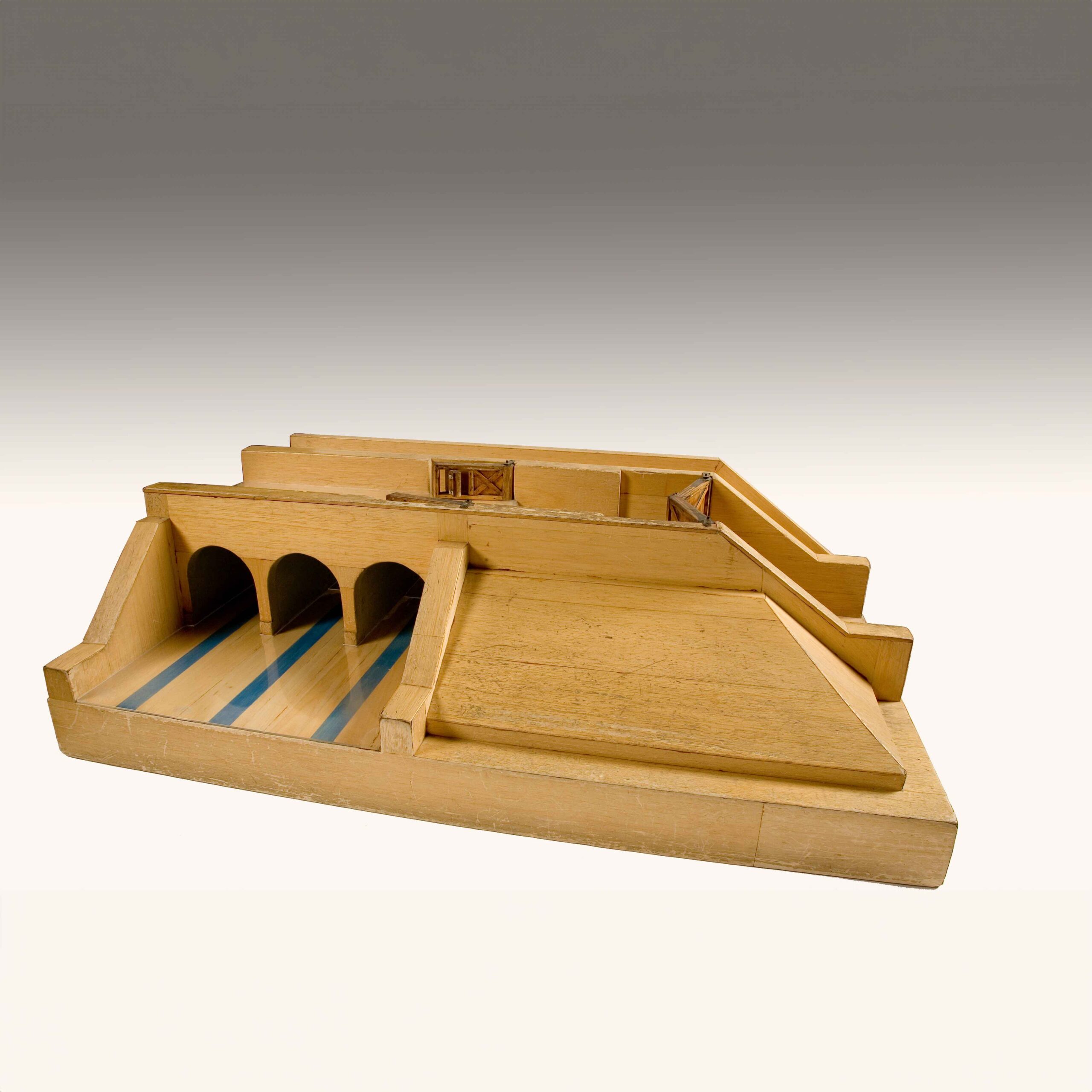
His bridges can be divided into three categories based on their intended function: military-use bridges, such as the quickly constructed bridge; those designed for an utopian ideal city, like the double-deck bridge and the drawbridge; and finally, commissioned bridges, including the canal bridge with locks requested by the City of Florence to plan the diversion of the Arno River during the war against Pisa.
Works of the collection
2 works belongs to this collection
War machines
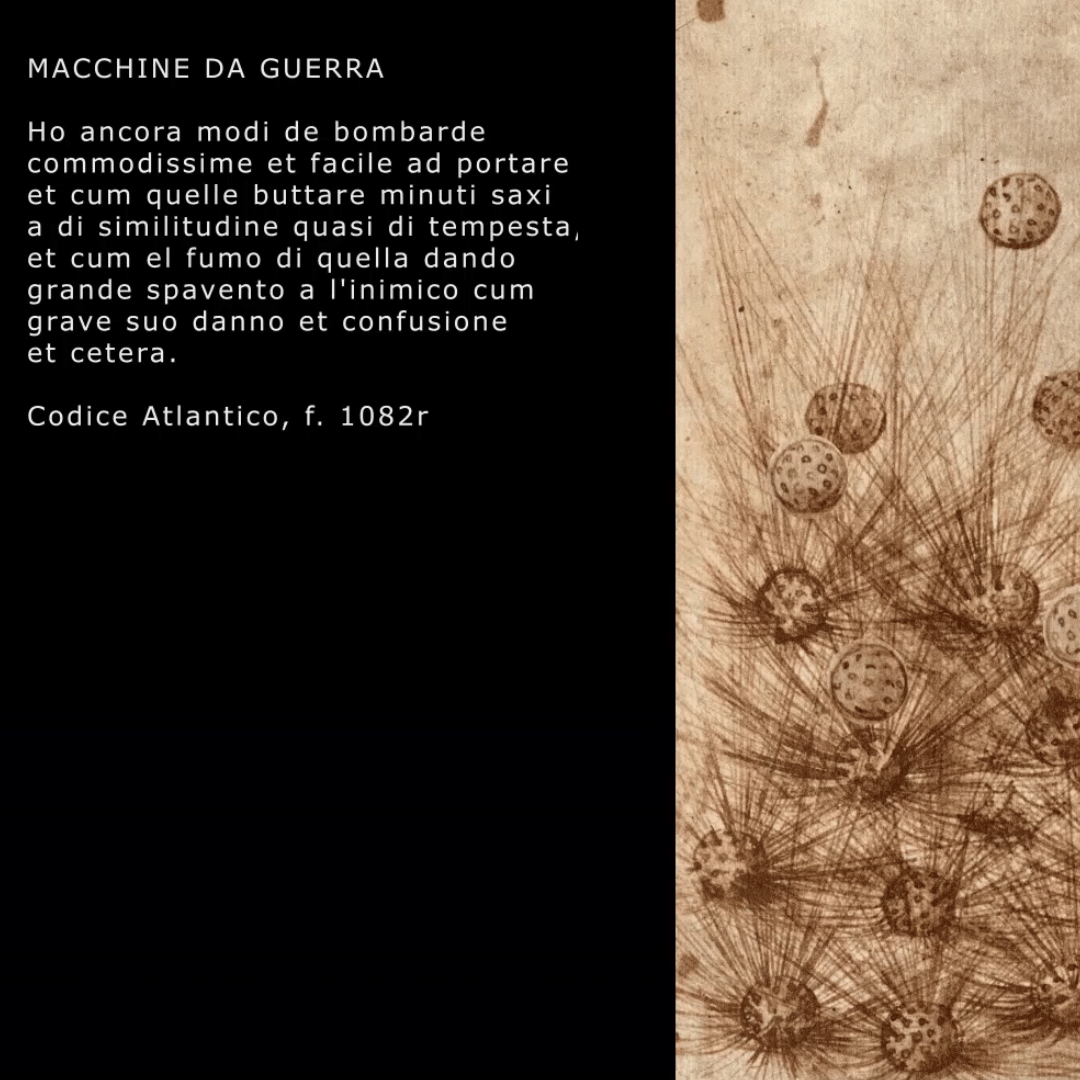
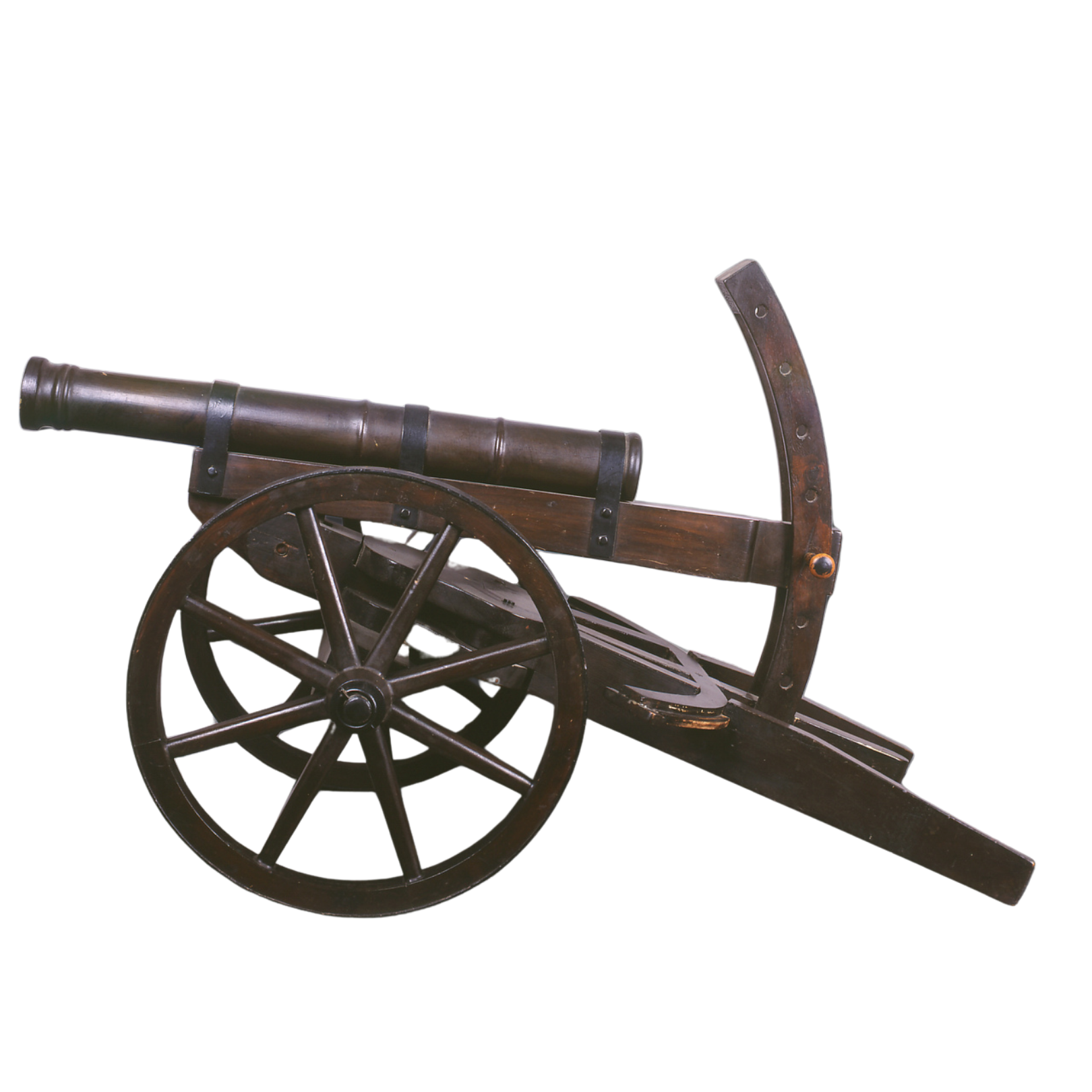
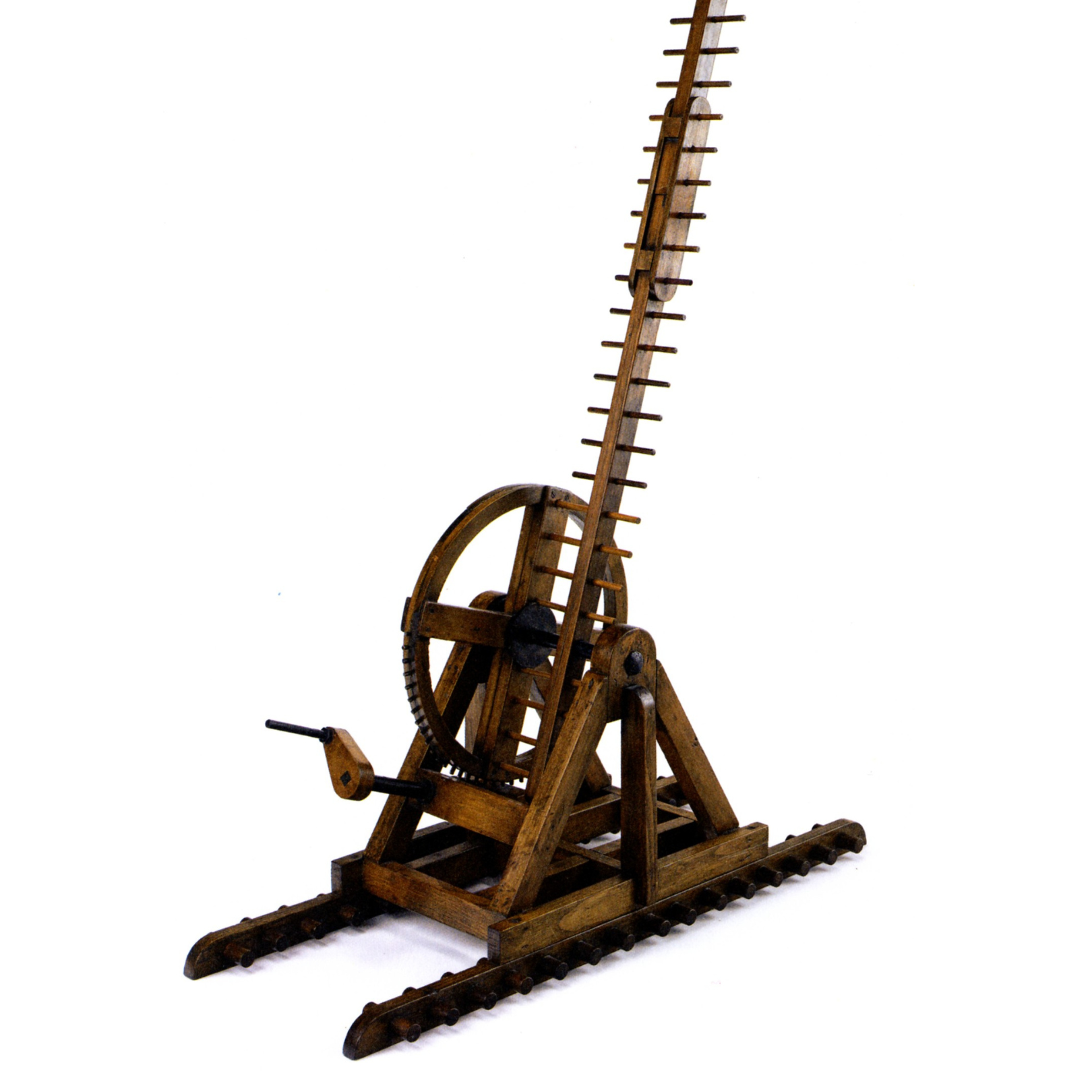
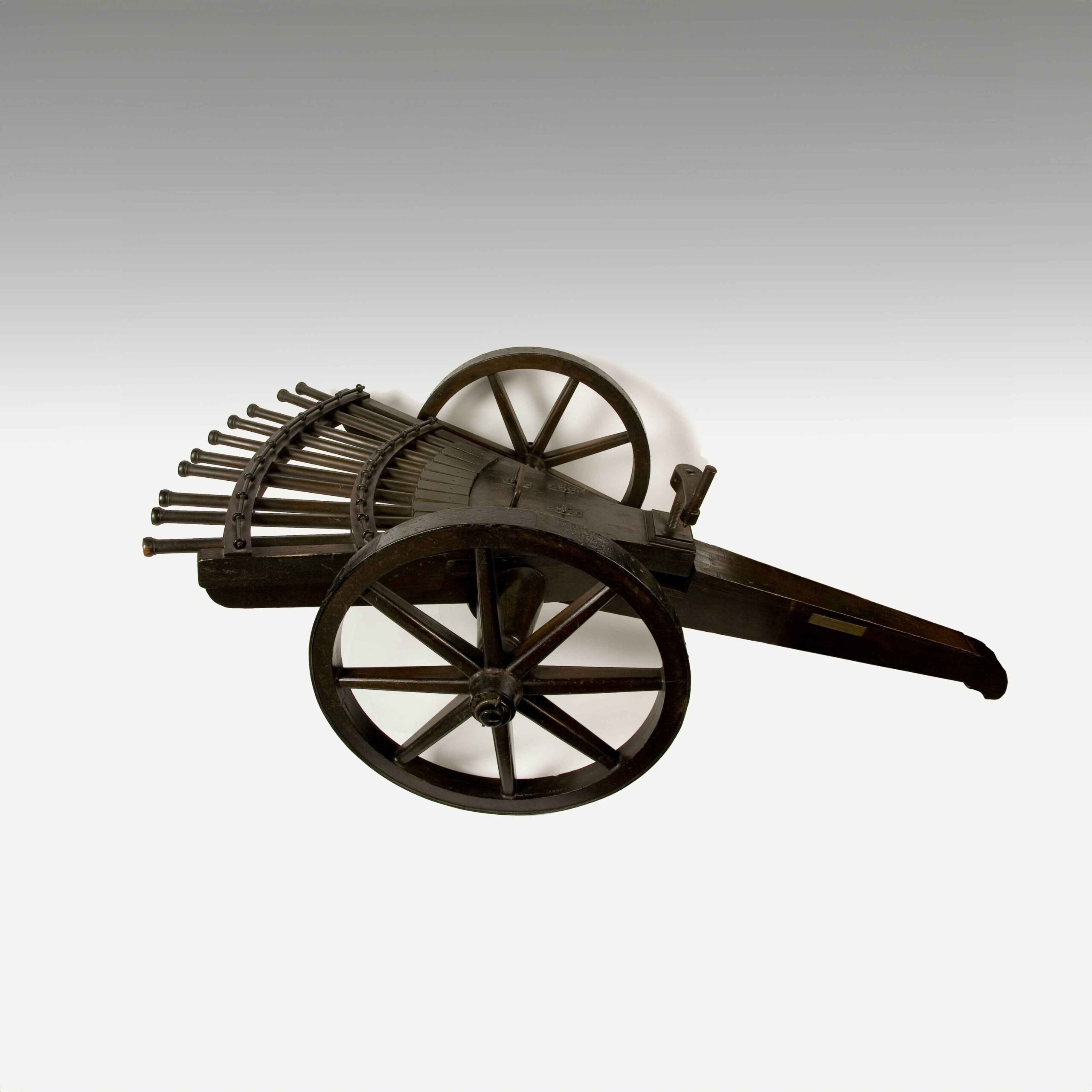
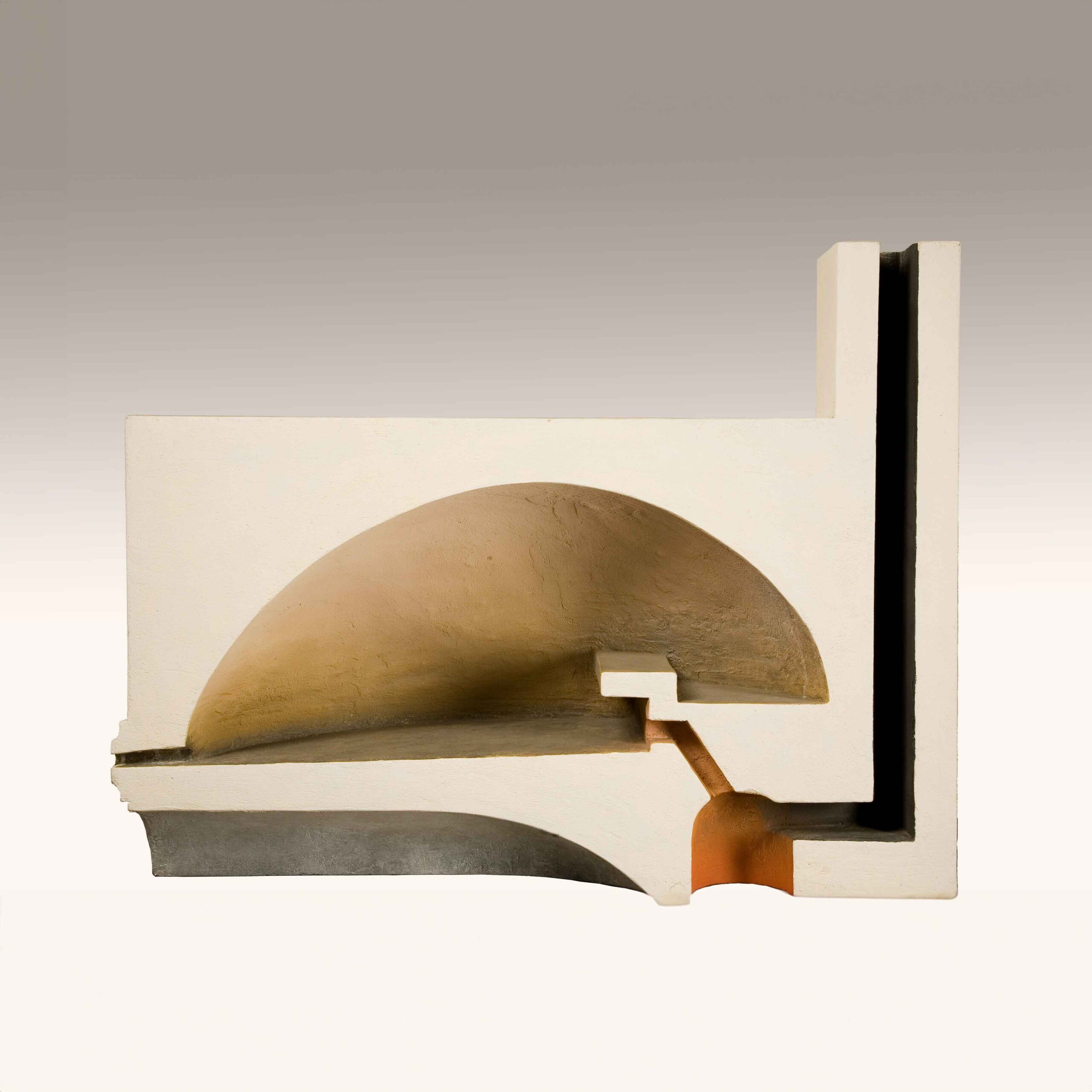
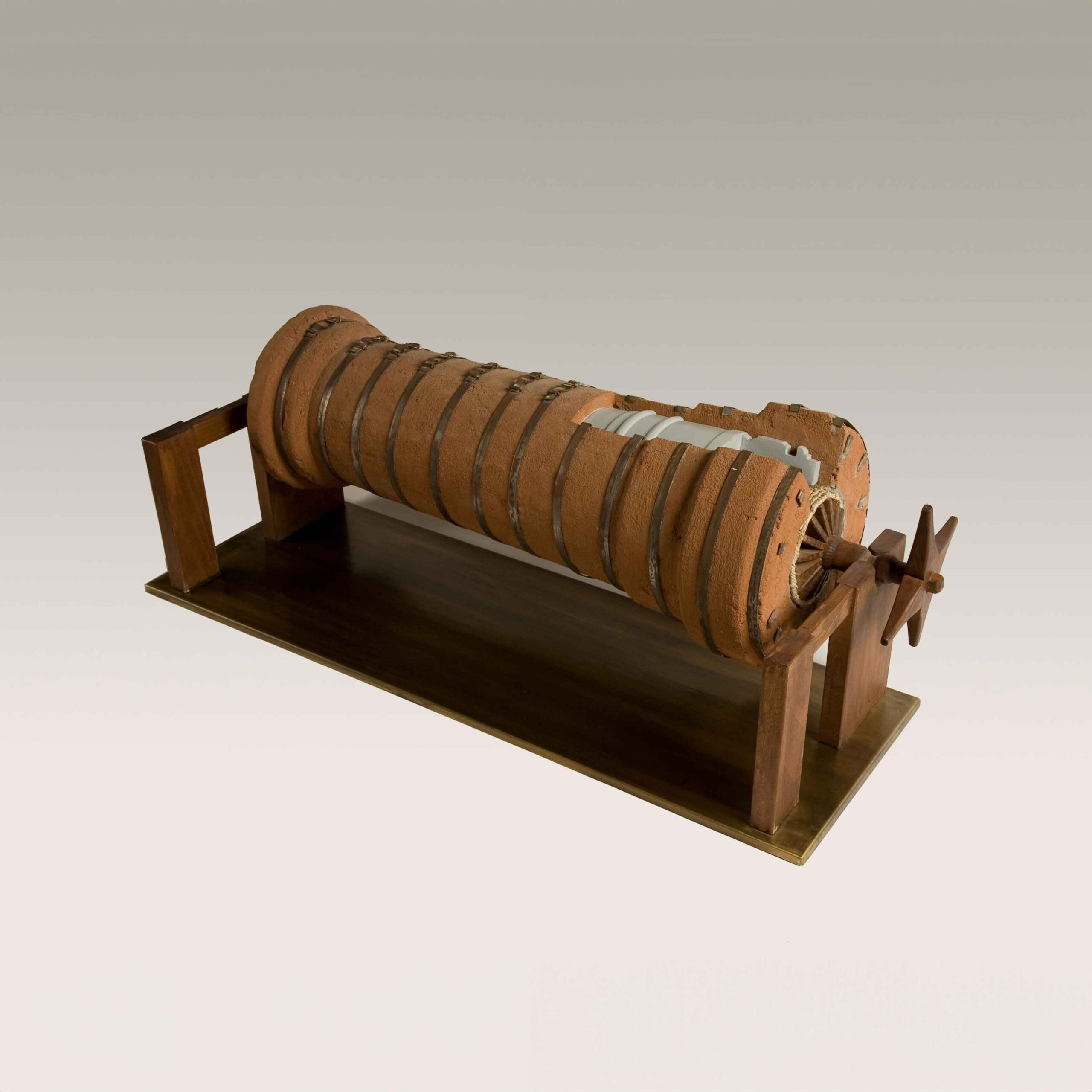
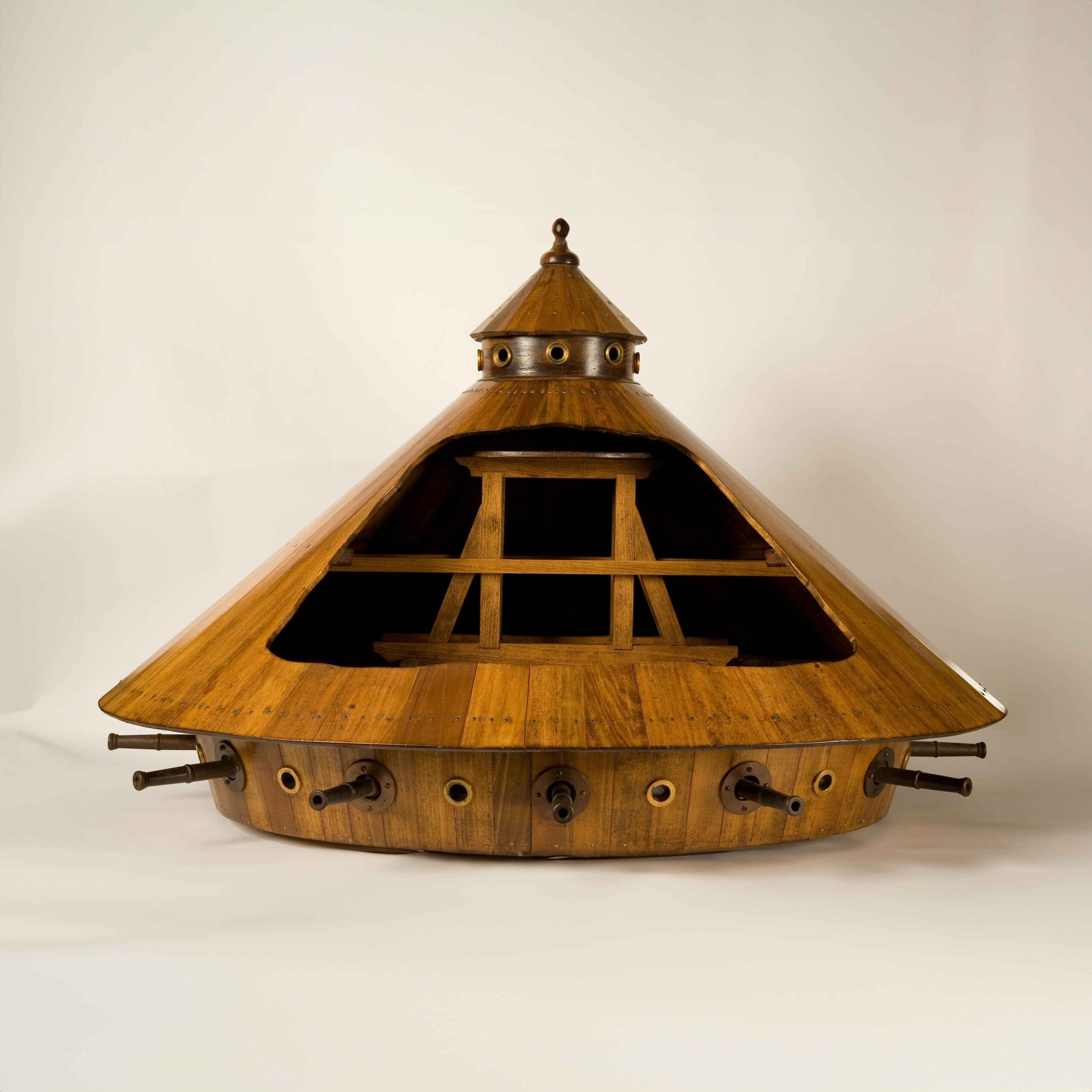
In 1482 Leonardo left Florence for Milan. It was at the court of Ludovico il Moro that he showed a keen interest in war techniques and weaponry, focusing on researching solutions to enhance shooting accuracy, firepower, and the speed of loading firearms.
In his notebooks, alongside drawings of powerful projectile weapons and systems to overcome obstacles during sieges, we find the development of new procedures for casting modular artillery, studies of multi-barrel guns, aiming and recoil-control systems, and even the innovative design of a steam-powered cannon.
The war machines section, presenting Leonardo’s military inventions, bears witness to the transformation at the end of the 15th century of warfare techniques compared to the still medieval military tradition, in parallel with the evolution of fortification systems.
Works of the collection
7 works belongs to this collection
Machines for transforming the territory
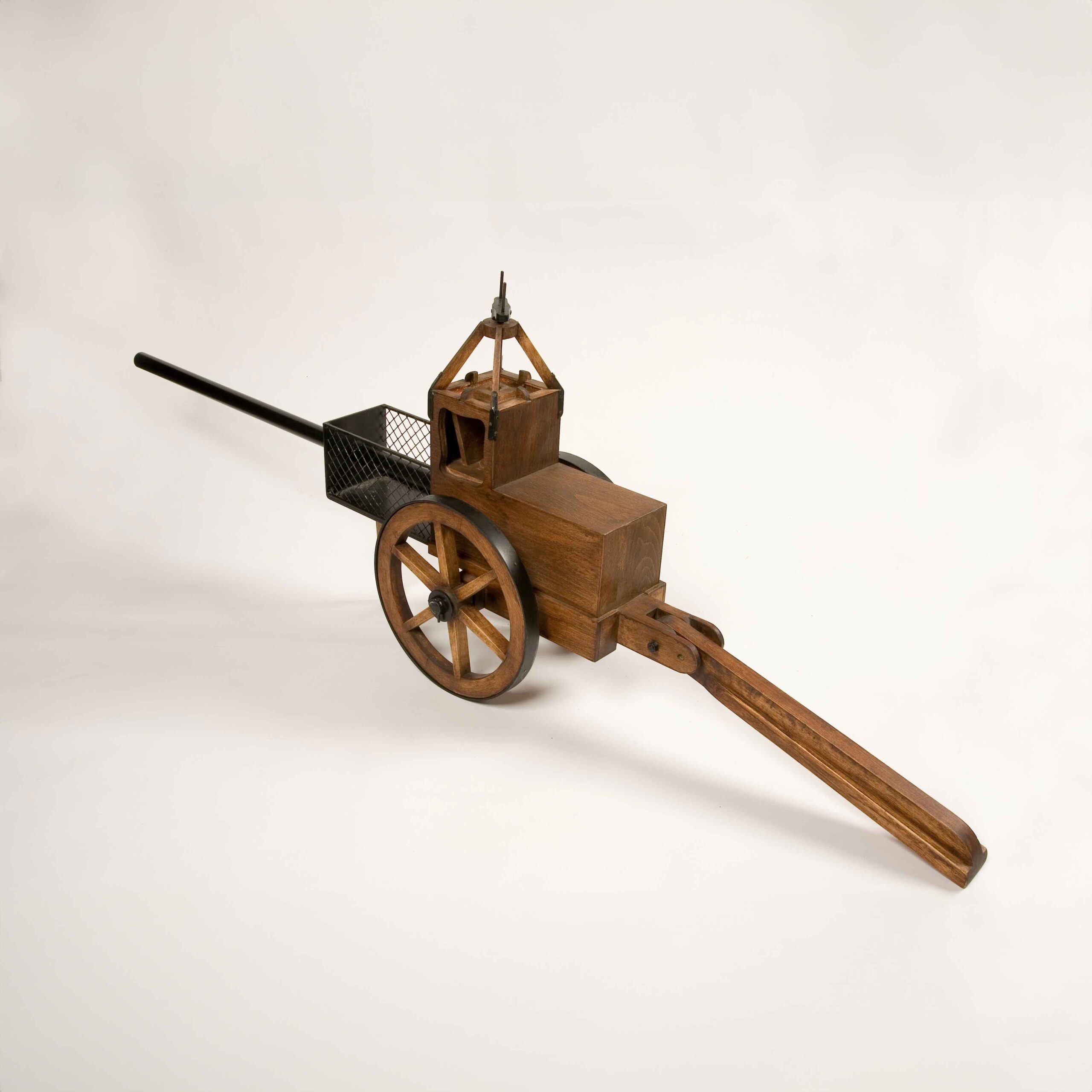
Reinforcing a riverbank to protect a settlement from flooding, reshaping the profile of a hill to facilitate the expansion of a town, or constructing a canal to allow for trade and the irrigation of farmland—these are all examples of humankind’s enduring desire to transform the landscape.
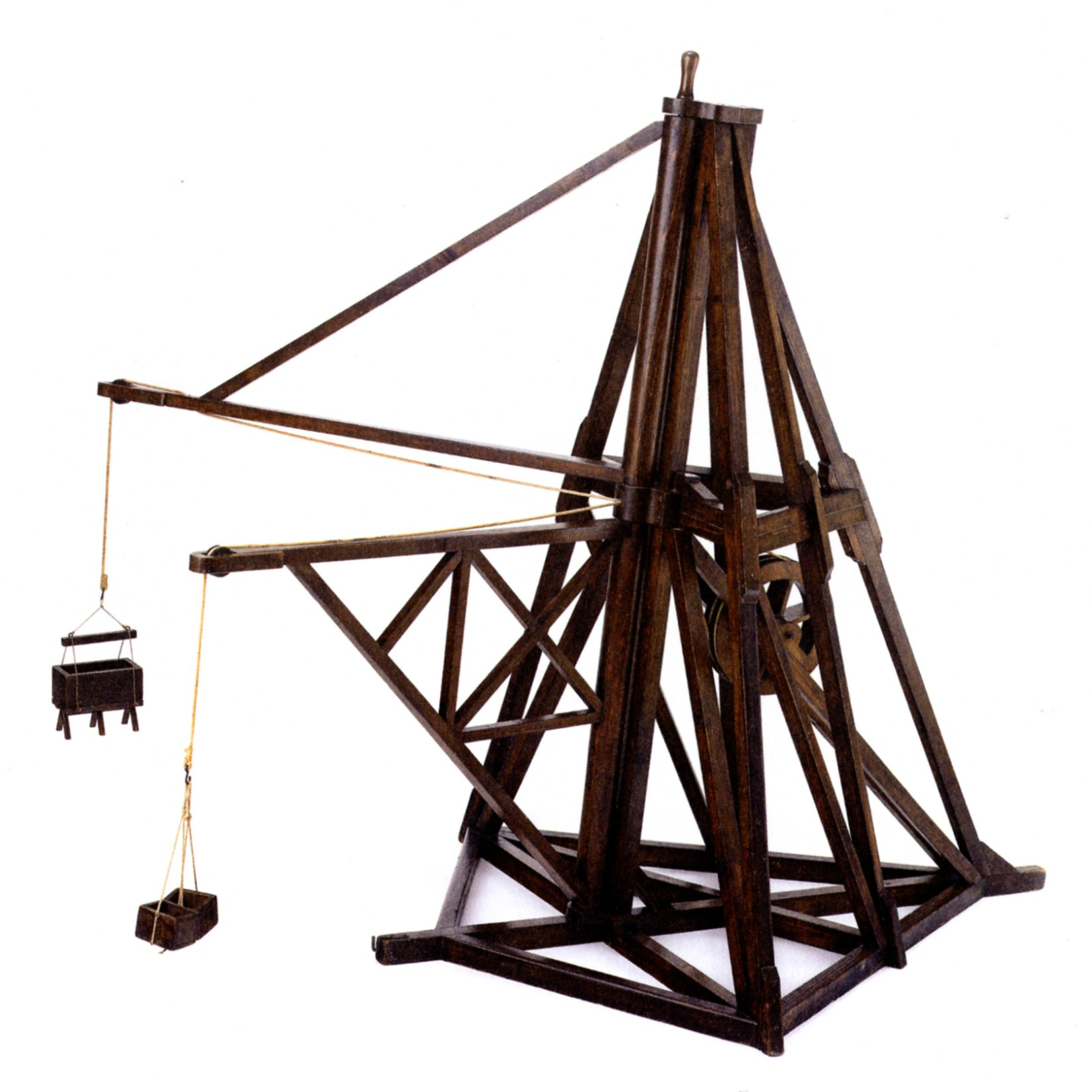
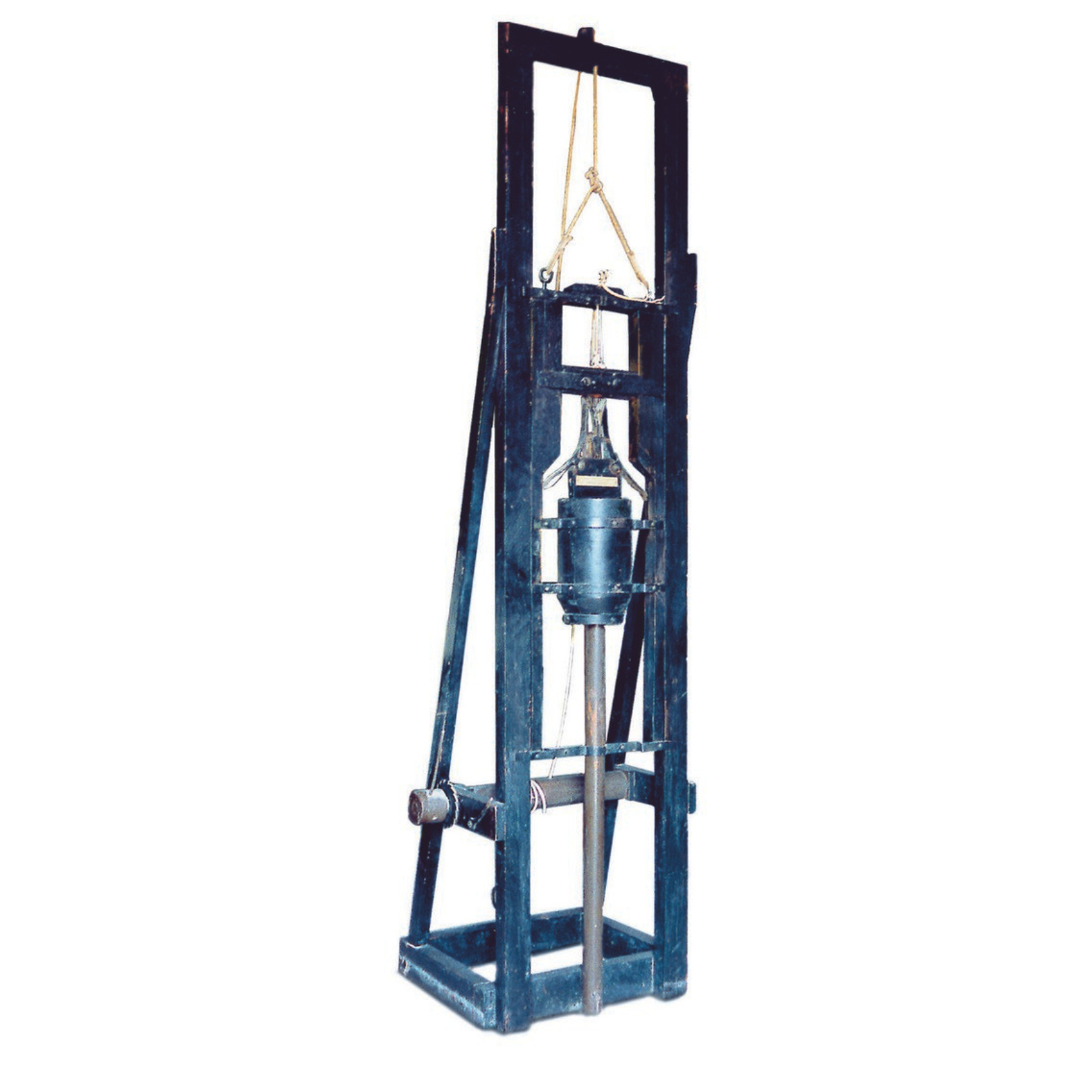
In this field of study, Leonardo—like many other Renaissance engineers—approached problems from a design perspective, taking an interest in tools of ancient origin such as the odometer, which made it possible to easily measure even great distances on land. He sought to improve machines like the pile driver, a Roman invention still widely used on Renaissance construction sites, and pushed the limits of the technology of his time by imagining gigantic machines capable of accelerating construction work like never before.
This section presents a selection of Leonardo’s designs conceived for land transformation projects, closely connected to the research he conducted as a hydraulic engineer, also featured in the museum section “Leonardo in Vinci.”
Works of the collection
3 works belongs to this collection
Carriages
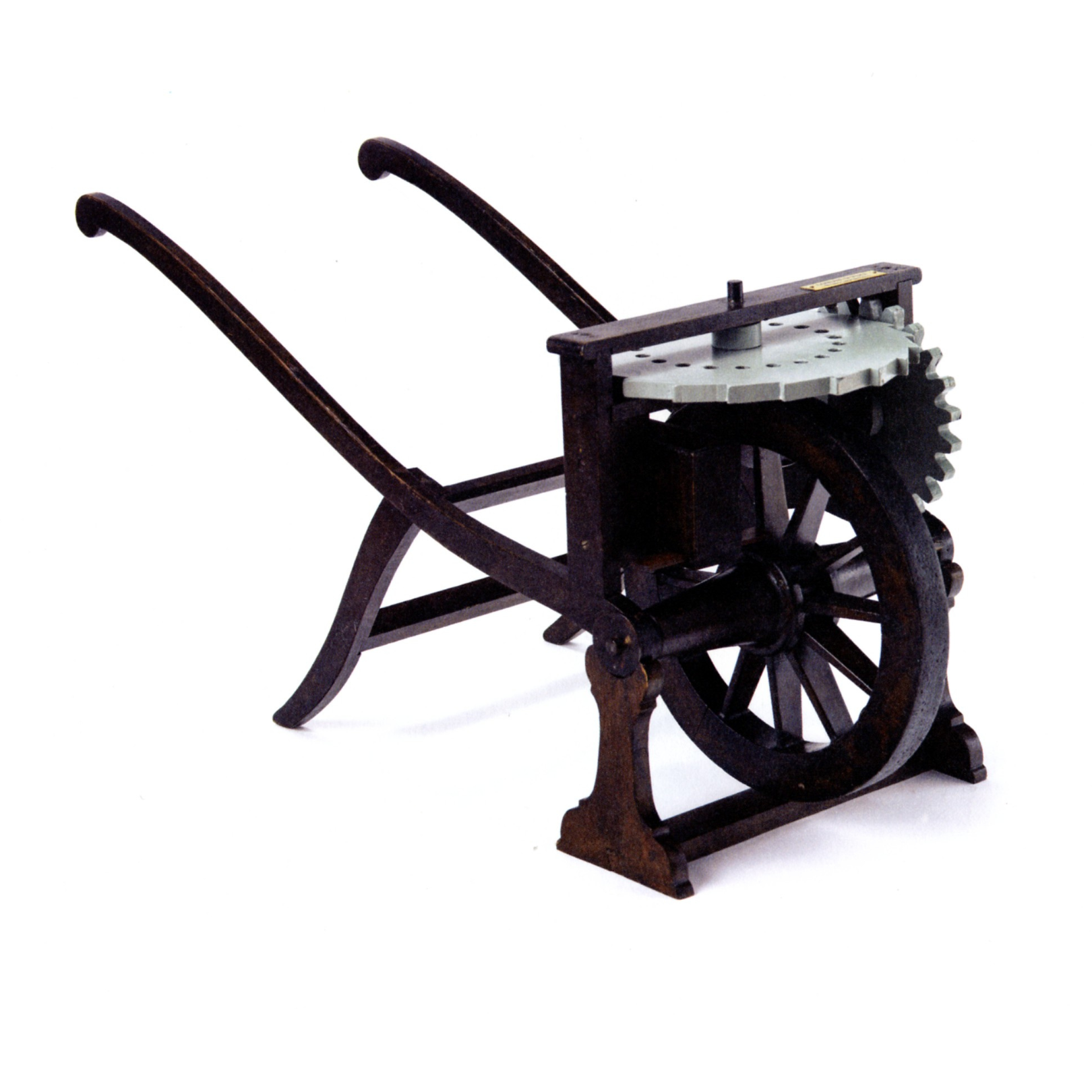
Leonardo demonstrated remarkable ingenuity in devising innovative solutions even for everyday objects, such as carts, which in his time were the most common means of transporting goods and people.
He improved their functionality and extended their operational life by inserting anti-friction devices into the wheel axles—components similar to modern bearings. These roller- or disc-shaped elements reduced traction effort and made the carts easier to pull.
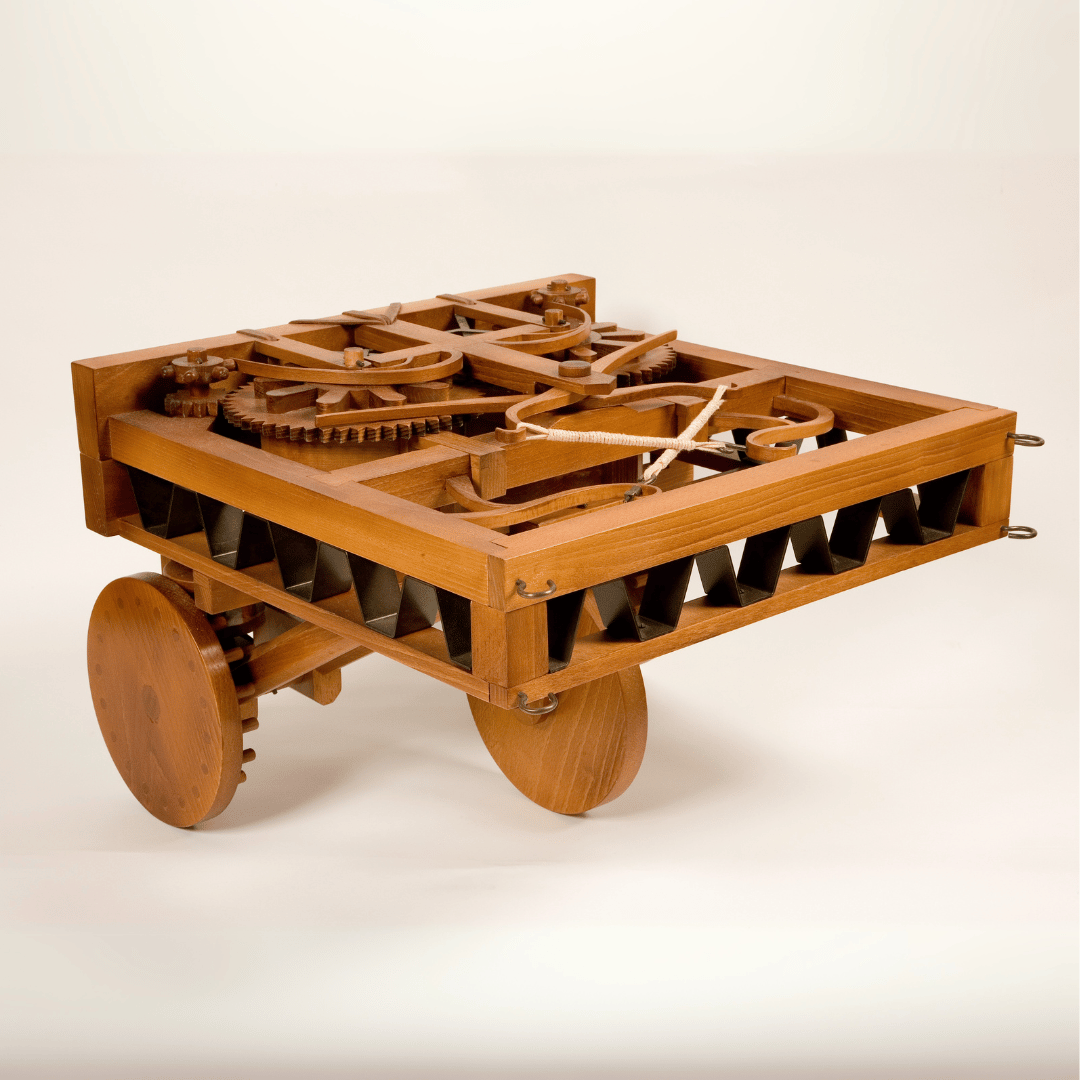
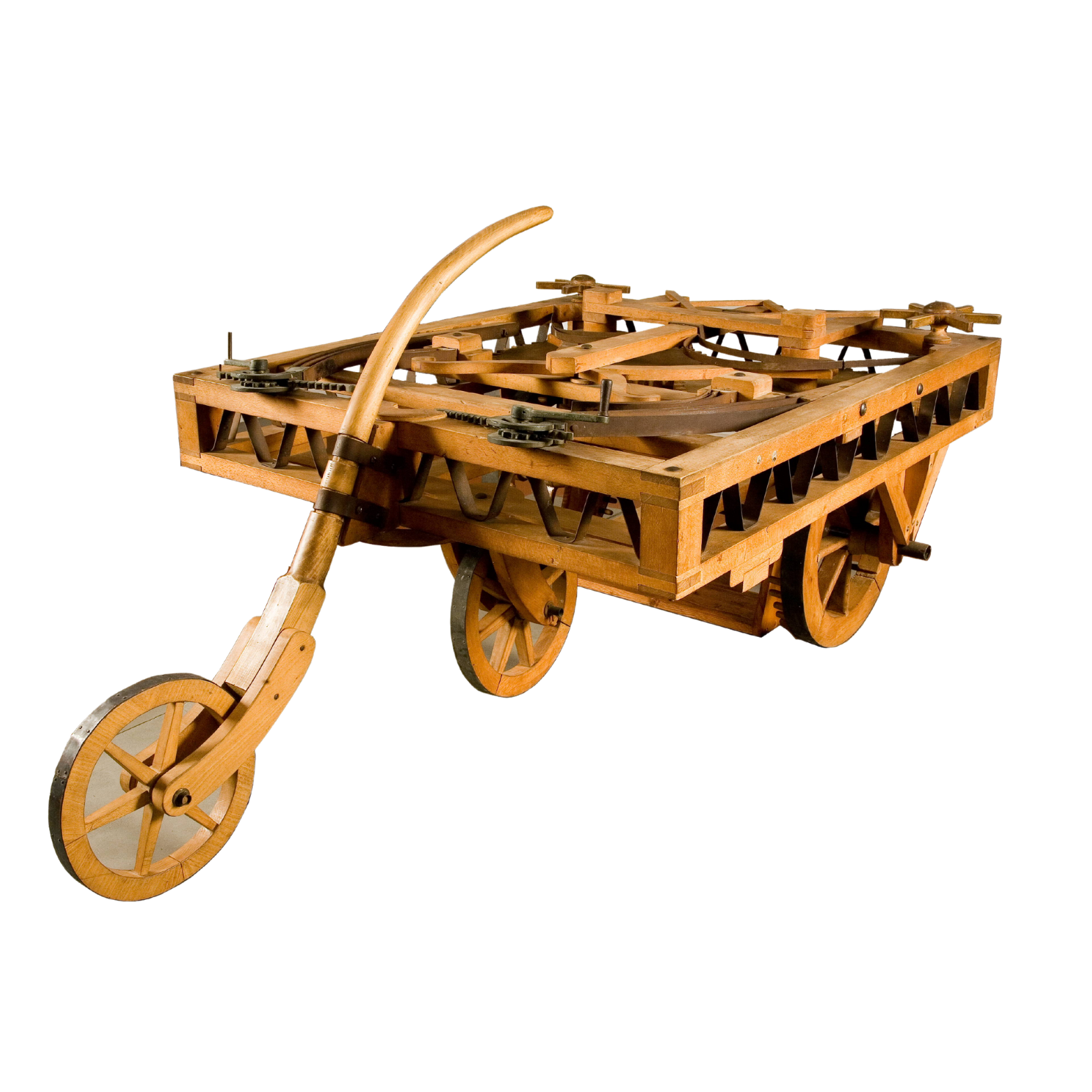
Leonardo also designed systems to enable carts to move autonomously, using lantern gears and side-toothed wheels operated by a hand crank.
Among his drawings stands out the ambitious project of a self-propelled cart, long interpreted as a precursor of the modern automobile but in fact conceived as a stage machine, similar to an automaton, designed by Leonardo to inspire awe and wonder in spectators.
Works of the collection
2 works belongs to this collection