Icona che richiama un banner d'attenzione

FOR GROUPS AND SCHOOL PARTIES ARRIVING BY BUS: Please be advised that, due to ongoing works in the village, bus access may be difficult.
We therefore recommend parking in Via Cerretana and continuing on foot.

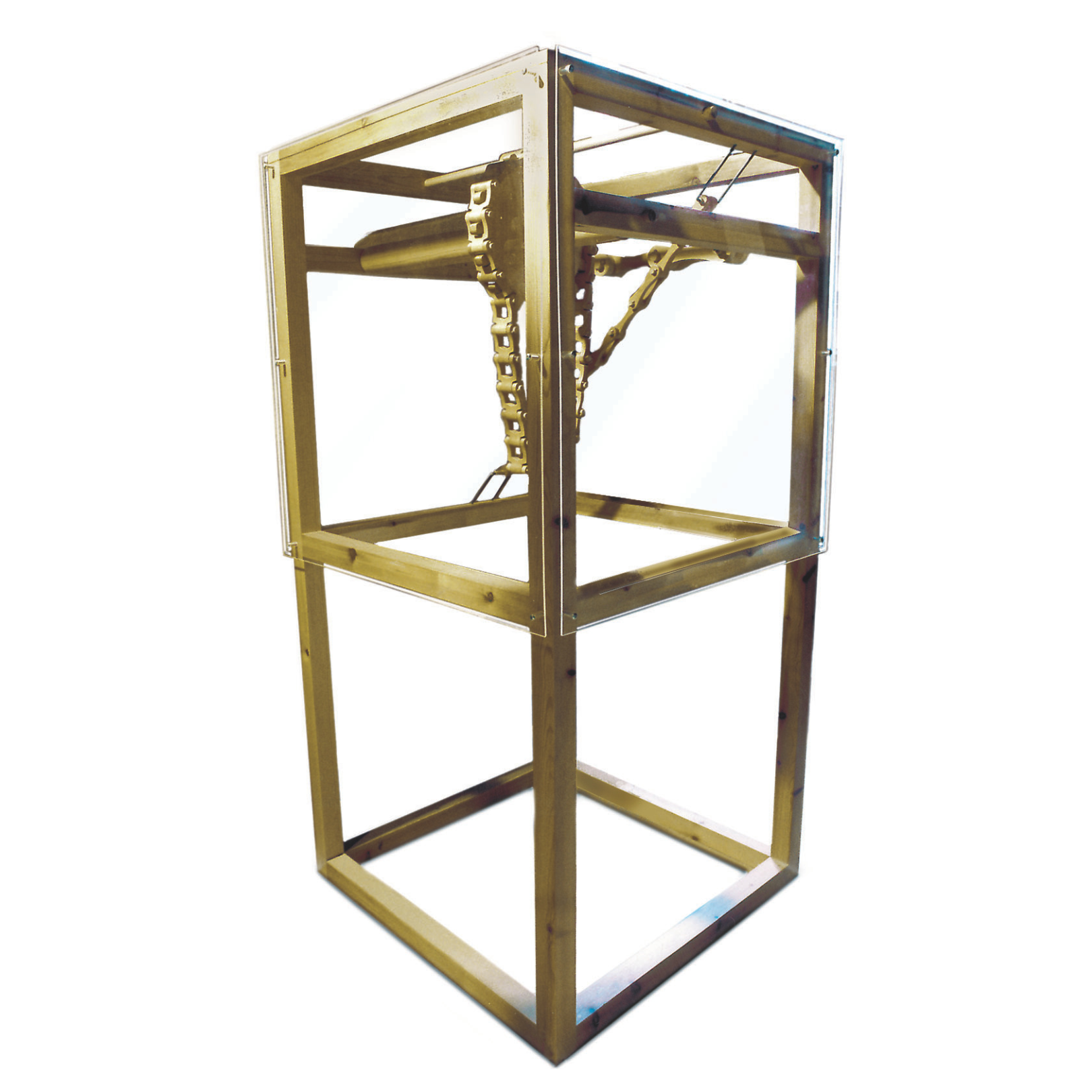
Stop device for automatic silk thread doubling mechanism

Made by
Università di Firenze, Facoltà di Ingegneria, Dipartimento di Meccanica e Tecnologie industriali

2003
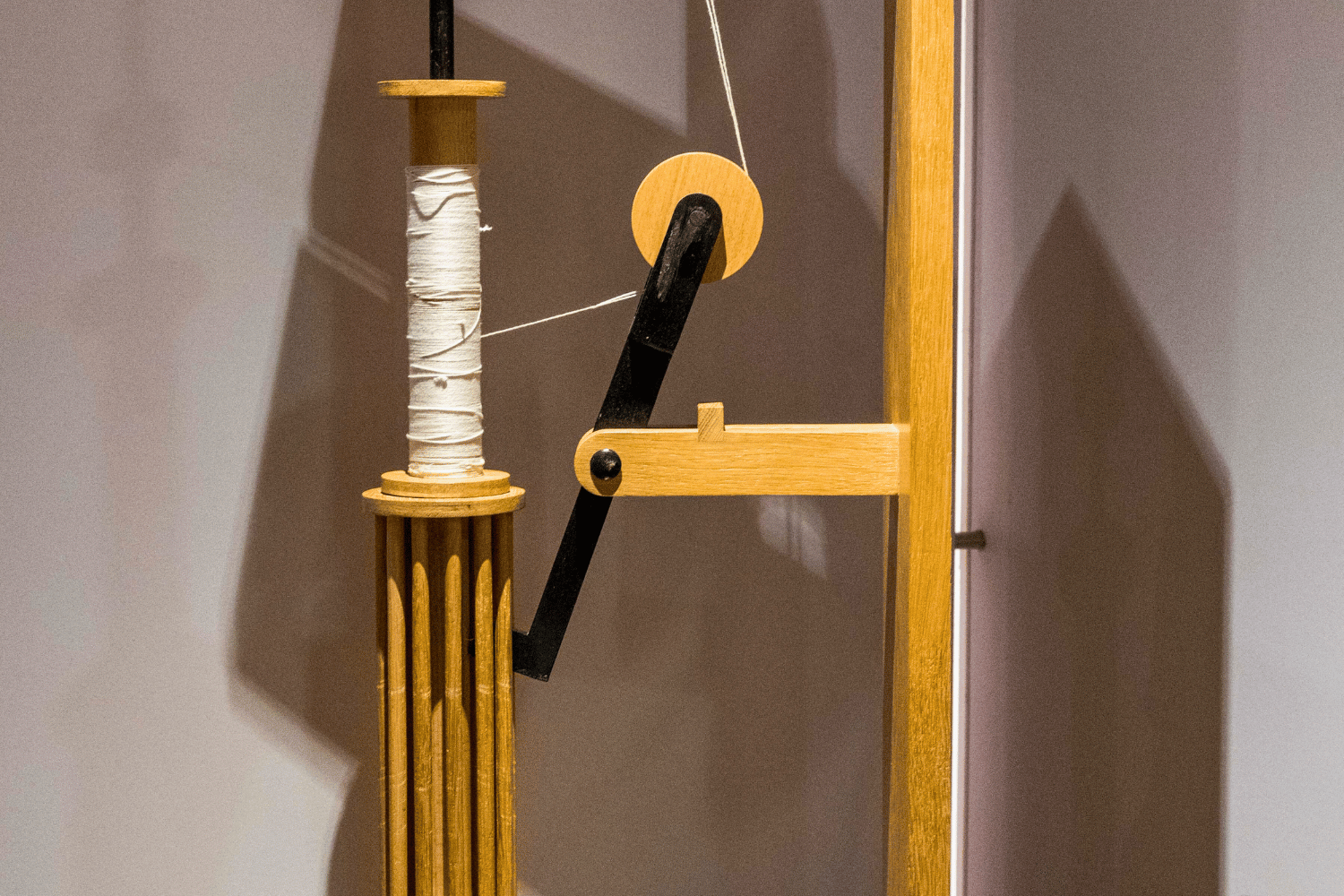
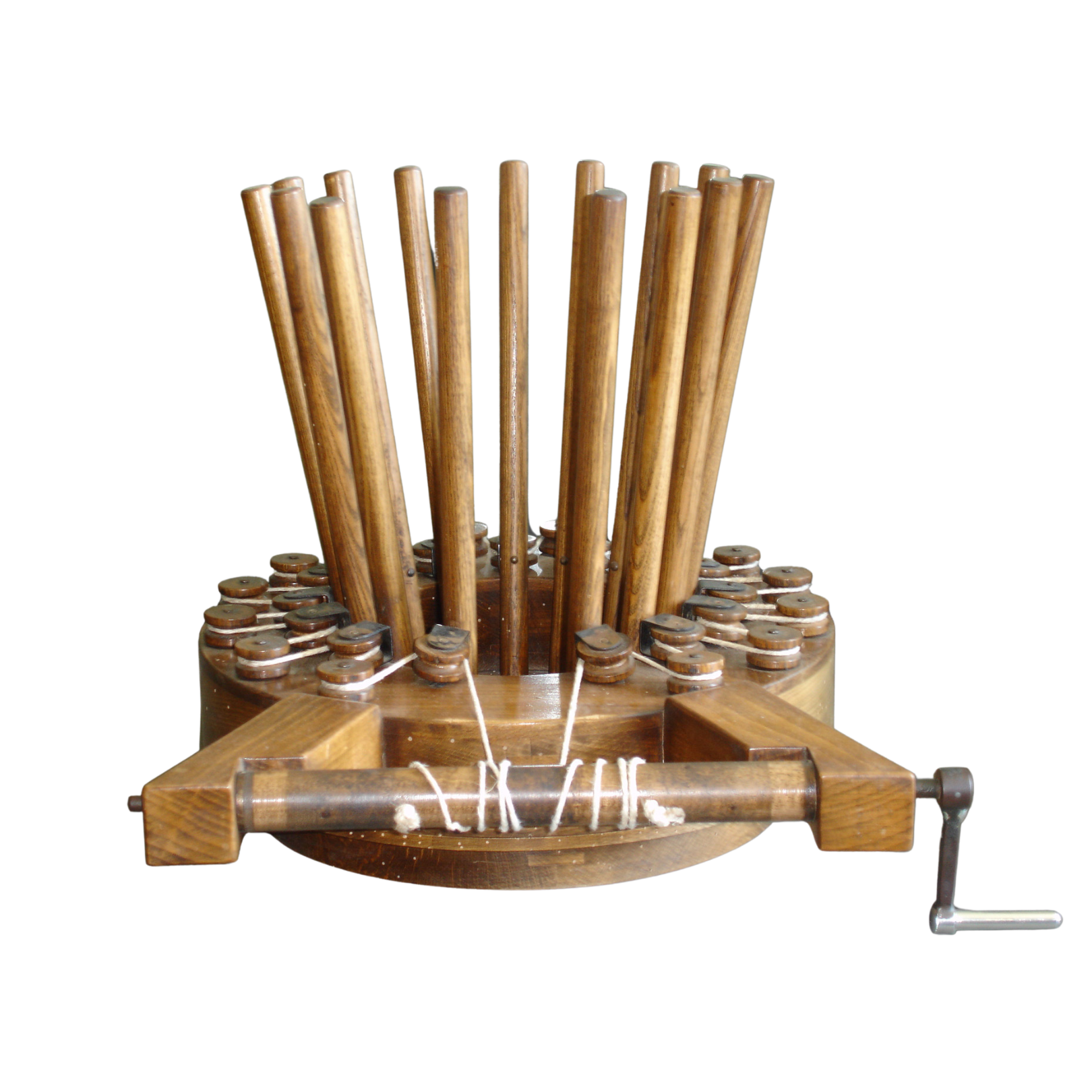
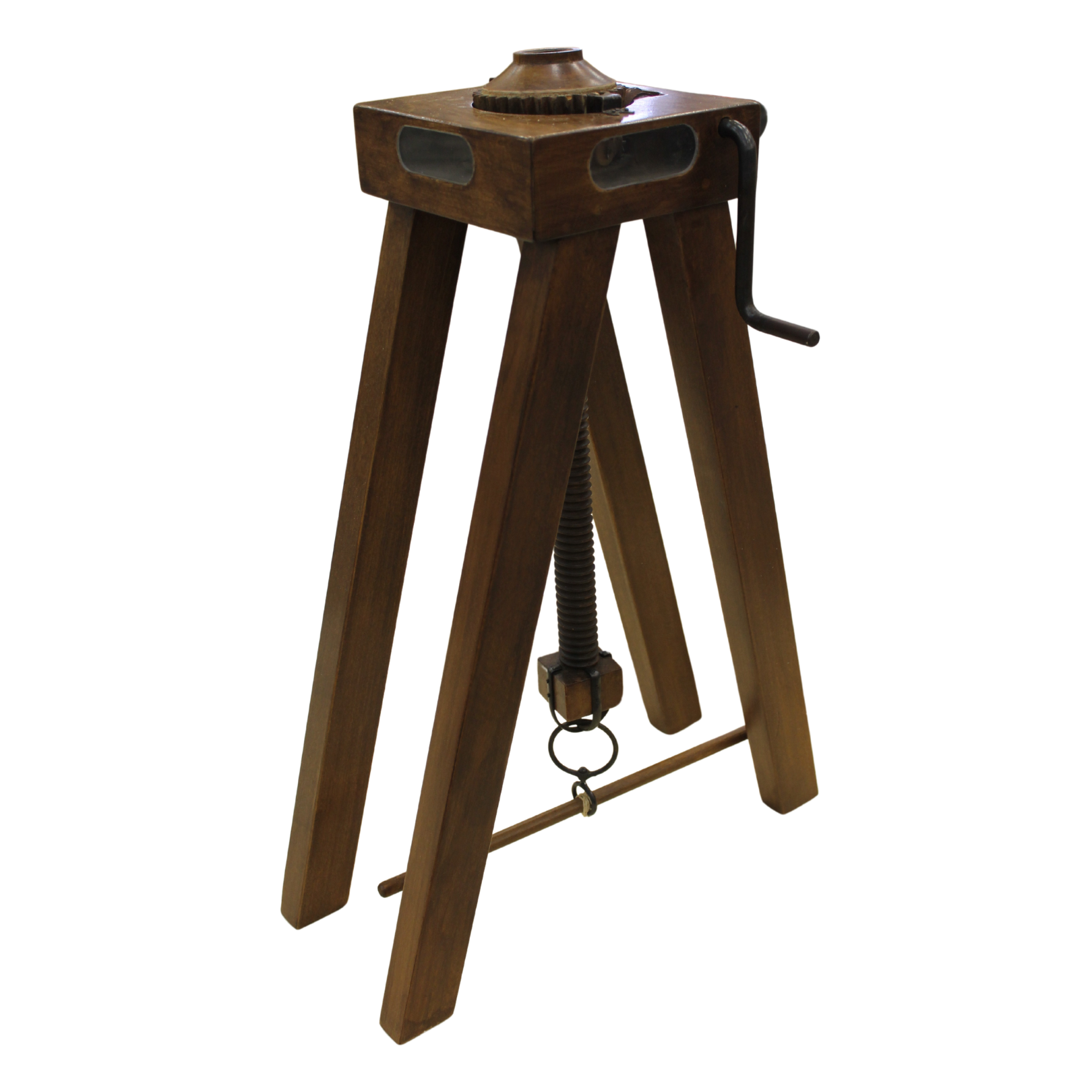
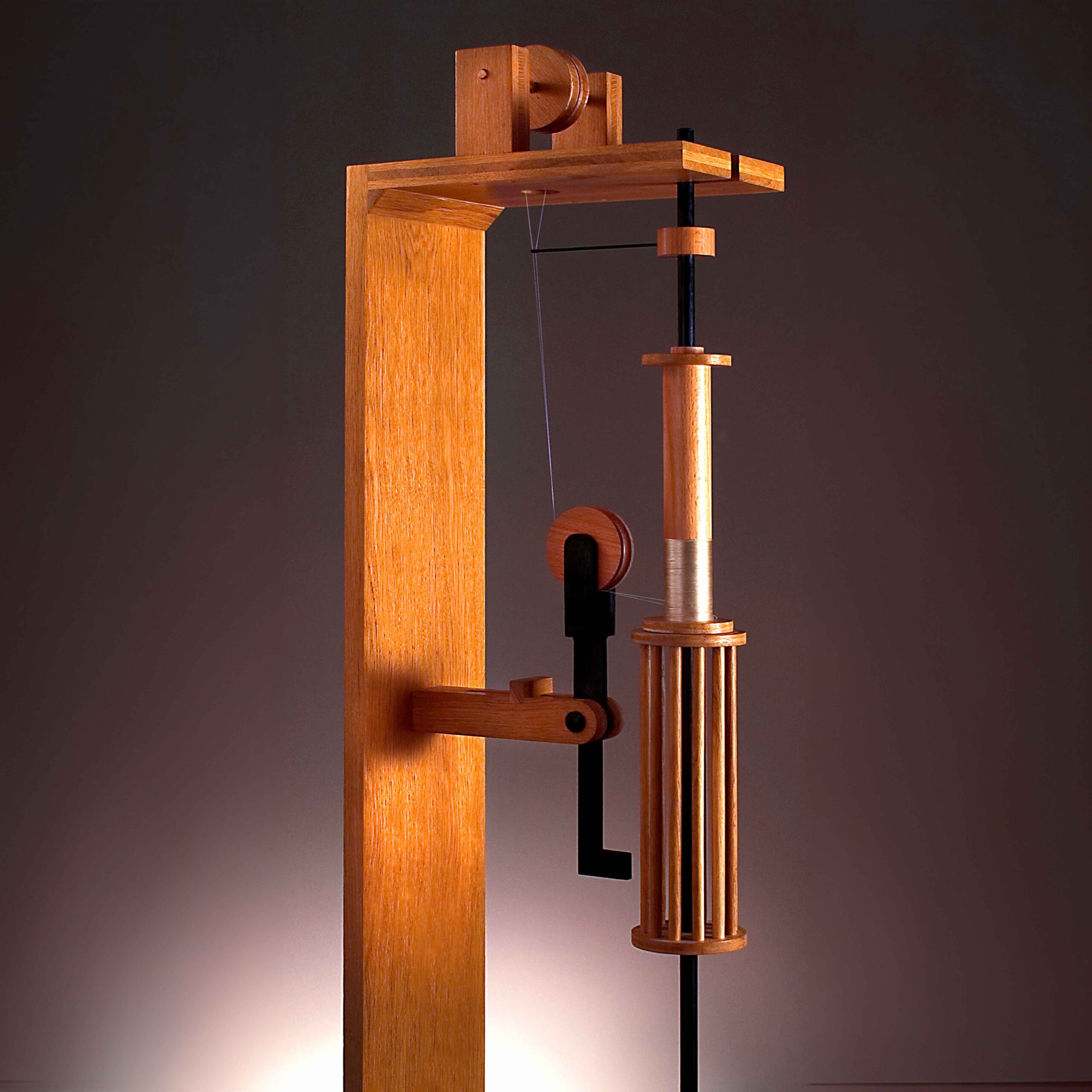
In his search for solutions to increase productivity in the textile industry, Leonardo designed a thread doubling mechanism equipped with an ingenious device capable of immediately stopping the machine in the event that one of the threads to be doubled were to break during the pairing process, carried out to increase the robustness of the threads.

From the spools at the top, the threads pass through a thread guide, winding onto the spool fixed on a mobile rod at the center, and while the spindle turns, the doubled threads are distributed on the bobbin. If one of these threads breaks, the spool drops backward, and the shaft on which it is mounted, with its end in the form of an L, moves so that it gets stuck in the rods of the lantern cage mechanism, stopping the rotation of the spindle and preventing the device from wrapping with just one single thread on the bobbin.
This concept of a thread-break controlled stopping device, sometimes referred to as a catch thread device, is applied today in many spinning and weaving machines.

Technical informations

Type of exhibit
Model
Collection
Material
Wood, iron, silk thread
Measures
Width: 35 cm, Height: 109 cm, Depth: 20 cm
Storage location
Relationship with the original work
Source: Leonardo da Vinci, Codex Atlanticus, f. 103 r
Location
Museo Leonardiano, Palazzina Uzielli, first floor

Last update: 22 September 2025, 08:51
Revolving thrust bearings

Made by
Etruria Musei

2010

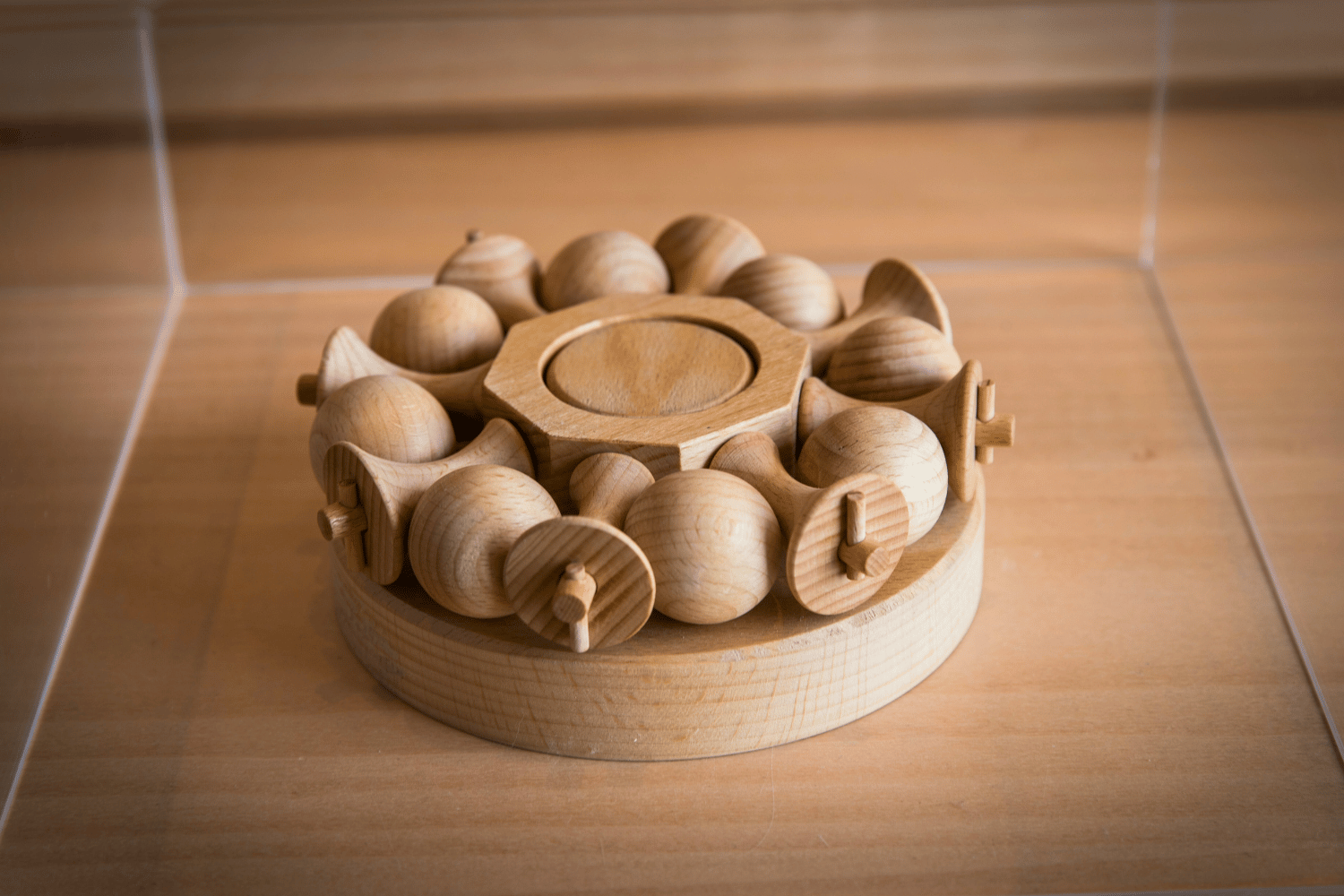
Leonardo dedicated great attention to the design of revolving thrust bearings: mechanisms to reduce or eliminate the effect of wear and tear from friction from moving parts in machines.

This model consists of a circular platform upon which eight spheres are arranged in a ring, interspersed with the same number of concave rolling spools fitting together with them perfectly. The balls are free to turn without bumping into one another, and are held together by the rollers that prevent them from leaving their seating.
These incredibly modern thrust bearings, generally called “ball bearings,” are nowadays widely used in all machines with moving parts.

Technical informations

Type of exhibit
Model
Material
Carved wood
Measures
Height: 17 cm; Diameter: 6.5 cm.
Storage location
Relationship with the original work
Source: Leonardo da Vinci, Madrid Codex I, f. 20 v
Location
Museo Leonardiano, Counts Guidi's castle, ground floor

Related exhibits

Last update: 11 November 2025, 12:48

The self-moving carriage (1952)

Giovanni Canestrini, Made by
IBM Italia, Roberto Antonio Guatelli

1952

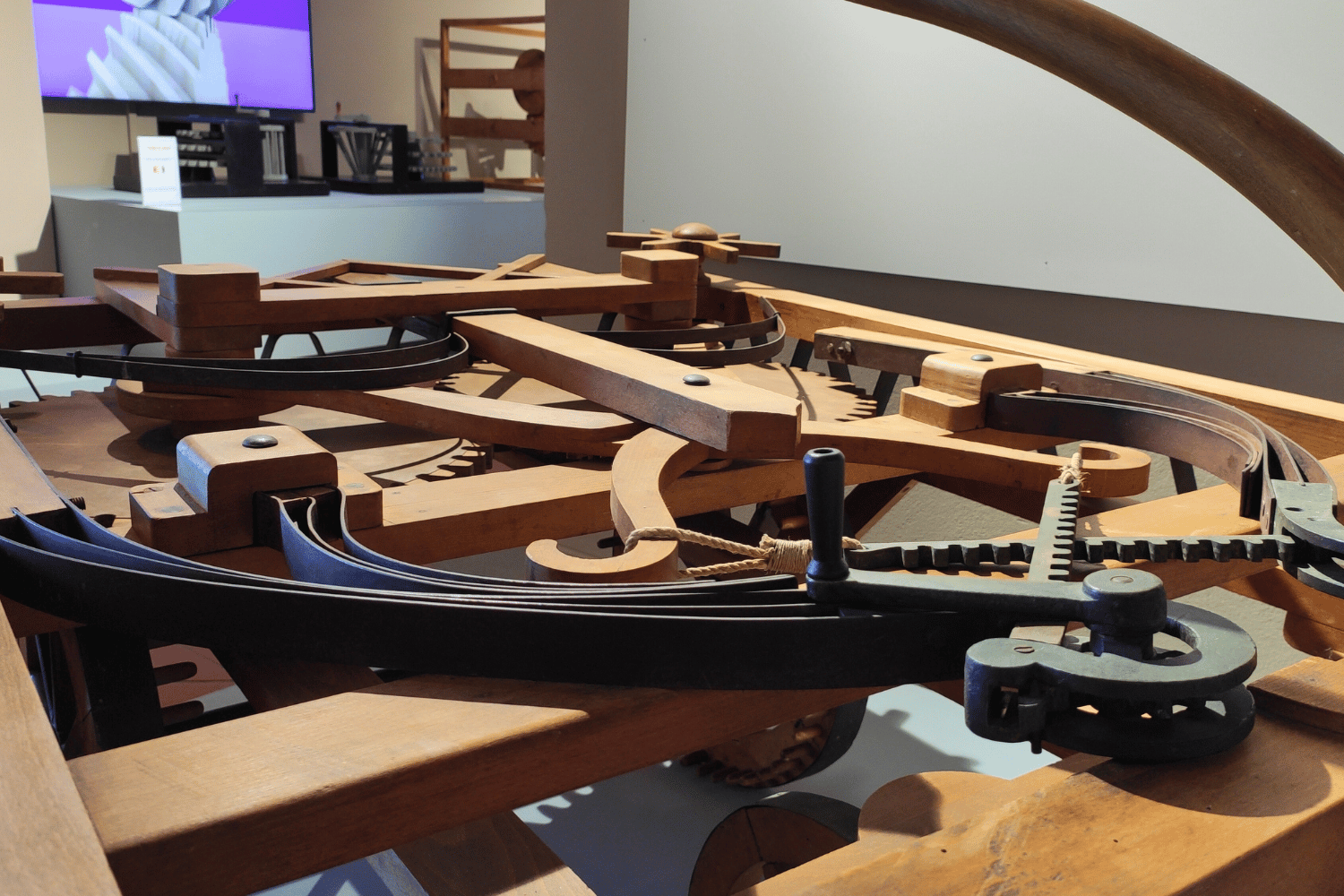
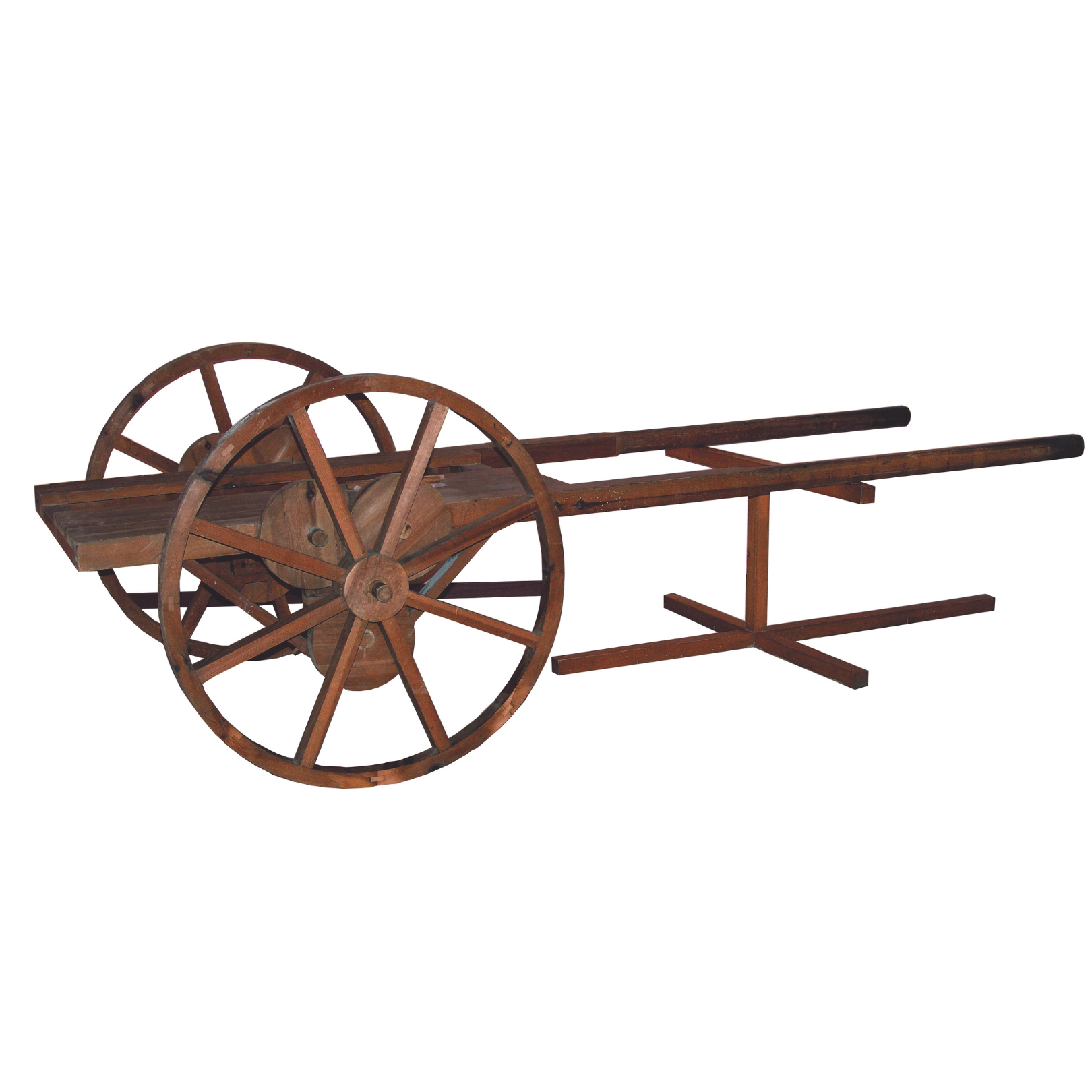
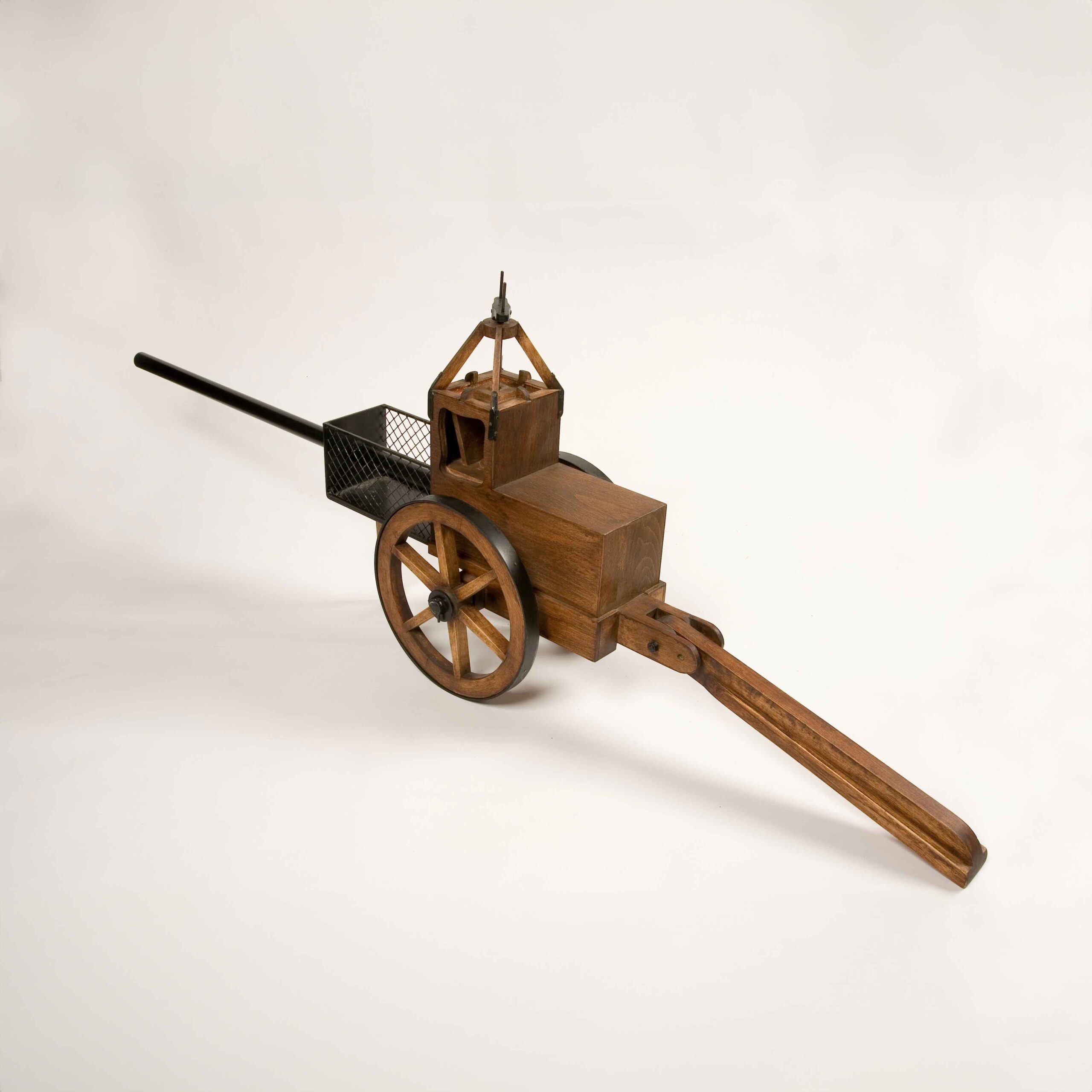
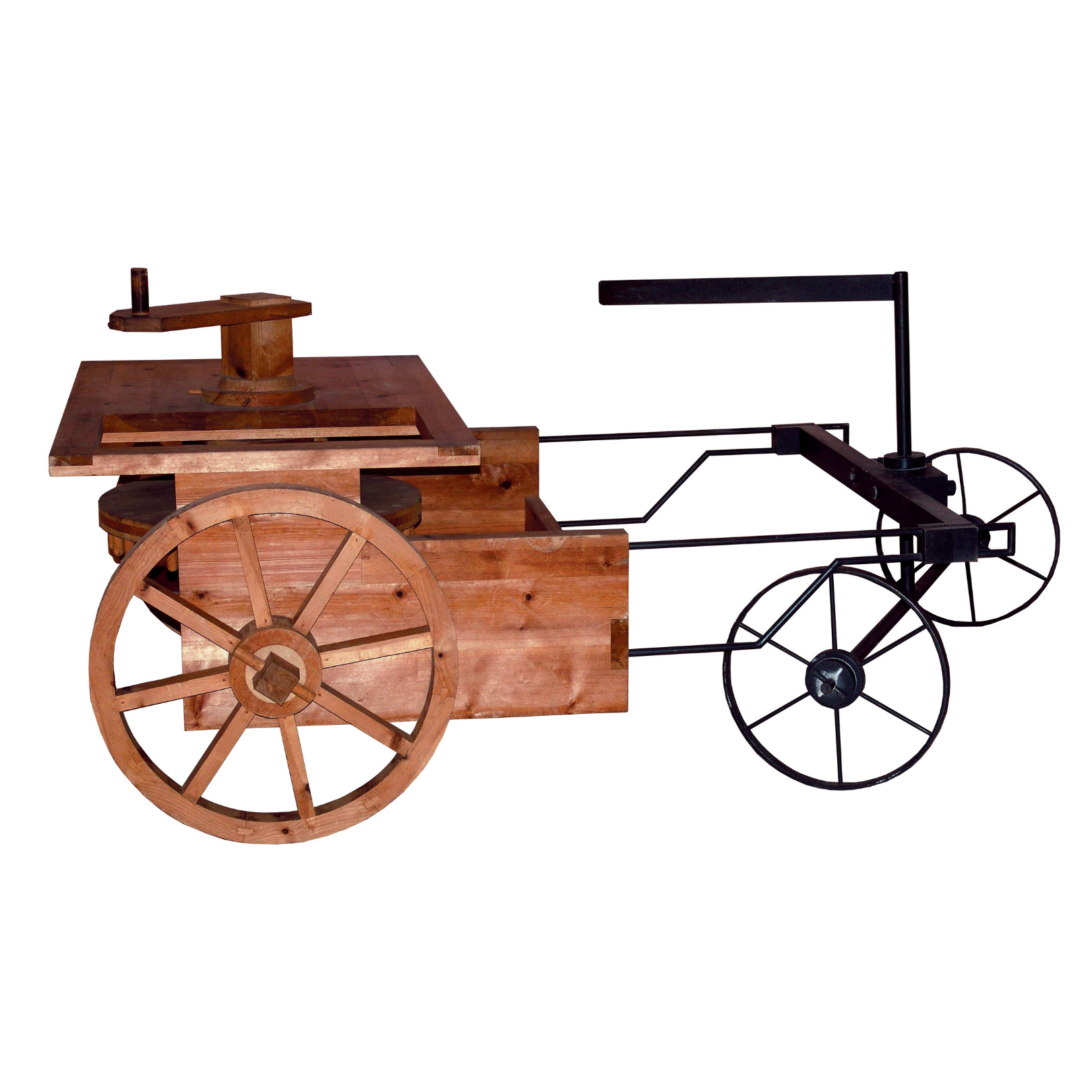
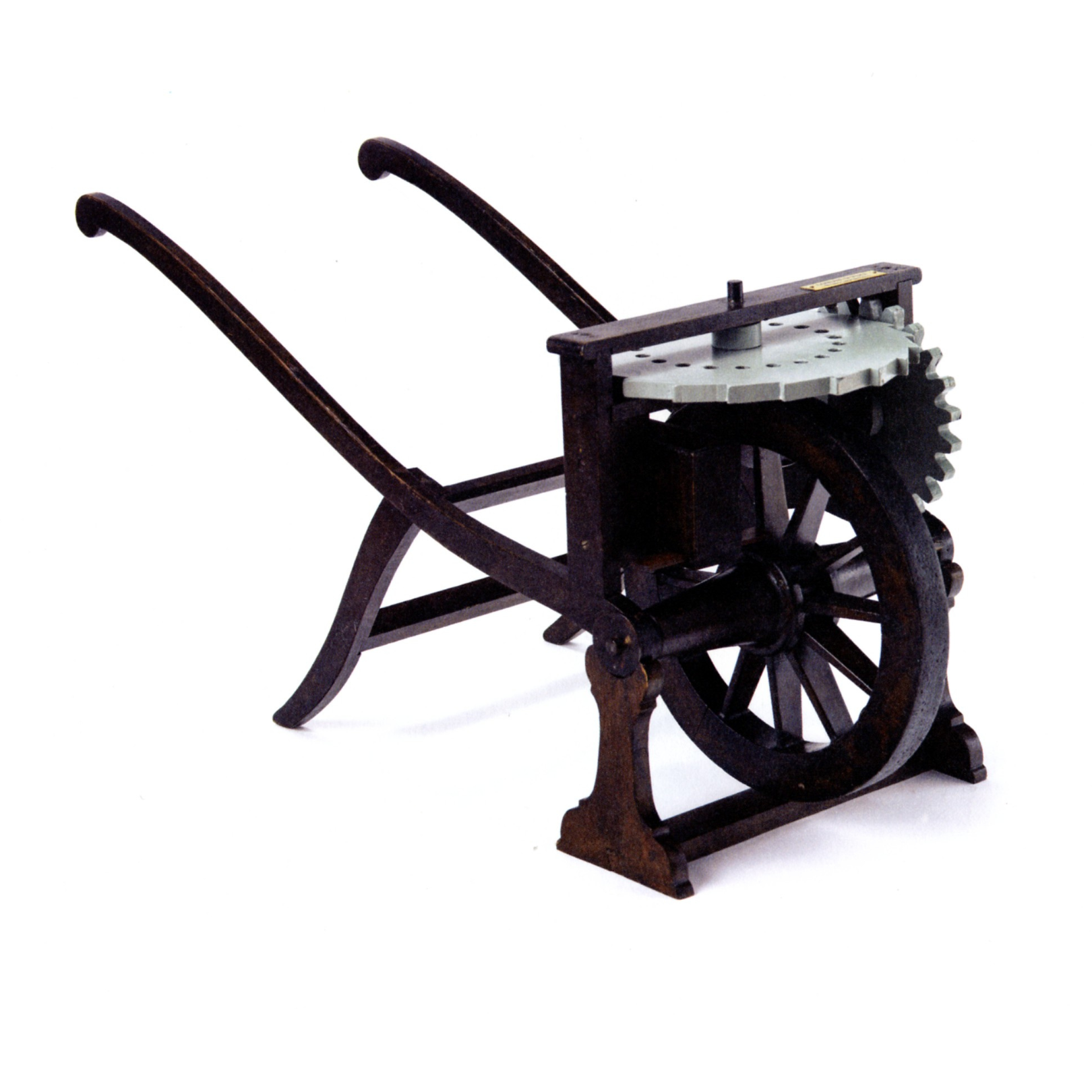
Constructed in 1952, this self-moving carriage documents one of the earliest interpretations of the drawing by Leonardo, previously considered to have been the forerunner of the automobile.
The two large leaf springs found behind the rudder in the front part of the carriage are charged manually by means of a pincer device, and as they relax, they transmit their stored energy into the moving wheels, causing the carriage to advance. In order to explain the transmitting of the energy generated by the spring leaf to the wheels, the model was provided with some connecting lines, which however did not appear in Leonardo’s drawing. These joined the large springs to the pegged wheels at the corners connected directly to the axles of the moving wheels.

Technical informations

Type of exhibit
Model
Collection
Material
Carved wood, wrought iron
Measures
Width: 88 cm, Length: 104.5 cm, Depth: 184 cm.
Storage location
Relationship with the original work
Source: Leonardo da Vinci, Codex Atlanticus, f. 812 r
Inventory number
Record n. OA: 00000048
Location
Museo Leonardiano, Palazzina Uzielli, second floor

Related exhibits

Last update: 24 June 2025, 11:20

Tank

Made by
IBM Italia

1952

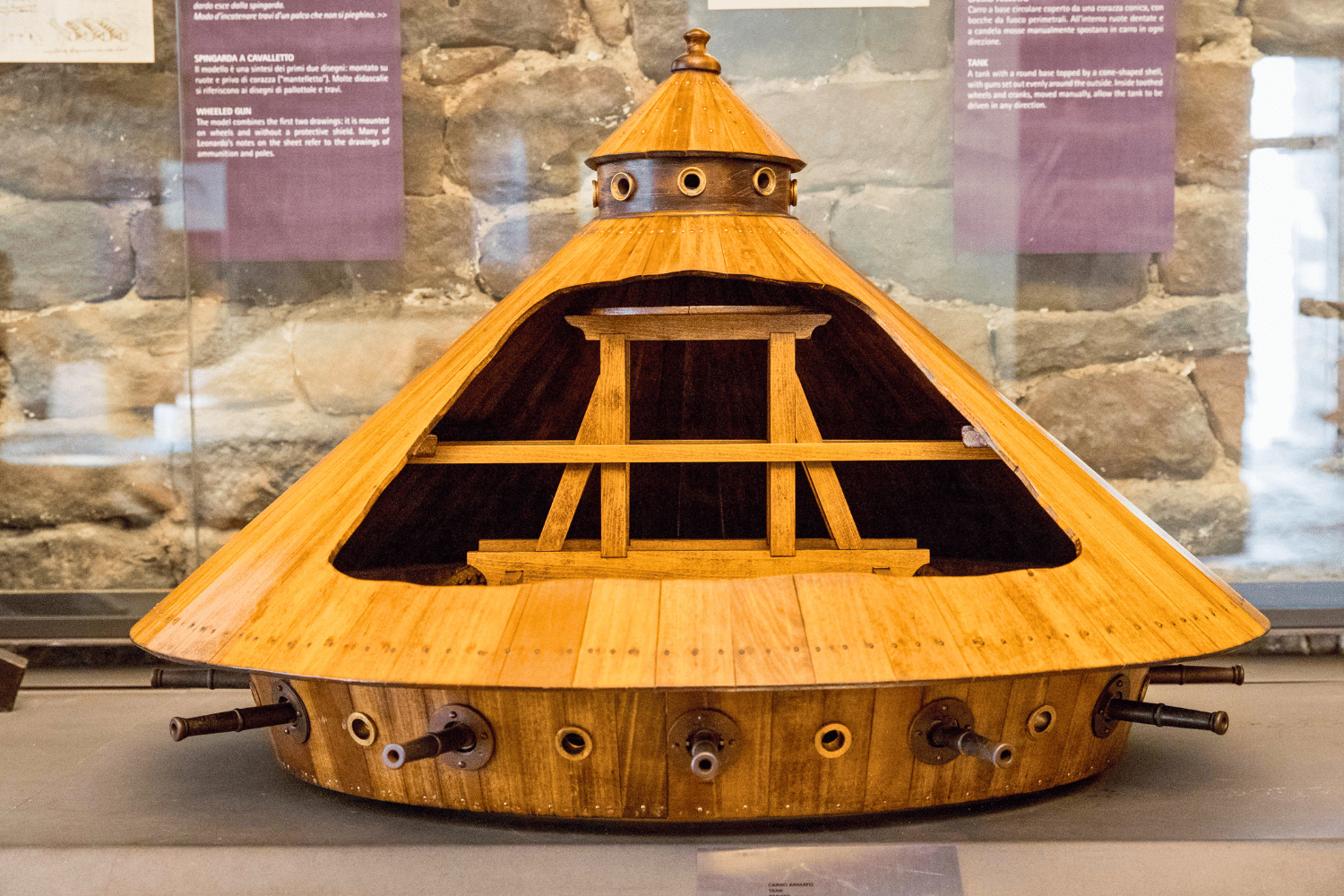
From the classical world, Leonardo took up again and reworked the idea of a covered, armored carriage in the shape of a tortoise. In his design, the machine is equipped with an original system for movement, and numerous firearms are installed. By turning the cranks, which are connected by gears to four moving wheels, eight men can power the machine. At the same time, the cannons positioned all around the tank’s perimeter can fire in every direction. Finally, the slotted turret at the top of the machine allows observation of the entire surrounding area, for the purpose of directing movements and firing operations.

Technical informations

Type of exhibit
Model
Collection
Material
Carved wood, iron, copper, brass
Measures
Width: 49 cm; Length: 110 cm; Depth: 82 cm.
Storage location
Relationship with the original work
Source: Leonardo da Vinci, British Museum, inv. 1860-6-16-99
Inventory number
Record n. OA: 00000011
Location
Museo Leonardiano, Counts Guidi's castle, ground floor

Related exhibits

Last update: 10 November 2025, 12:44

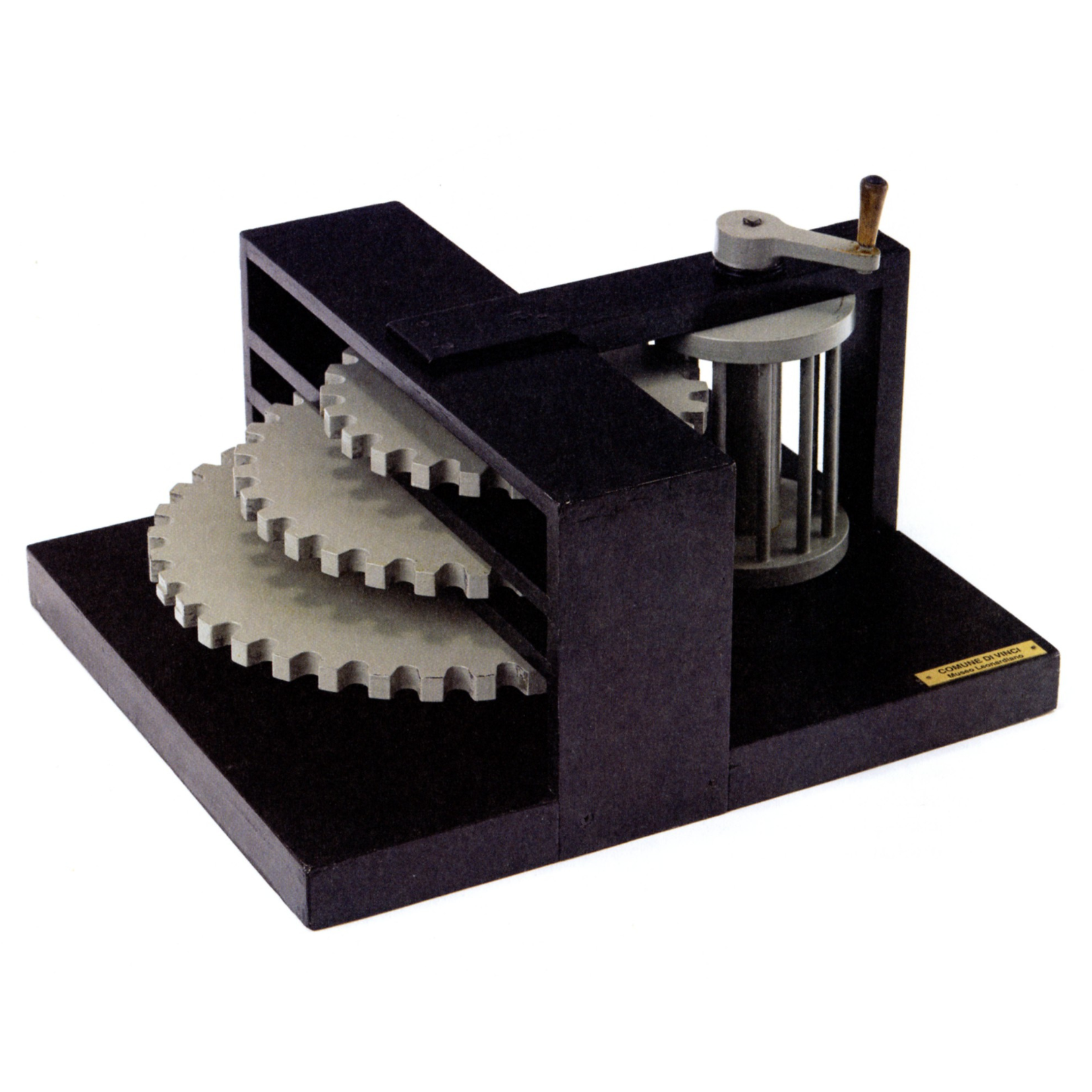
Bevel and spur gear speed changer

Made by
IBM Italia

1952

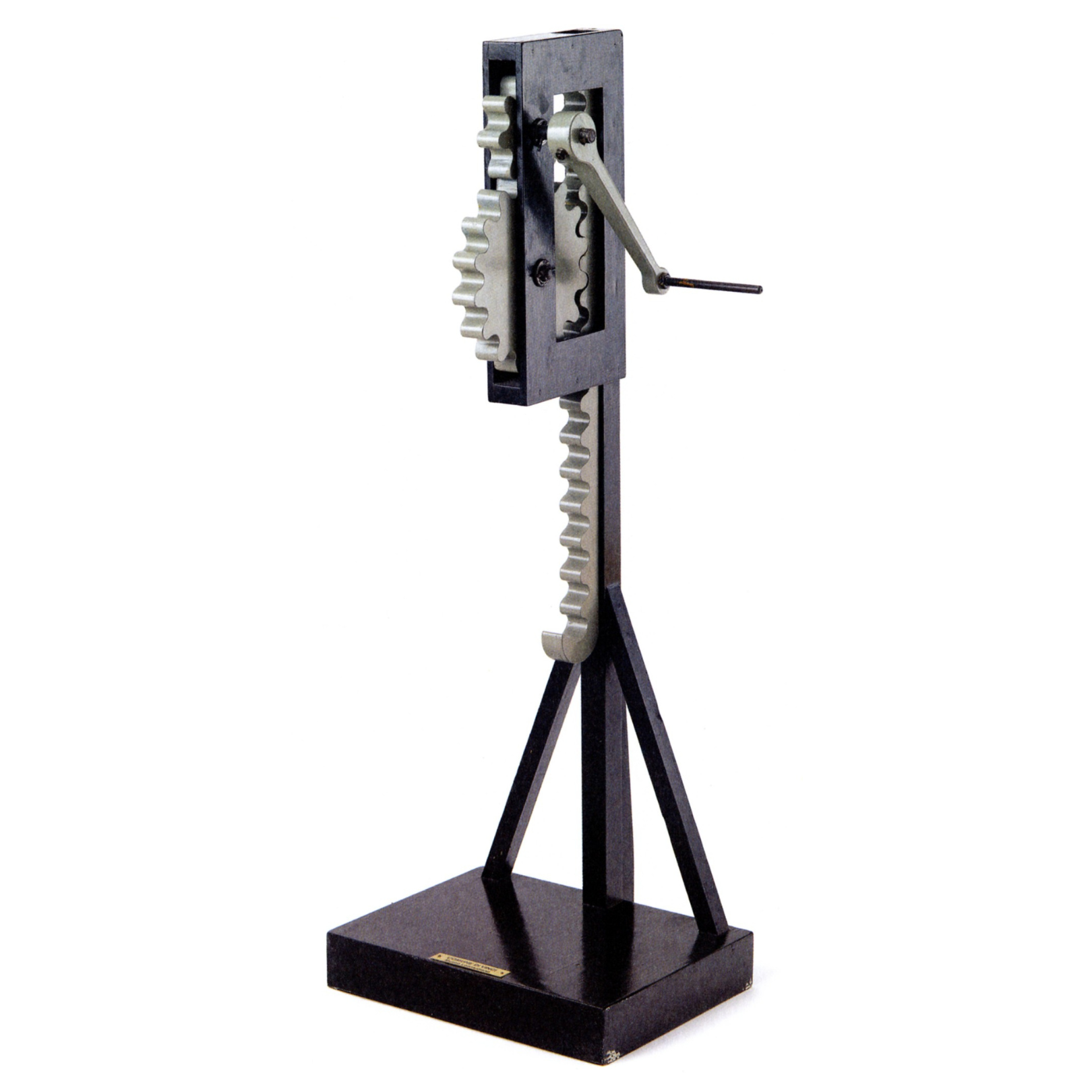
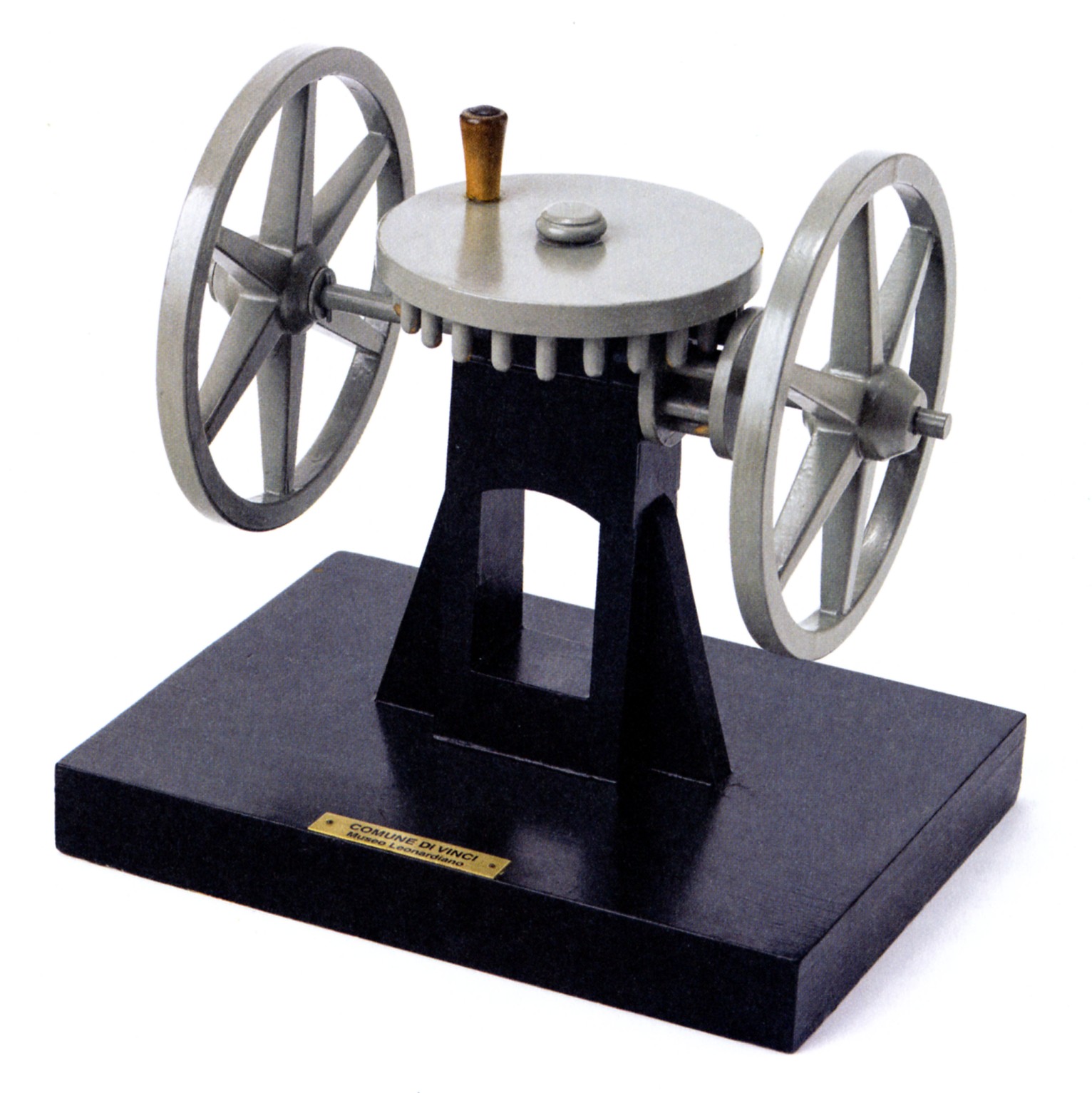
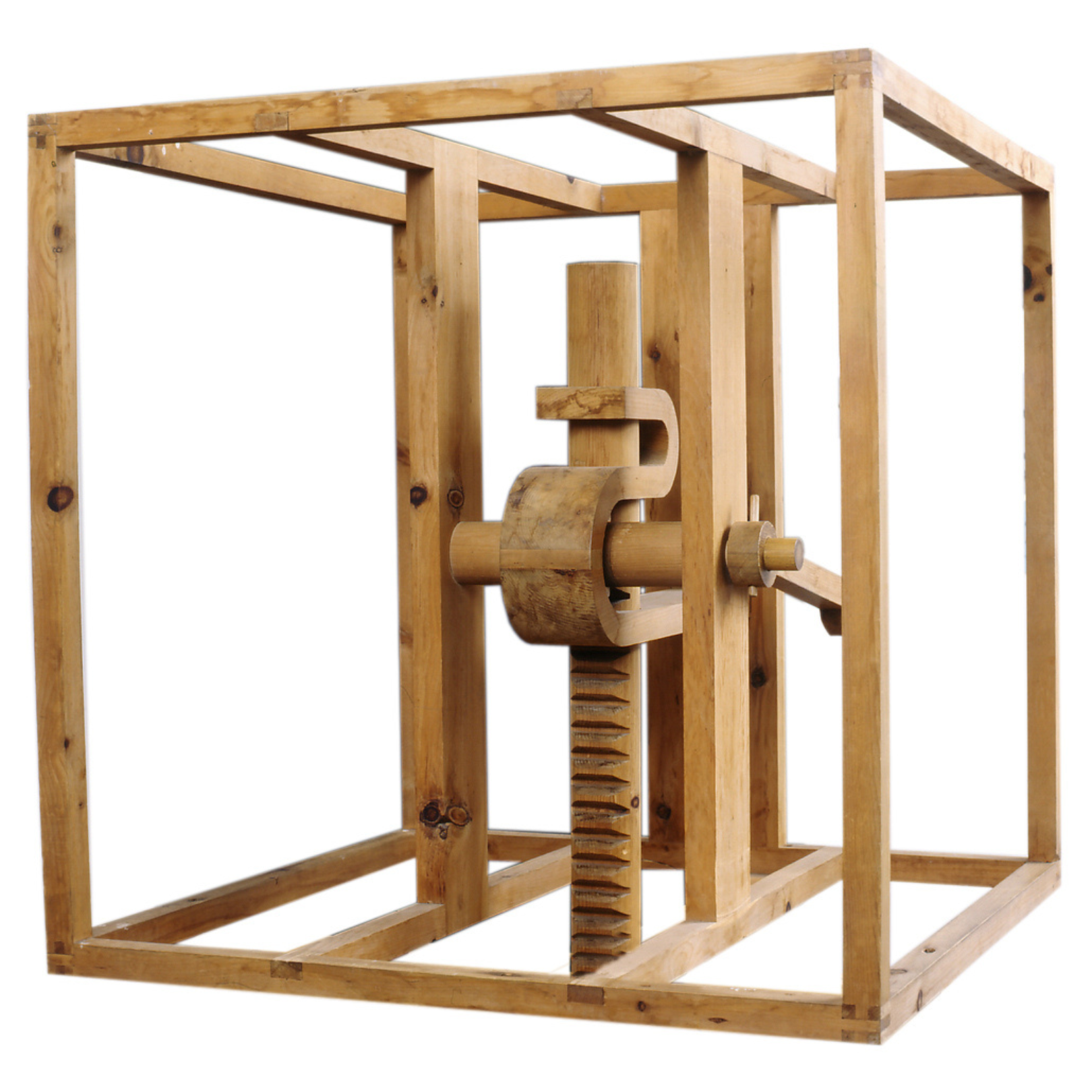
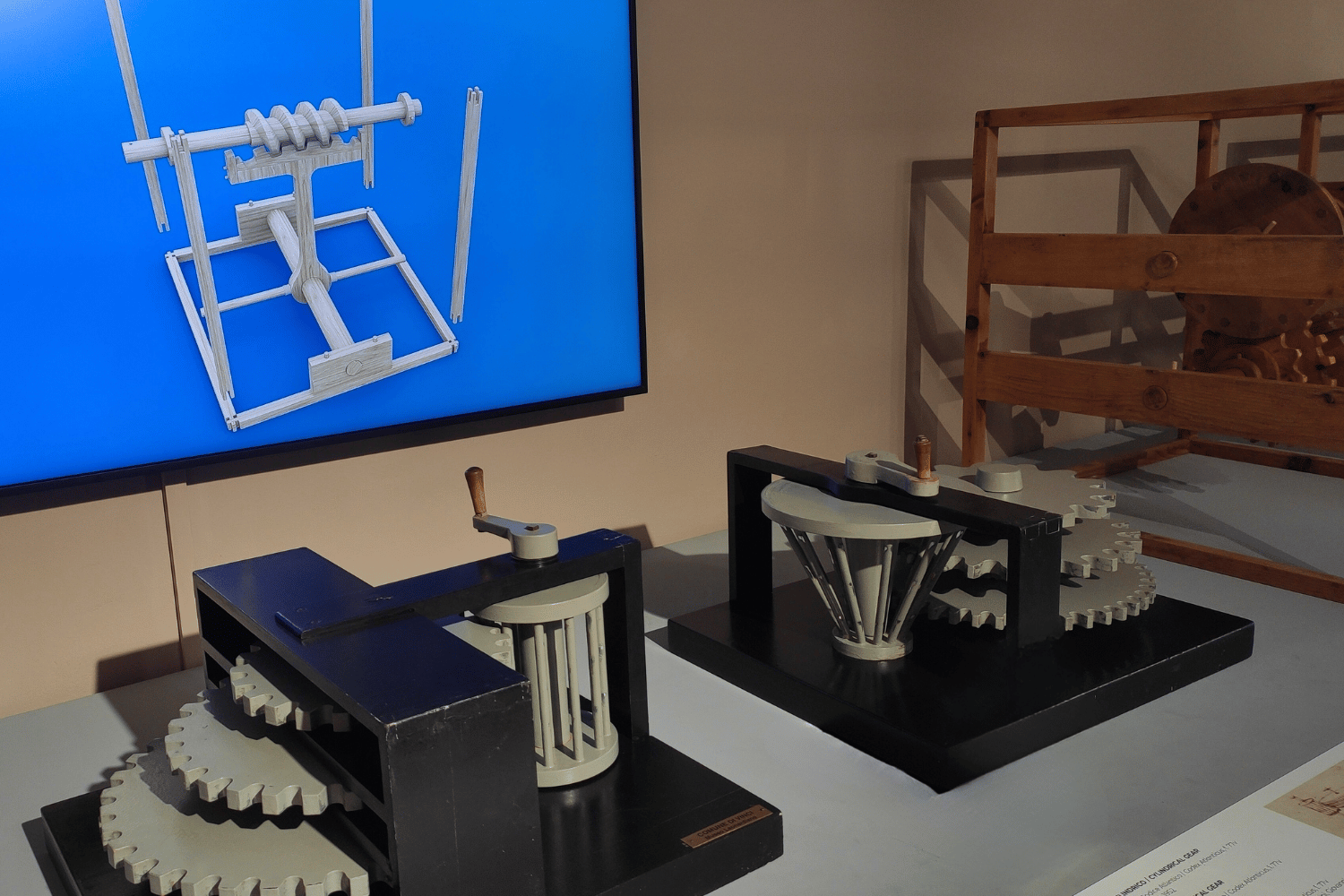
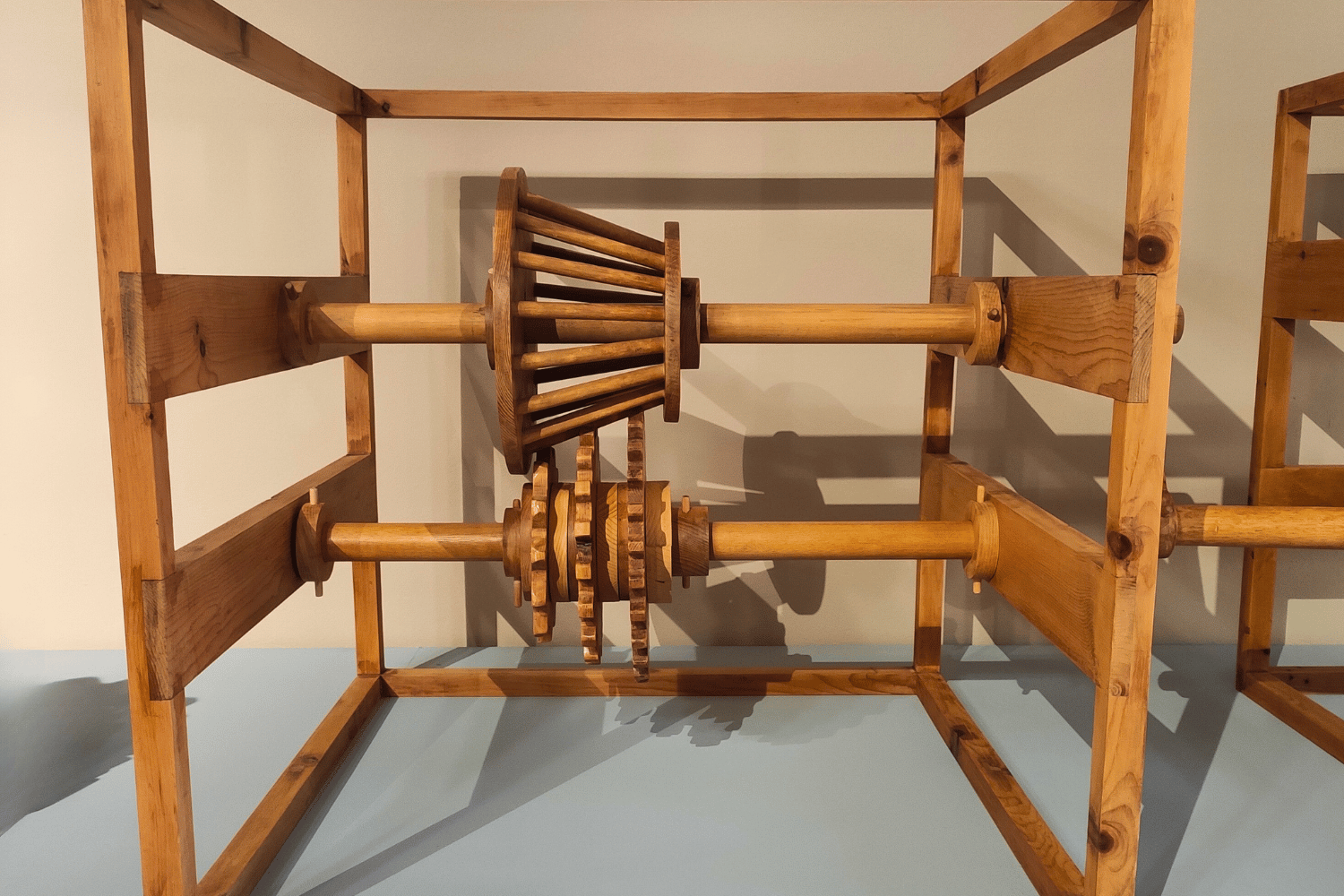
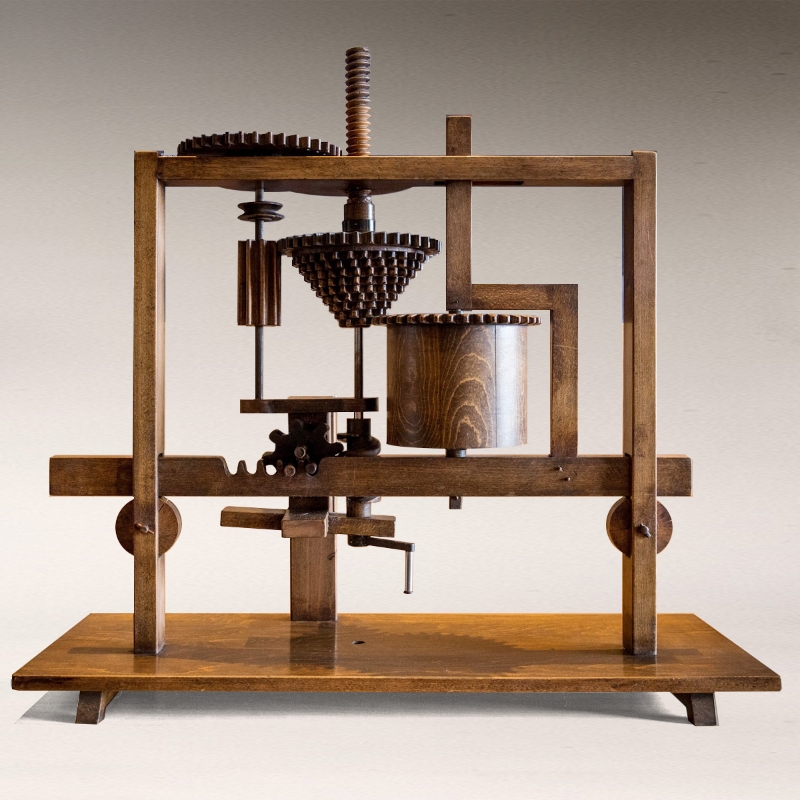
In these devices, a lantern gear drives three toothed wheels. Their different diameters cause them to rotate at different speeds. Leonardo’s study compares two possibilities: in one case, the lantern gear is cylindrical, the three wheels have identical teeth, and each has its own axis of rotation. In the second case, the conical shape of the lantern gear results in different teeth for each wheel, but allows the use of a single common axis of rotation. A similar principle is applied in modern automobile gearboxes.

The model with the conical lantern gear is presented in two examples, reflecting two different interpretations: the first from 1952, and the second from 1983.

Technical informations

Type of exhibit
Model
Collection
Material
Painted carved wood
Measures
Width: 37 cm, Length: 50 cm, Depth: 60 cm
Storage location
Relationship with the original work
Source: Leonardo da Vinci, Codex Atlanticus, f. 77 v
Location
Museo Leonardiano, Palazzina Uzielli, second floor

Related exhibits

Last update: 29 September 2025, 11:59

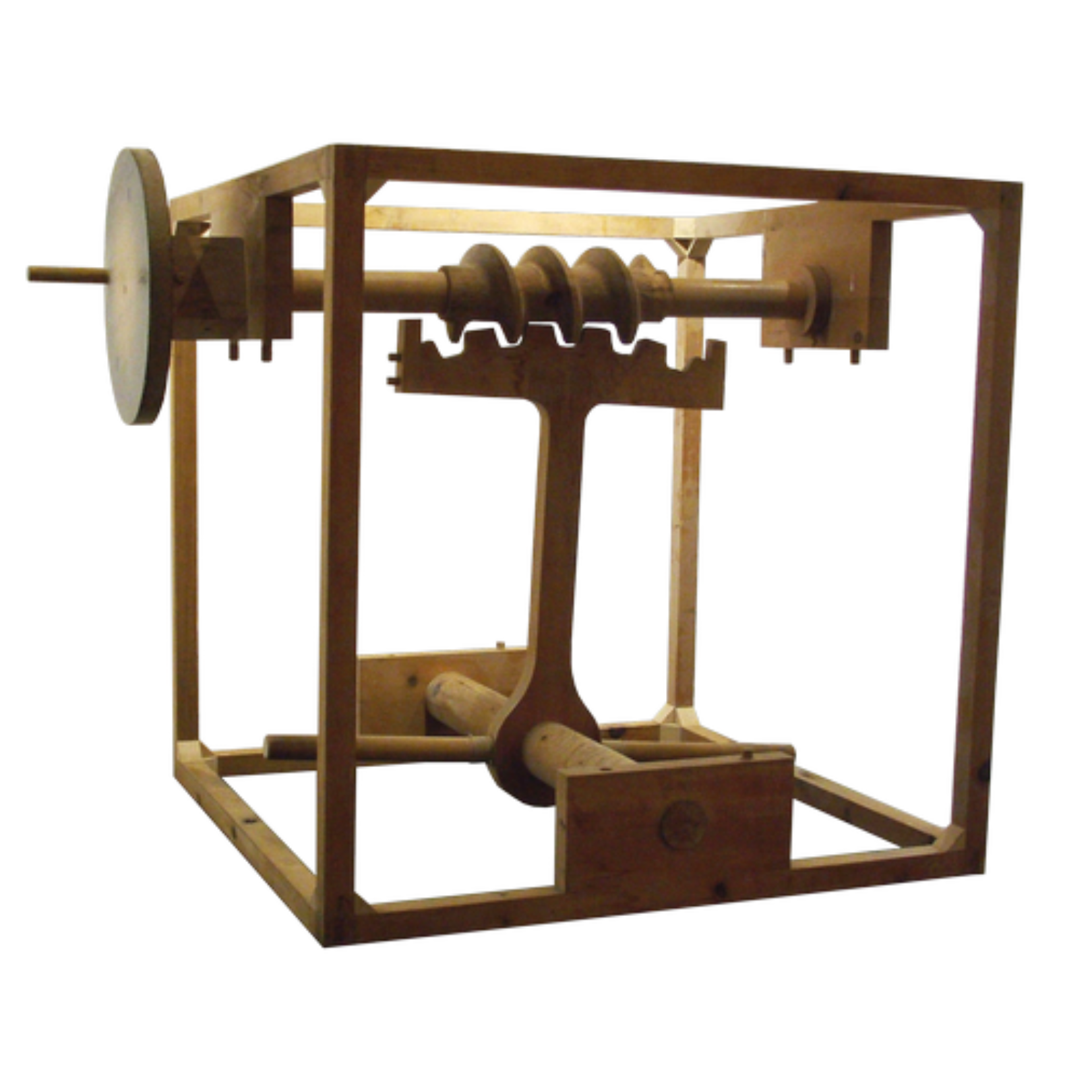
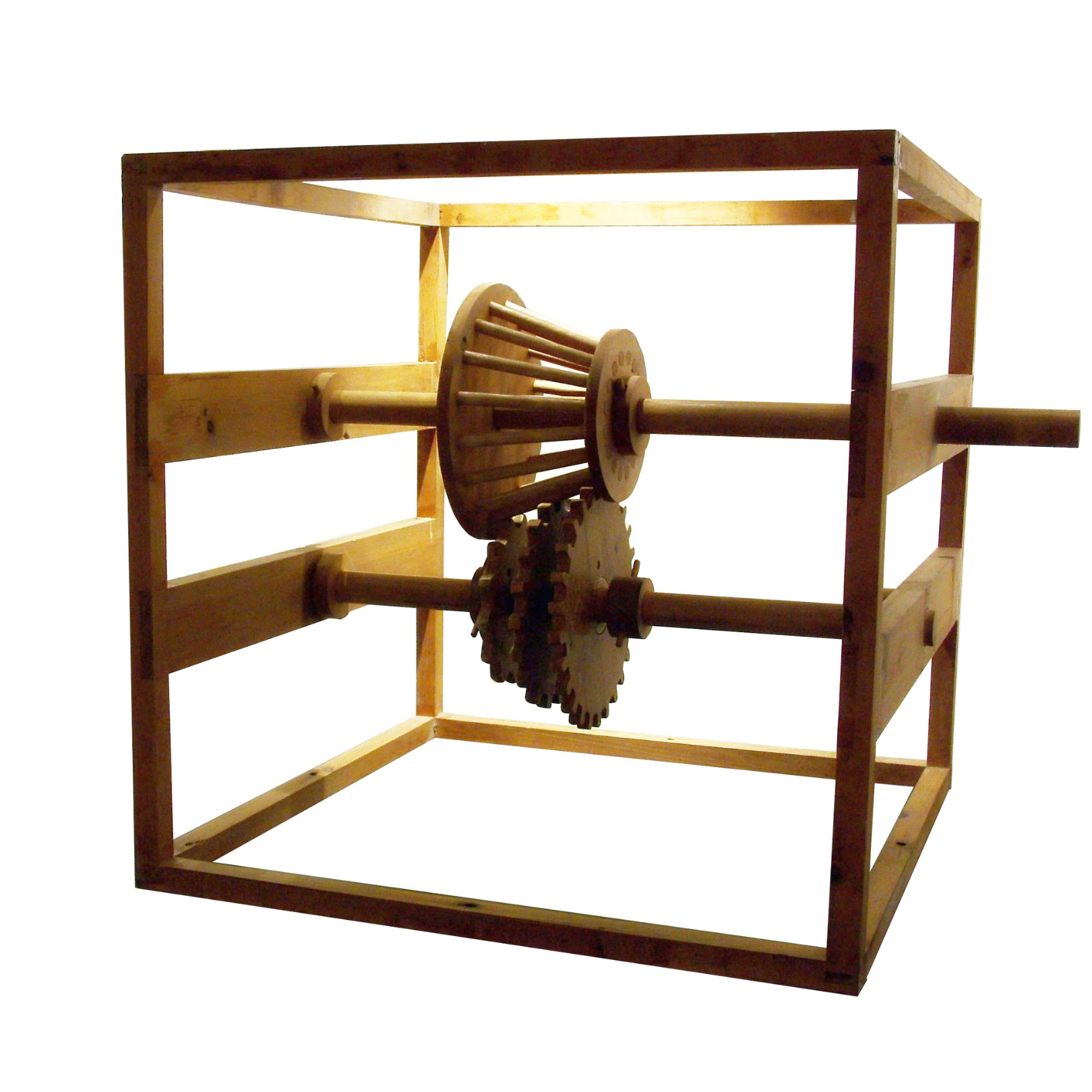
Three-speed gearbox

Fausto Colombo

1983

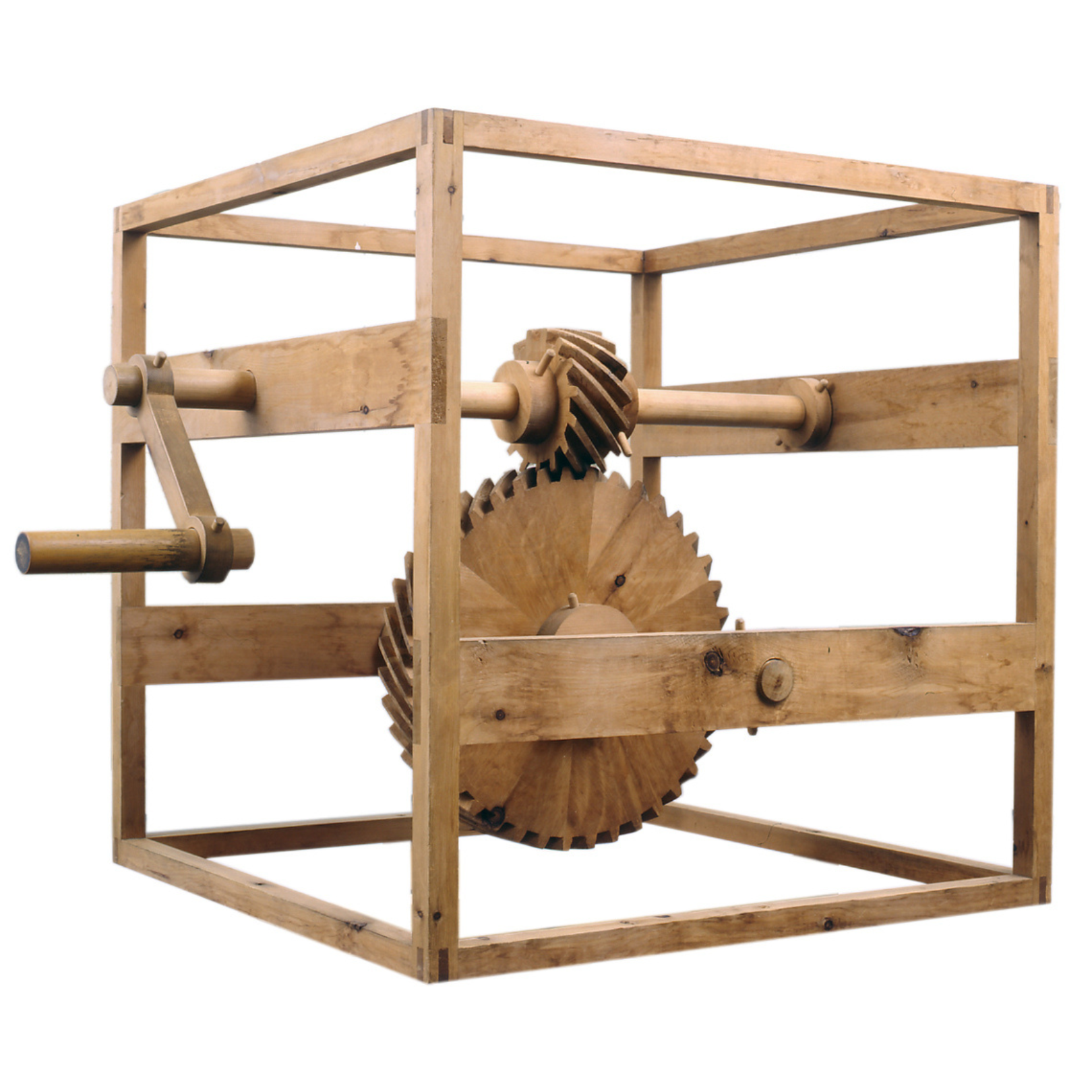
The model consists of three selectable gear ratios. A lantern gear in the shape of a truncated cone engages with three toothed wheels of different diameters. It is this lantern pinion, operated by a crank, that transmits motion to the three wheels. These wheels rotate at different speeds, corresponding to the time taken to complete a full turn. The device, as schematized in the model, could be applied to various types of machinery.

Technical informations

Type of exhibit
Model
Collection
Material
Carved Swiss pine wood
Measures
Width: 75 cm, Length: 75 cm, Depth: 75 cm
Storage location
Relationship with the original work
Source: Leonardo da Vinci, Codex Atlanticus, f. 77 v
Location
Museo Leonardiano, Palazzina Uzielli, second floor

Related exhibits

Last update: 29 September 2025, 11:35

Battipalo

Made by
IBM Italia

1952

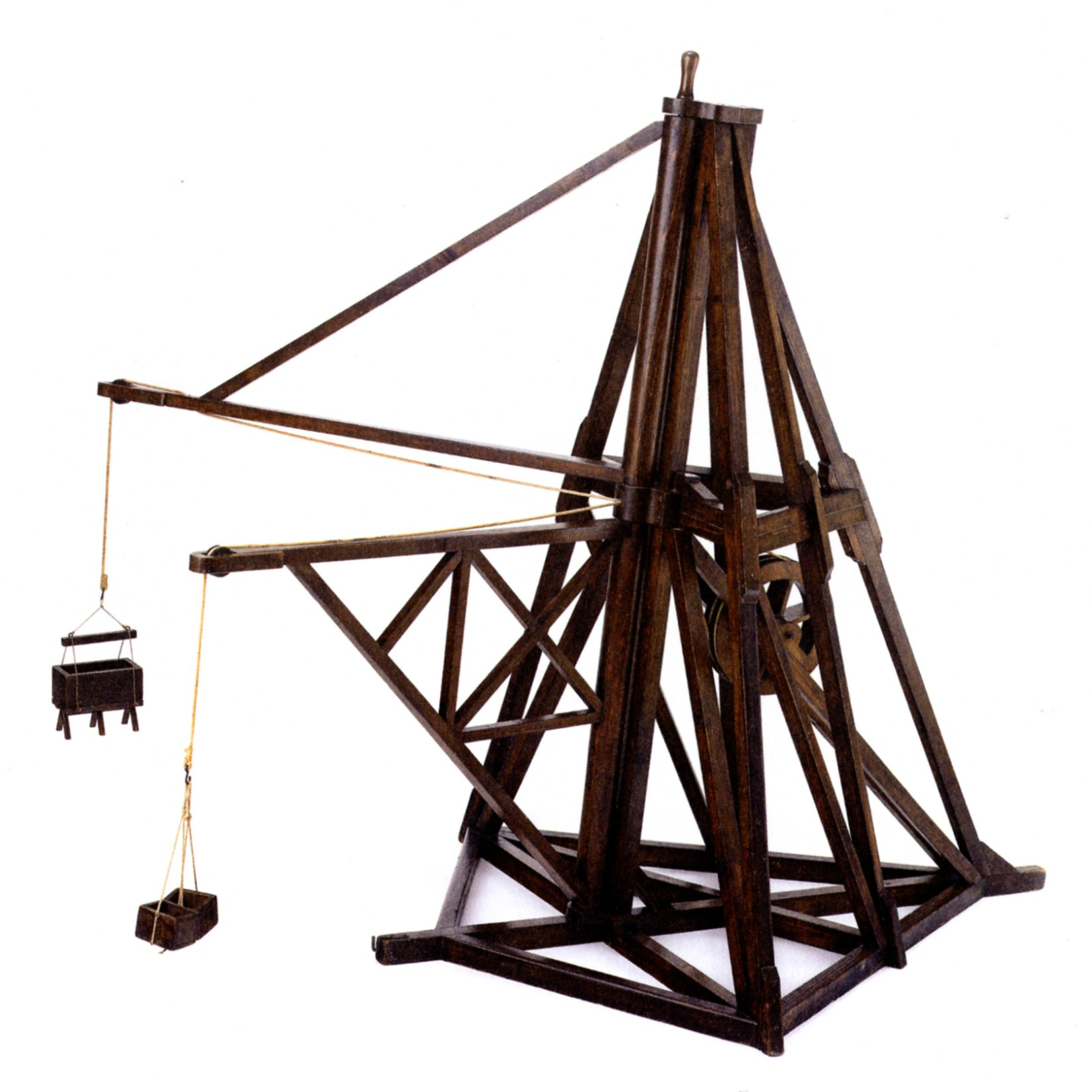
II modello rappresenta una macchina per la palificazione che può trovare impiego sia nella costruzione di argini che nell’edificazione di fondamenta di edifici, nonché per la pavimentazione di conche idrauliche.
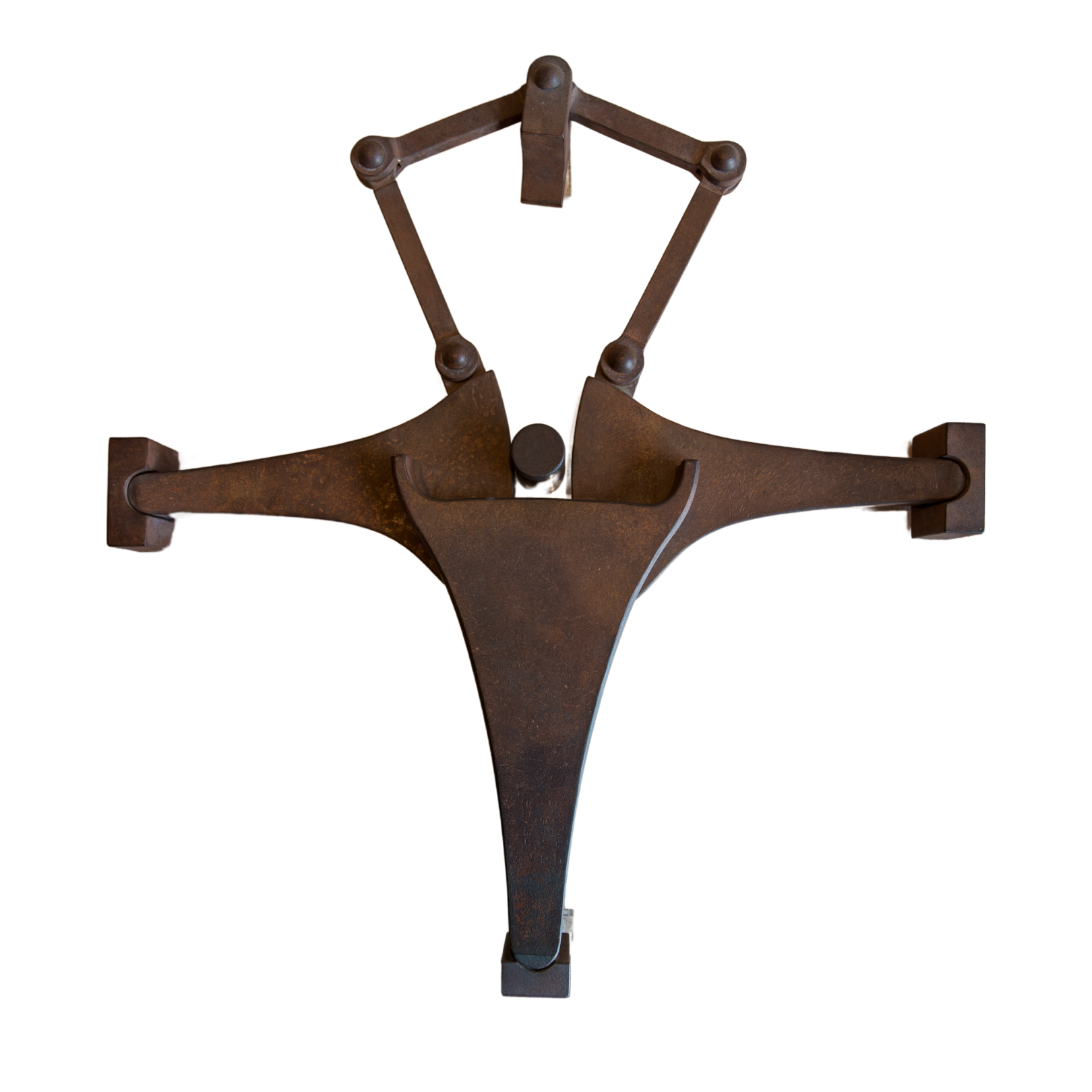
È composta da un telaio verticale con argano per il sollevamento del peso battente. Il peso è munito sulla testata di un congegno di presa costituito da due balestre mobili piegate in alto a forma di “S” che si fronteggiano e si accostano, mentre in basso sono tenute divaricate in modo che il tutto formi una “M”. Un cuneo a coda di rondine rovesciata, fissato alla corda dell’argano e sostenuto da una traversa munita di alette laterali che scorrendo fanno da guida, viene fatto velocemente discendere fino ad incastrarsi nel vuoto centrale della “M” che aprendosi lo lascia passare e poi si richiude sulle sue sporgenze laterali. Con l’azione dell’argano il peso viene sollevato in alto fino a che le due balestre della “M” non sono intercettate da due sporgenze laterali interne del telaio che le fanno restringere in basso ed aprire in alto, con la conseguente liberazione del peso e la sua caduta sulla testa del sottostante palo che viene così obbligato ad infiggersi nel terreno. La manovra, semplice e relativamente faticosa, può essere ripetuta celermente fino a conficcare il palo alla profondità voluta.

Technical informations

Type of exhibit
Modello
Material
Legno intagliato dipinto, corda, ferro, rame
Measures
Larghezza: 200 cm, Lunghezza: 50 cm; Profondità: 41 cm.
Storage location
Relationship with the original work
Derivazione: Leonardo da Vinci, Codice Atlantico, f. 784 r
Location
Museo Leonardiano, Castello dei conti Guidi, pianterreno

Related exhibits

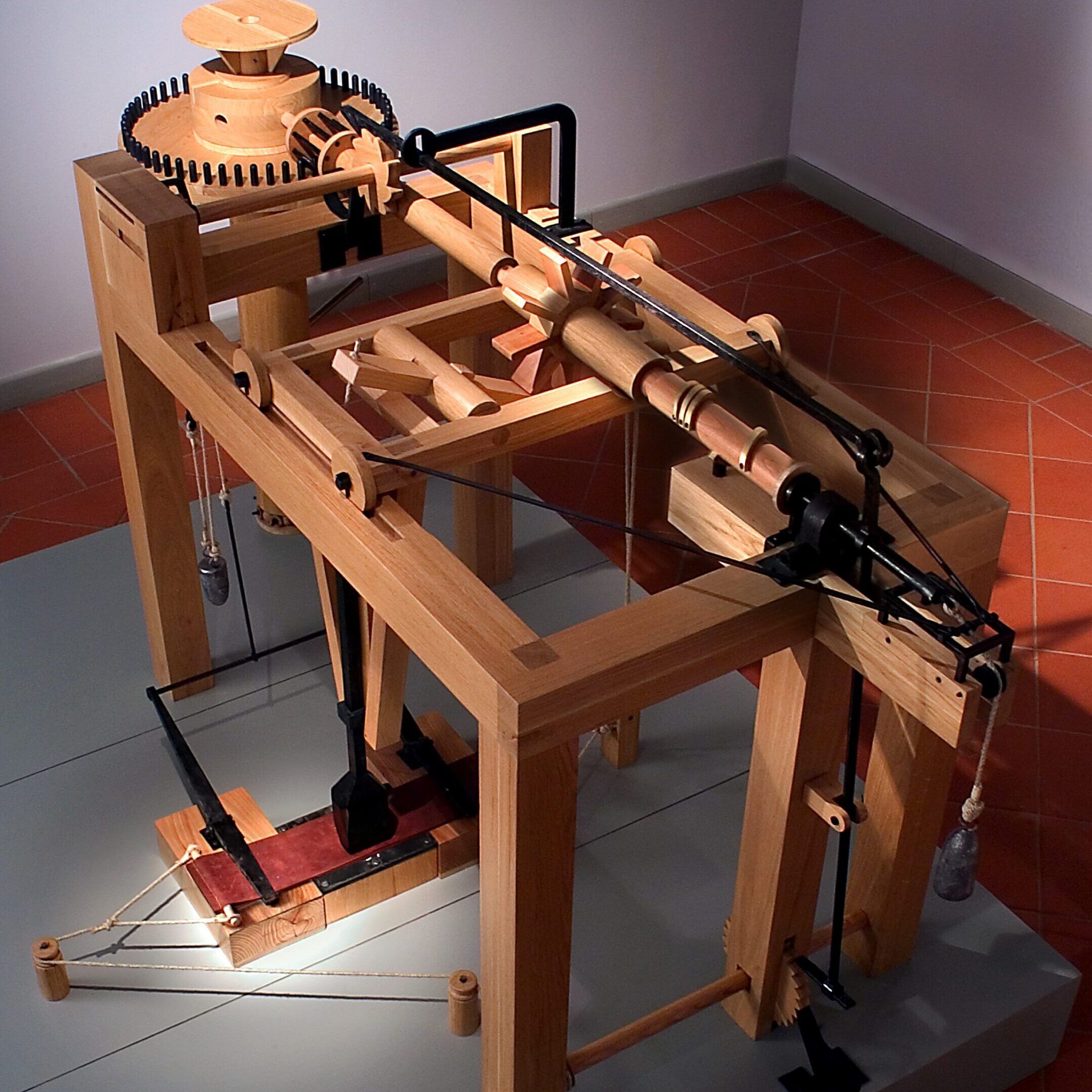
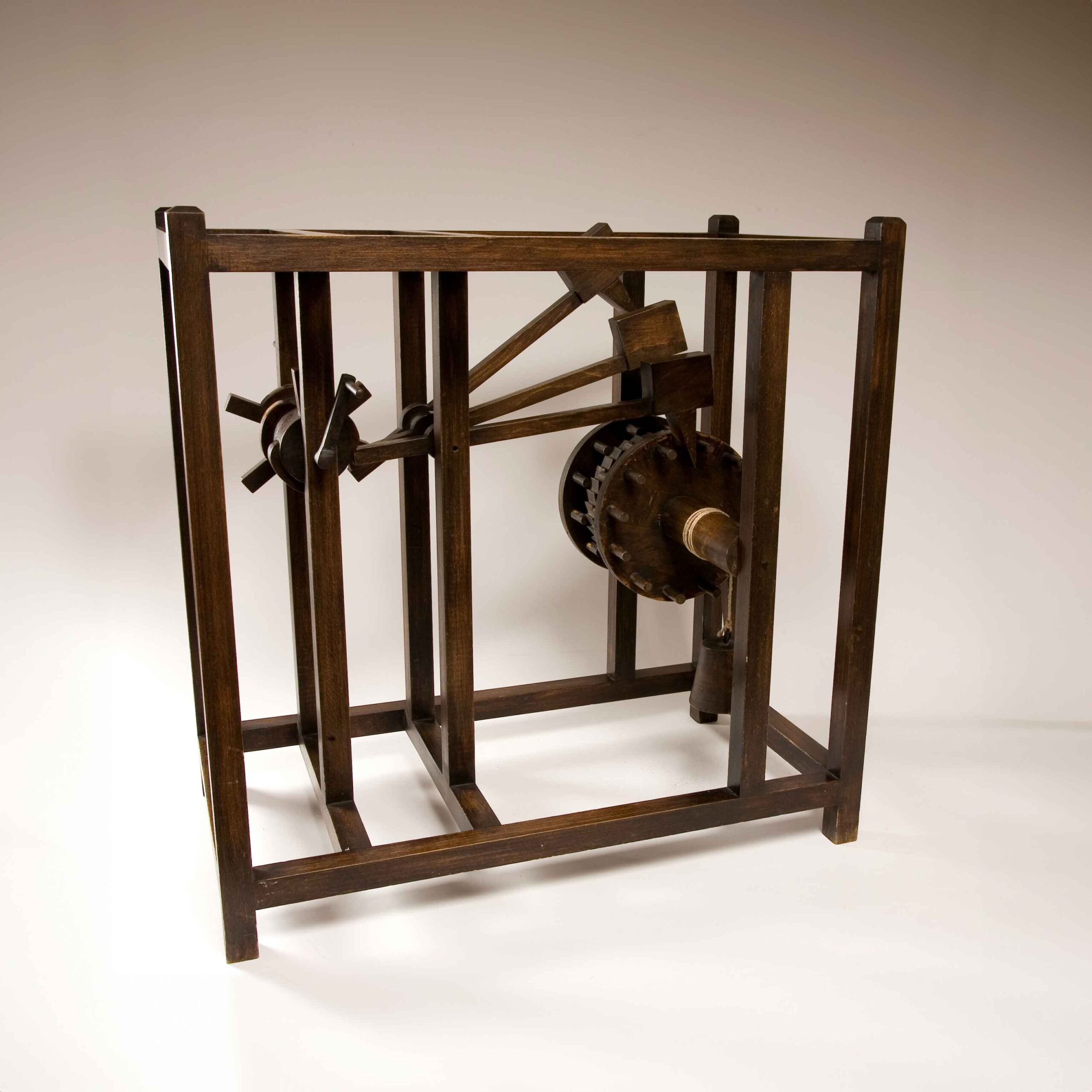
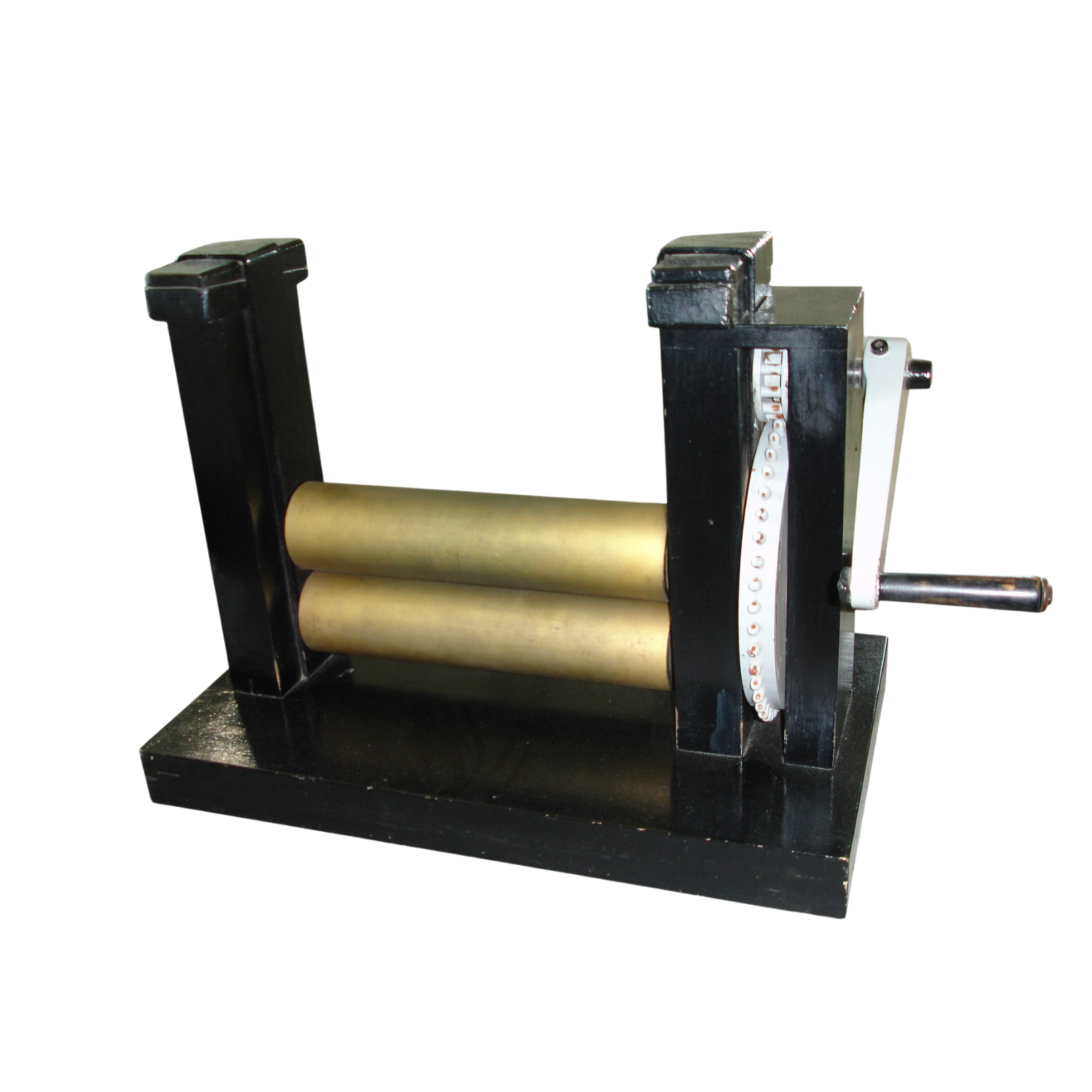
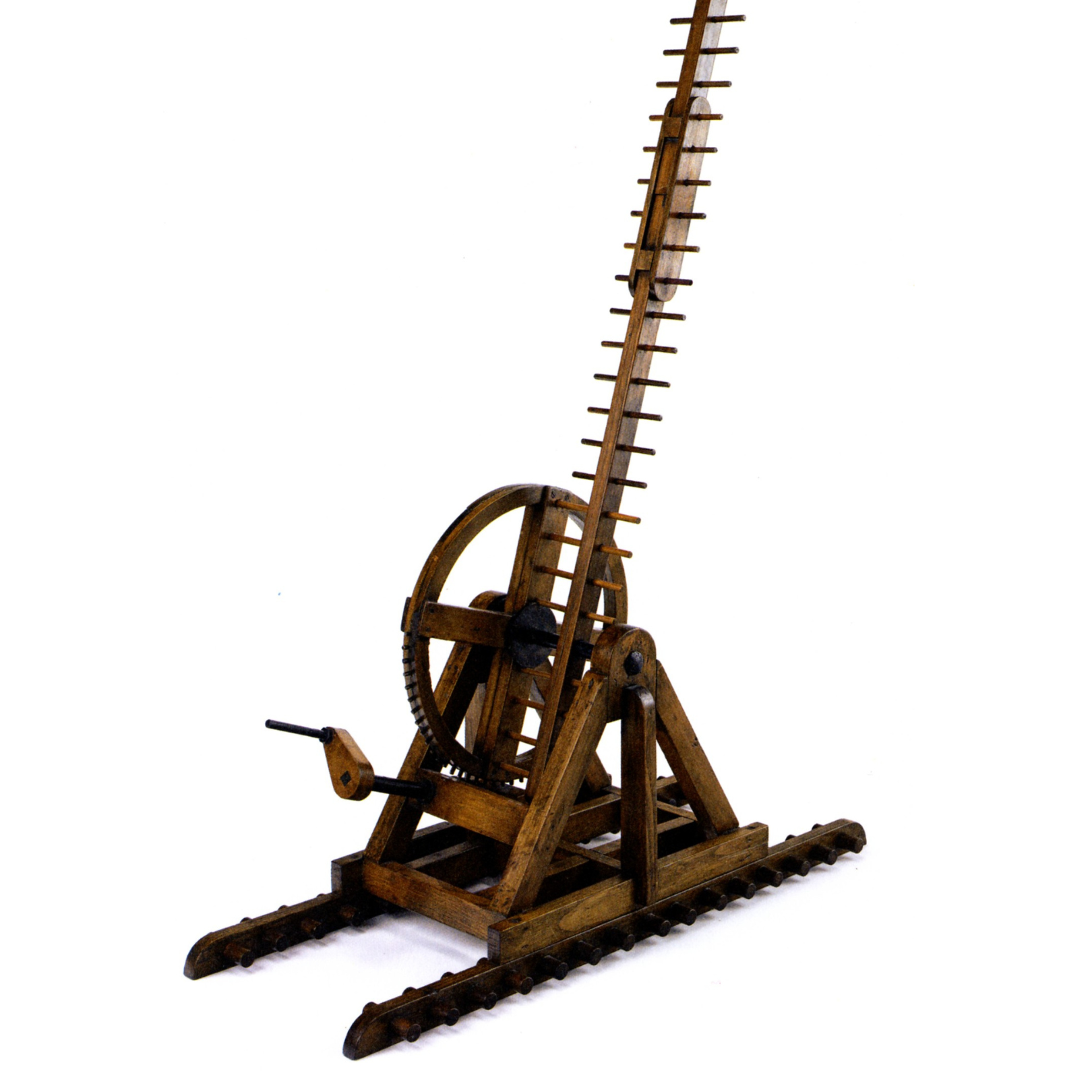
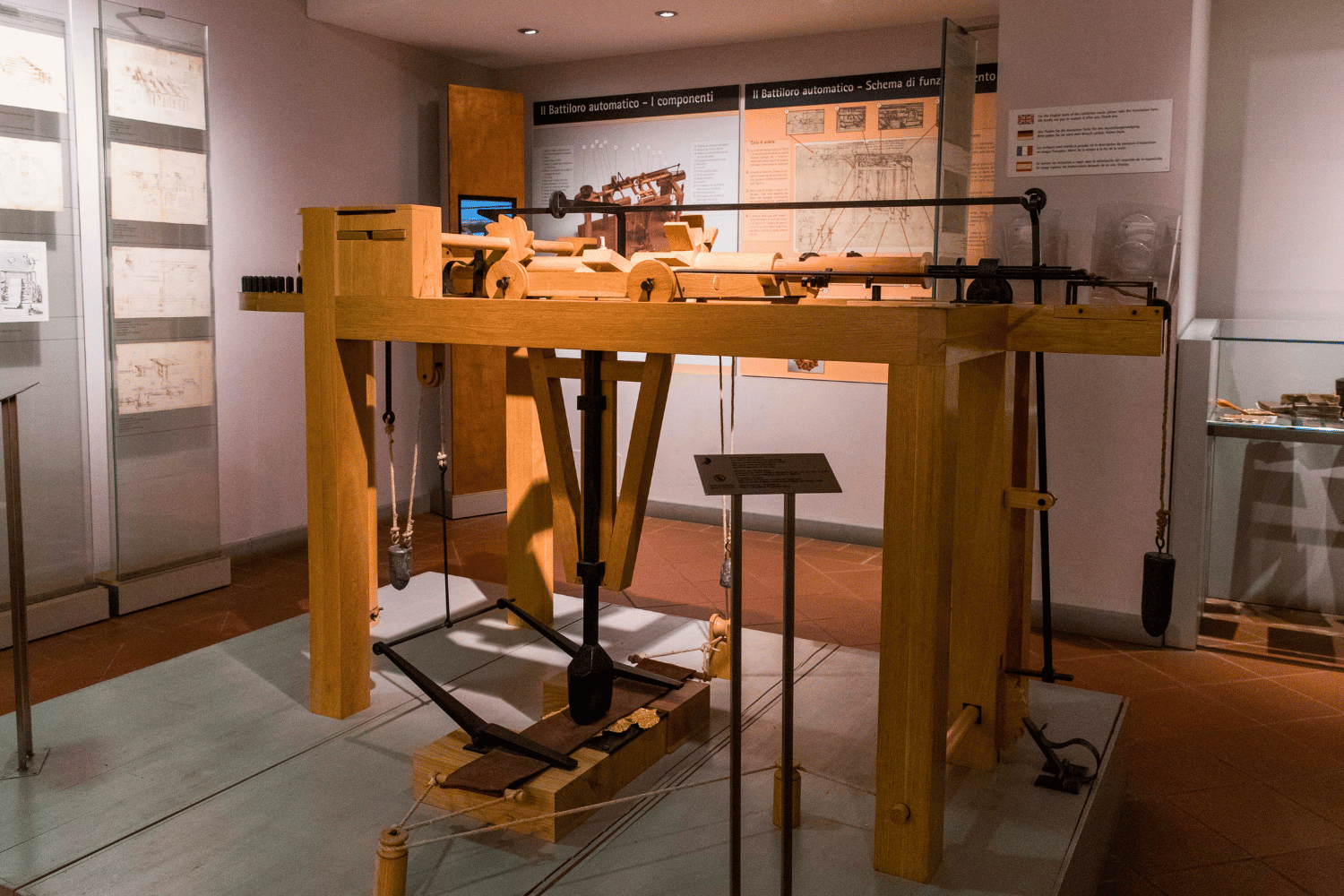
Leonardo proposed different solutions for automating the process of beating precious metals, or in other words, the work that the gold-beater carried out manually in his workshop to reduce gold and silver down to very thin sheets, which would then be used for producing threads of precious metals, or for gilding frames, or for use in paintings.

One of his most remarkable designs was the mechanical gold-beater. The device was set into operation by turning a driving wheel capable of simultaneously actuating a series of synchronized devices and automated mechanisms, made up of pulleys, toothed wheels, and counterweights. The metal to be processed moved along at the base of the gold-beating machine, where it was beaten by a mallet actuated by a device connected with the upper part of the machine.
Leonardo’s intentions were probably to make use of the gold-beating machine in the production of auroseric threads, obtained by wrapping fine strips of silver or gold around a silk thread.

Technical informations

Type of exhibit
Model
Collection
Material
Wood, iron, leather, rope, lead, and gold leaf.
Measures
Width: 123 cm, Length: 250 cm; Depth: 140 cm.
Storage location
Relationship with the original work
Source: Leonardo da Vinci, Codex Atlanticus, f. 29 r
Location
Museo Leonardiano, Palazzina Uzielli, first floor

Related exhibits

Last update: 19 June 2025, 14:32

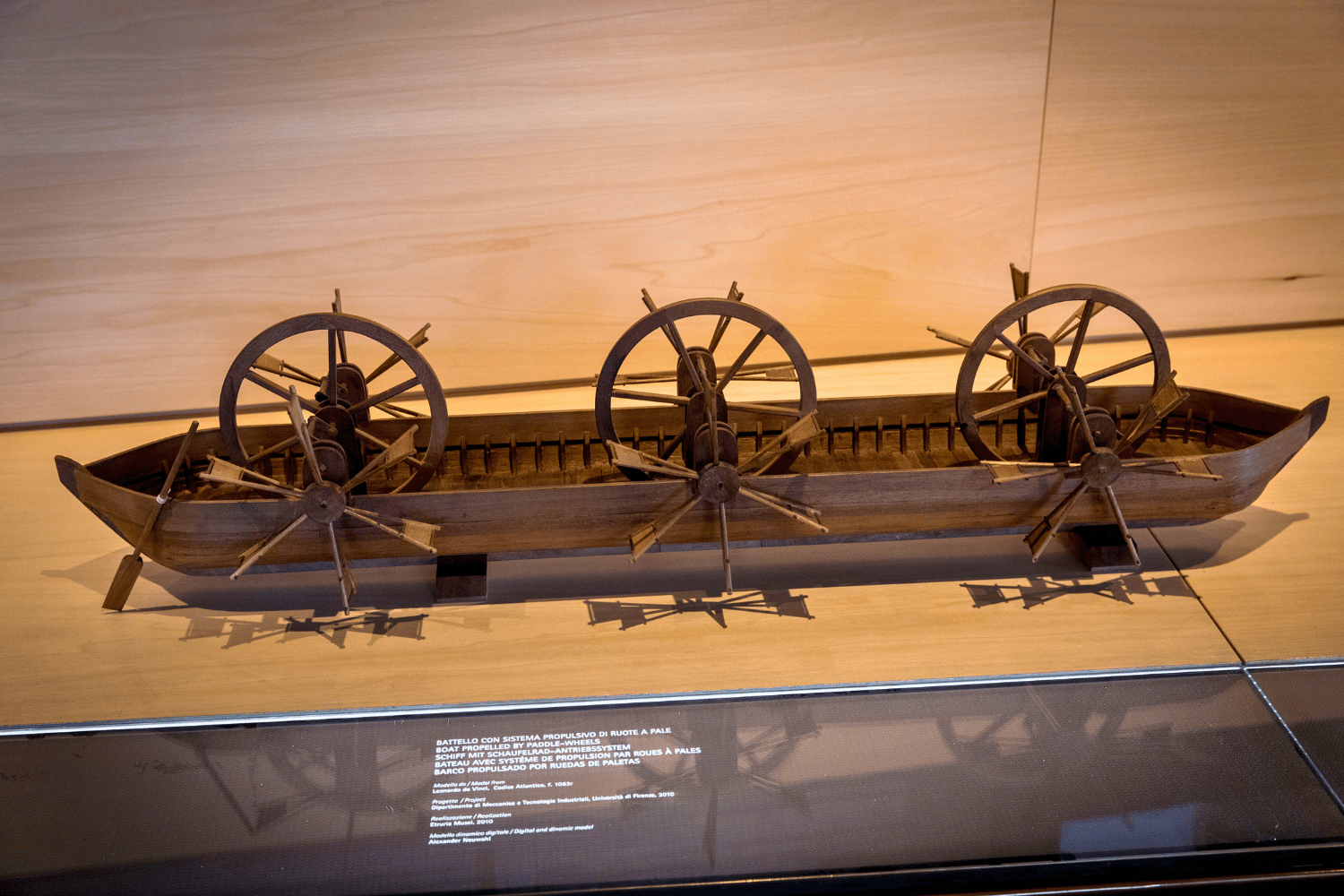
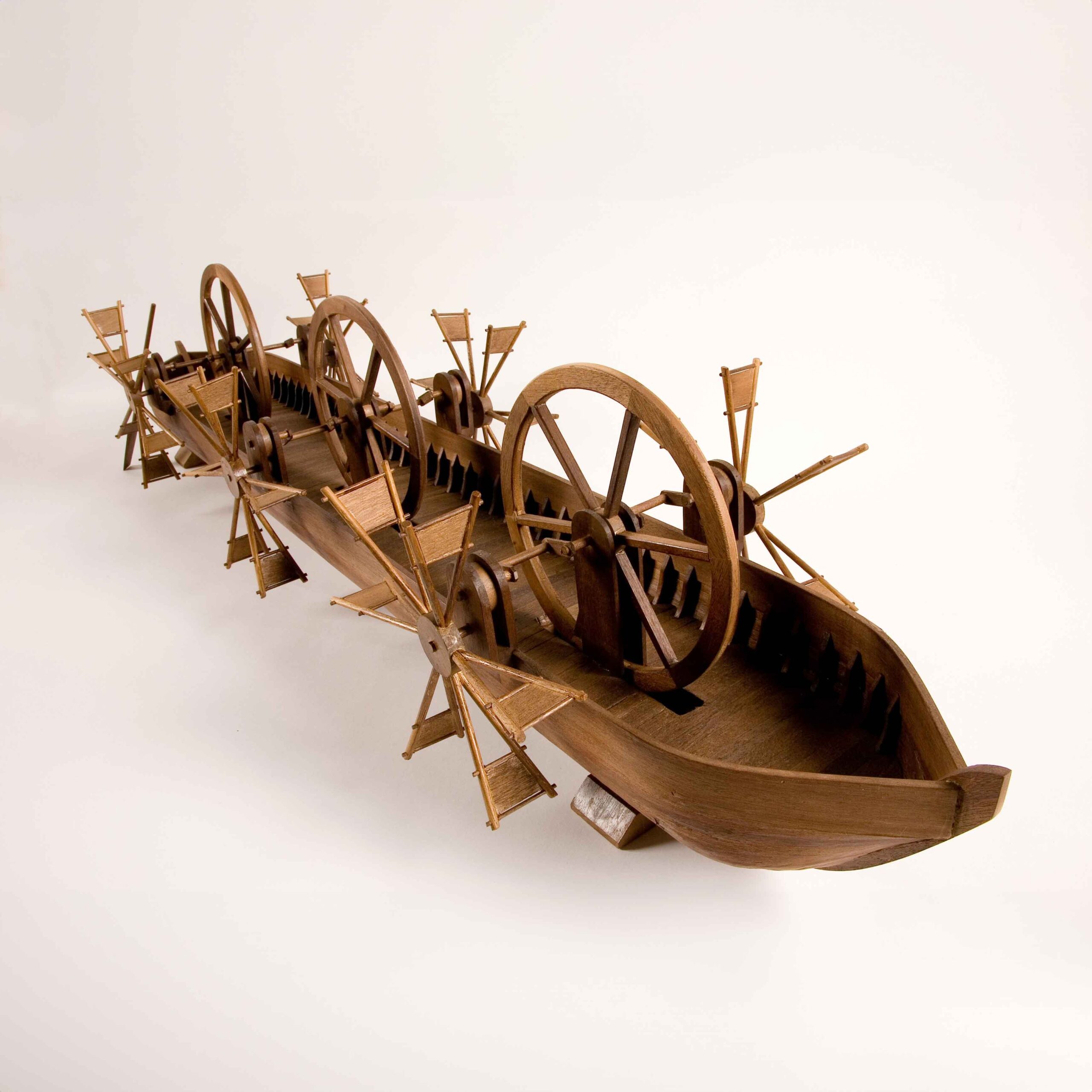
Taking up from the studies of his predecessors, Leonardo developed the idea of a boat with a paddle-wheel propulsion system, equipped with mechanisms capable of increasing navigation speed and of augmenting the transportable load over that of traditional rowboats or sailboats.

The boat moves along by means of three pairs of paddle wheels that are moved by cranks turned by human effort. The meshing of the toothed wheels and lantern pinions provide excellent performance output, through multiplication of the revolutions of the paddles.
To make the rotation more uniform, and thereby ease the work of the operators, Leonardo introduced the use of flywheels: large wheels connected directly to the cranks. As these turn, they accumulate mechanical energy, releasing it then during phases of low energy input.

Technical informations

Type of exhibit
Model
Collection
Material
Wood
Measures
Width:101 cm,Height:24 cm,Depth:26 cm.
Storage location
Relationship with the original work
Source: Leonardo da Vinci, Codex Atlanticus, f. 1063 r
Location
Museo Leonardiano, Counts Guidi's castle, first floor

Related exhibits

Last update: 17 November 2025, 12:56

Water storage basin in Vinci

Alexander Neuwahl

2019

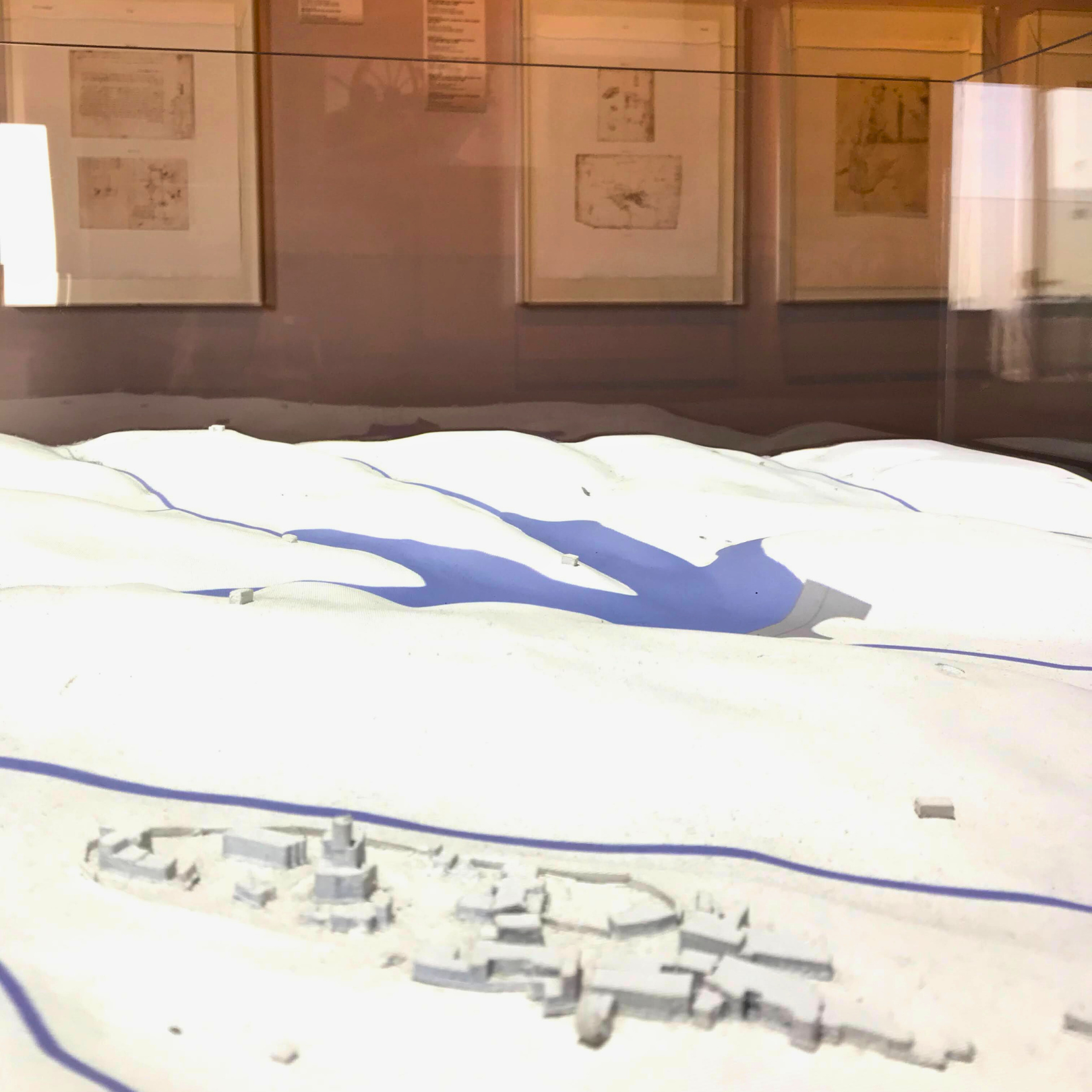
The multimedia model, which reproduces the village of Vinci and its surroundings as they appeared in the 19th-century Leopoldine Cadastre, is brought to life by an evocative video mapping that reconstructs Leonardo’s project for a large dam intended to create a water-storage basin in the area of Serravalle, east of the village of Vinci, on land owned by his father, Ser Piero da Vinci. The structure was designed to collect the water of several streams in a vast reservoir to power a manufacturing facility, such as a mill.

Approximately 230 meters long and reinforced with massive buttresses, it could have contained one million cubic meters of water.

Technical informations

Type of exhibit
Multimedia model
Collection
Material
Storage location
Relationship with the original work
Source: Leonardo da Vinci, Windsor Collection, RL 912675
Location
Museo Leonardiano, Counts Guidi's castle, first floor

Related exhibits

Last update: 17 November 2025, 13:06

How clear is the information on this page?

Thank you, your feedback will help us improve the service!

What were your favorite aspects?1/2

Dove hai incontrato le maggiori difficoltà?1/2

Do you want to add more details?2/2

Enter a maximum of 200 characters

This website is protected by reCAPTCHA. Google Privacy Policy and Terms of Use di applies.