Icona che richiama un banner d'attenzione

FOR GROUPS AND SCHOOL PARTIES ARRIVING BY BUS: Please be advised that, due to ongoing works in the village, bus access may be difficult.
We therefore recommend parking in Via Cerretana and continuing on foot.

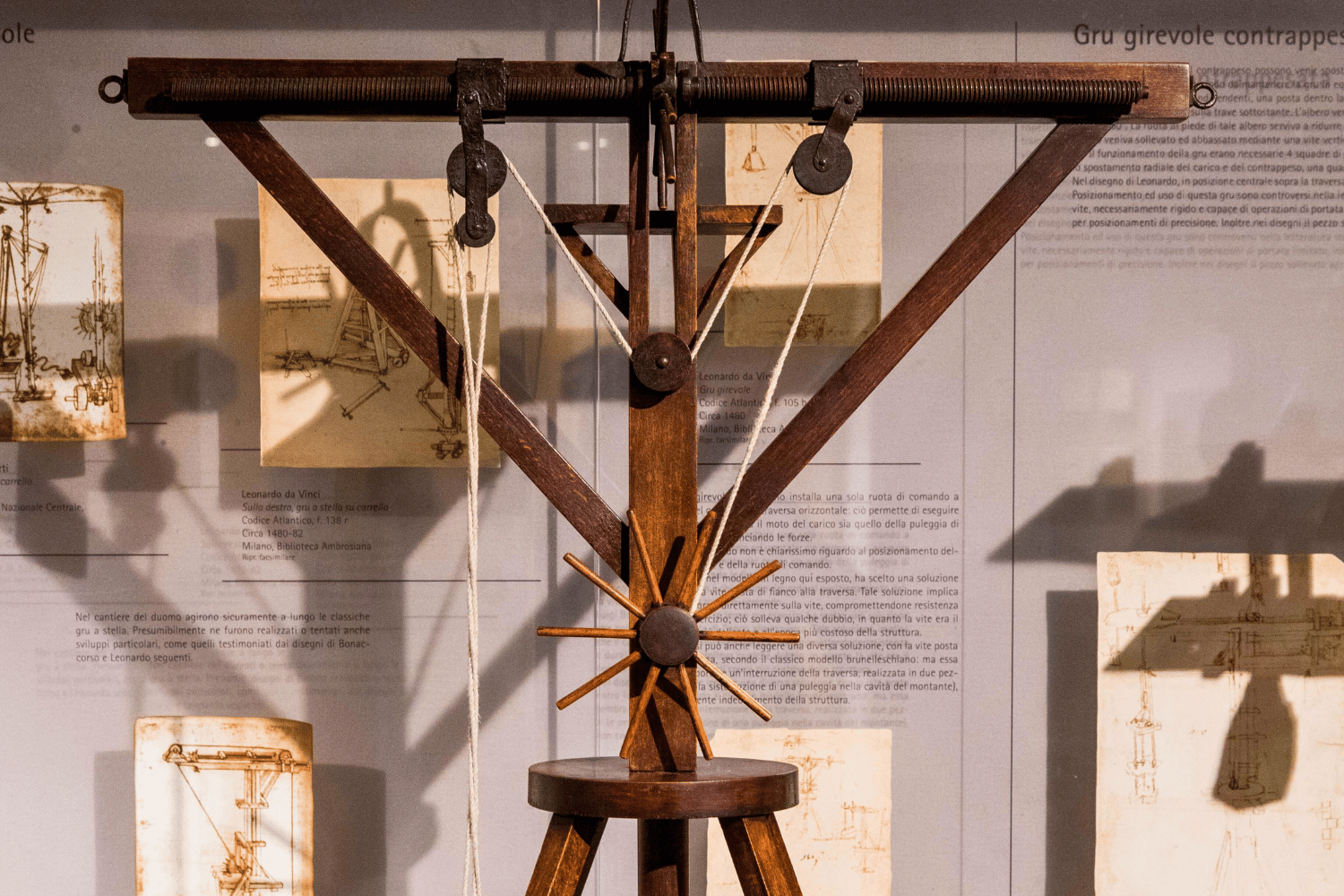
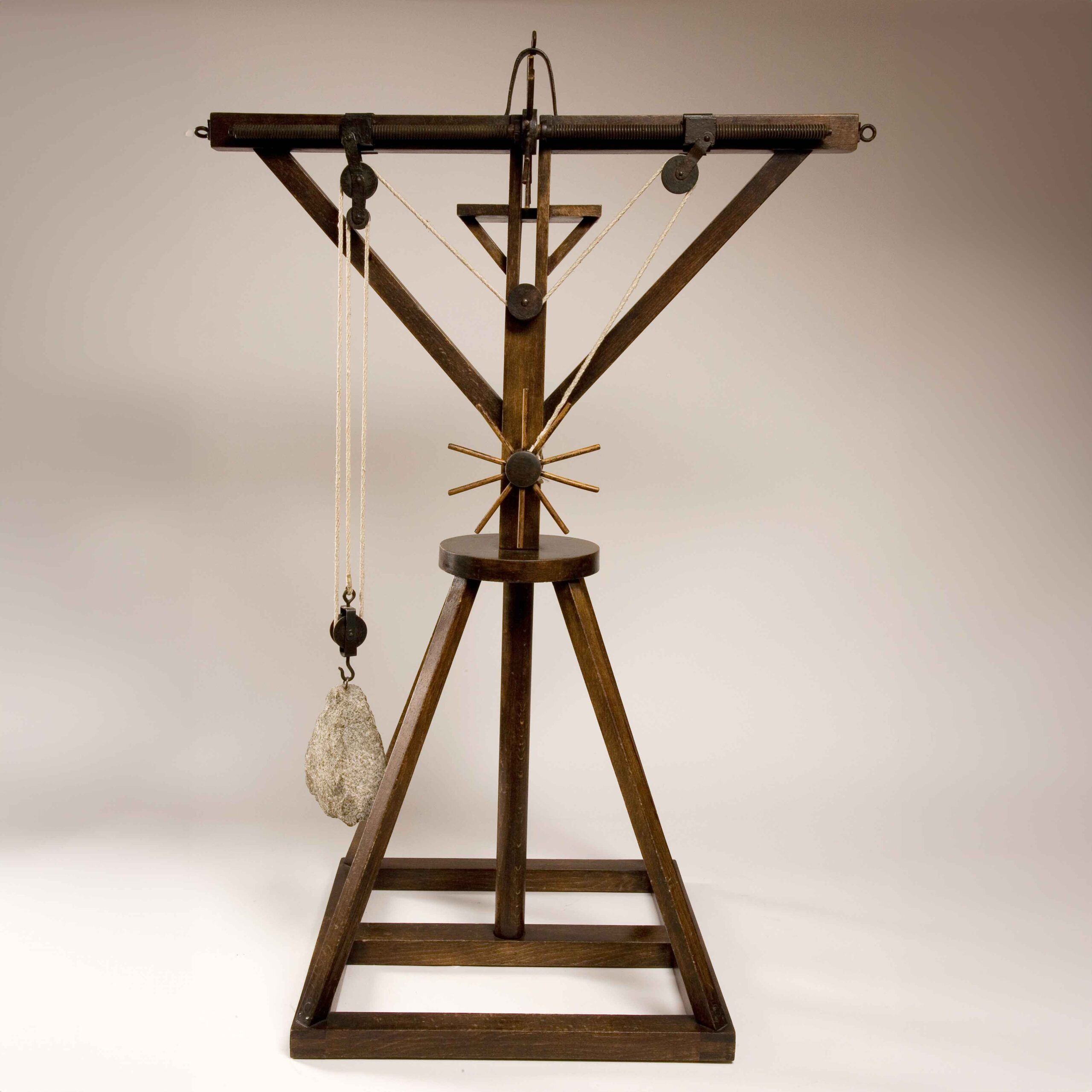
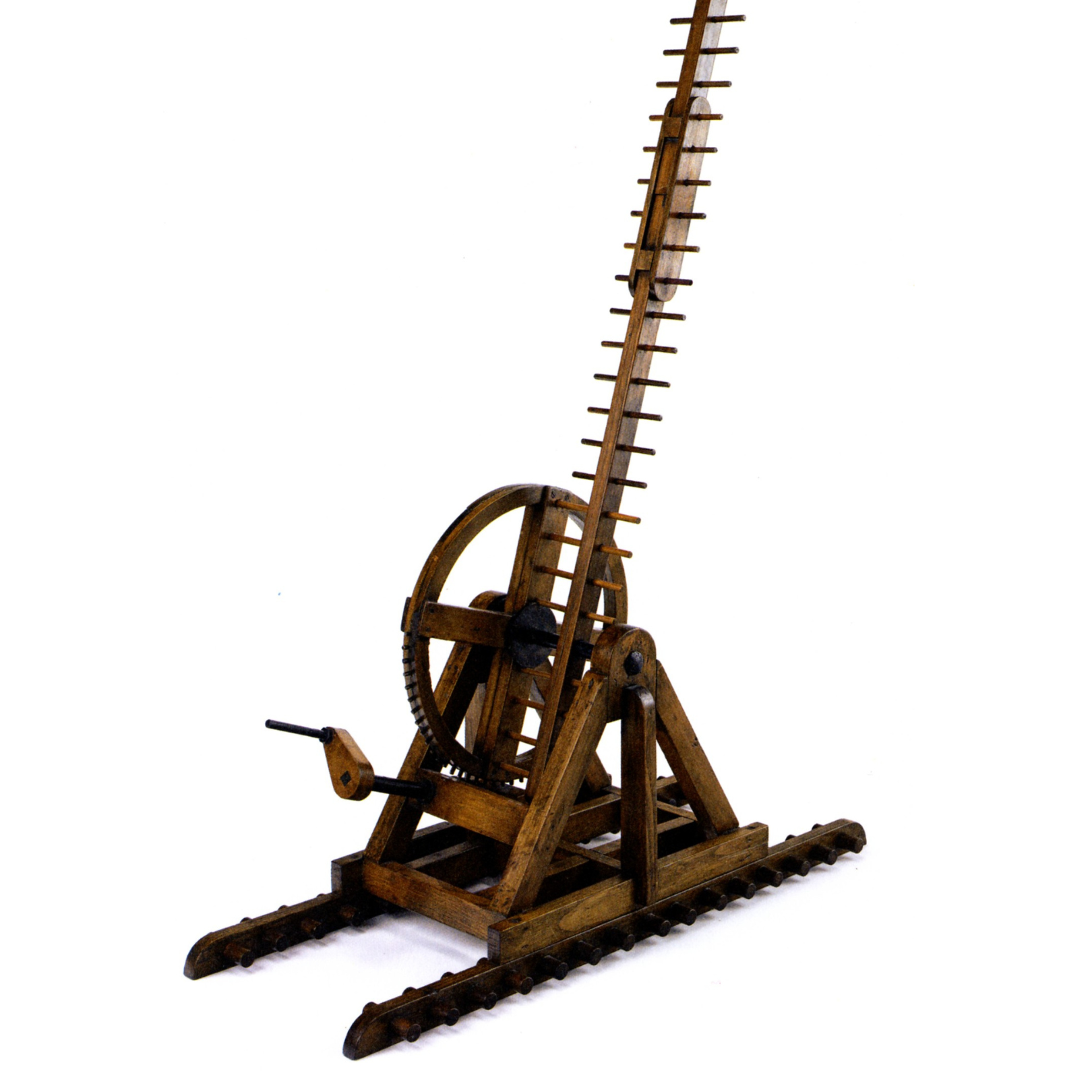
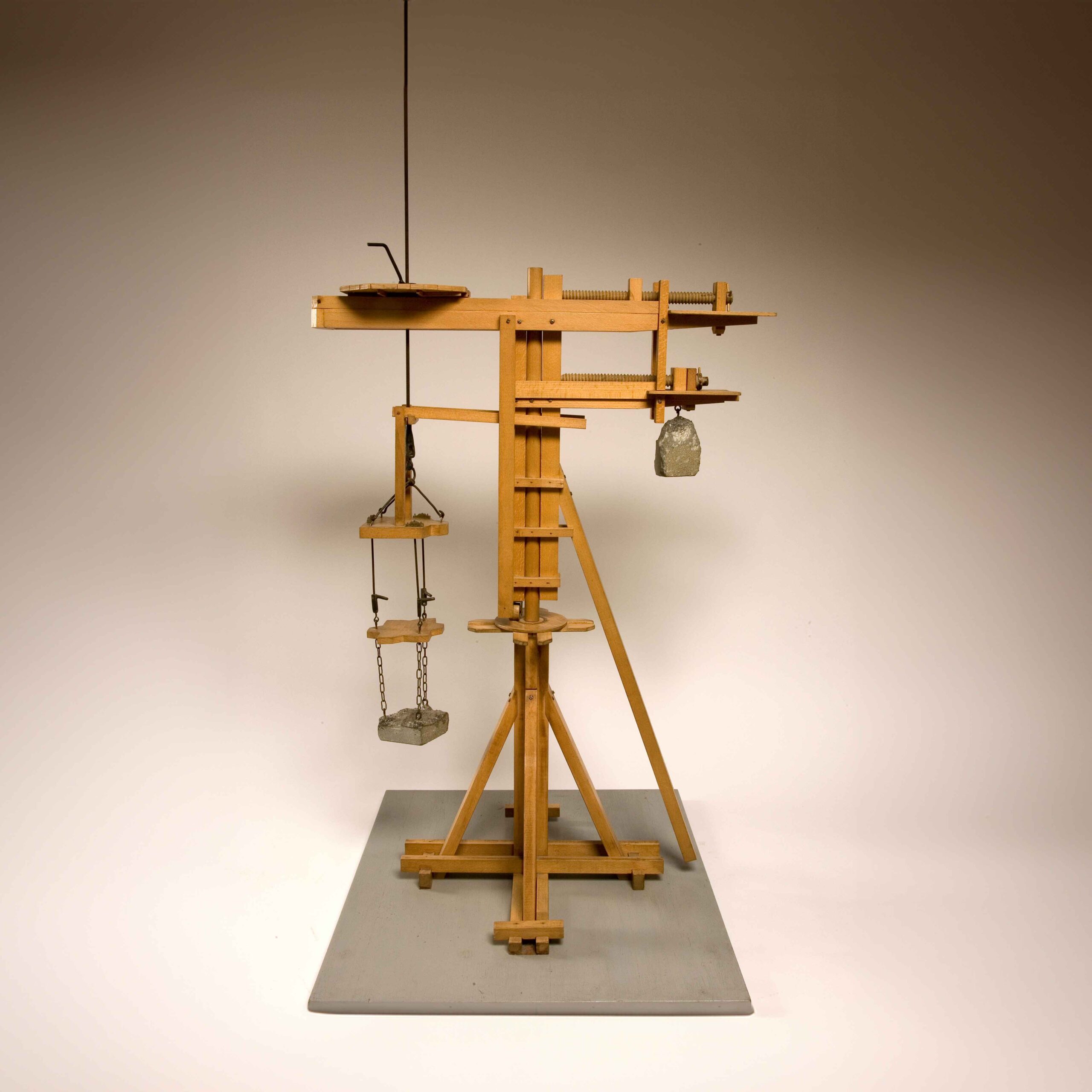
Swivel crane

Luigi Boldetti

1966

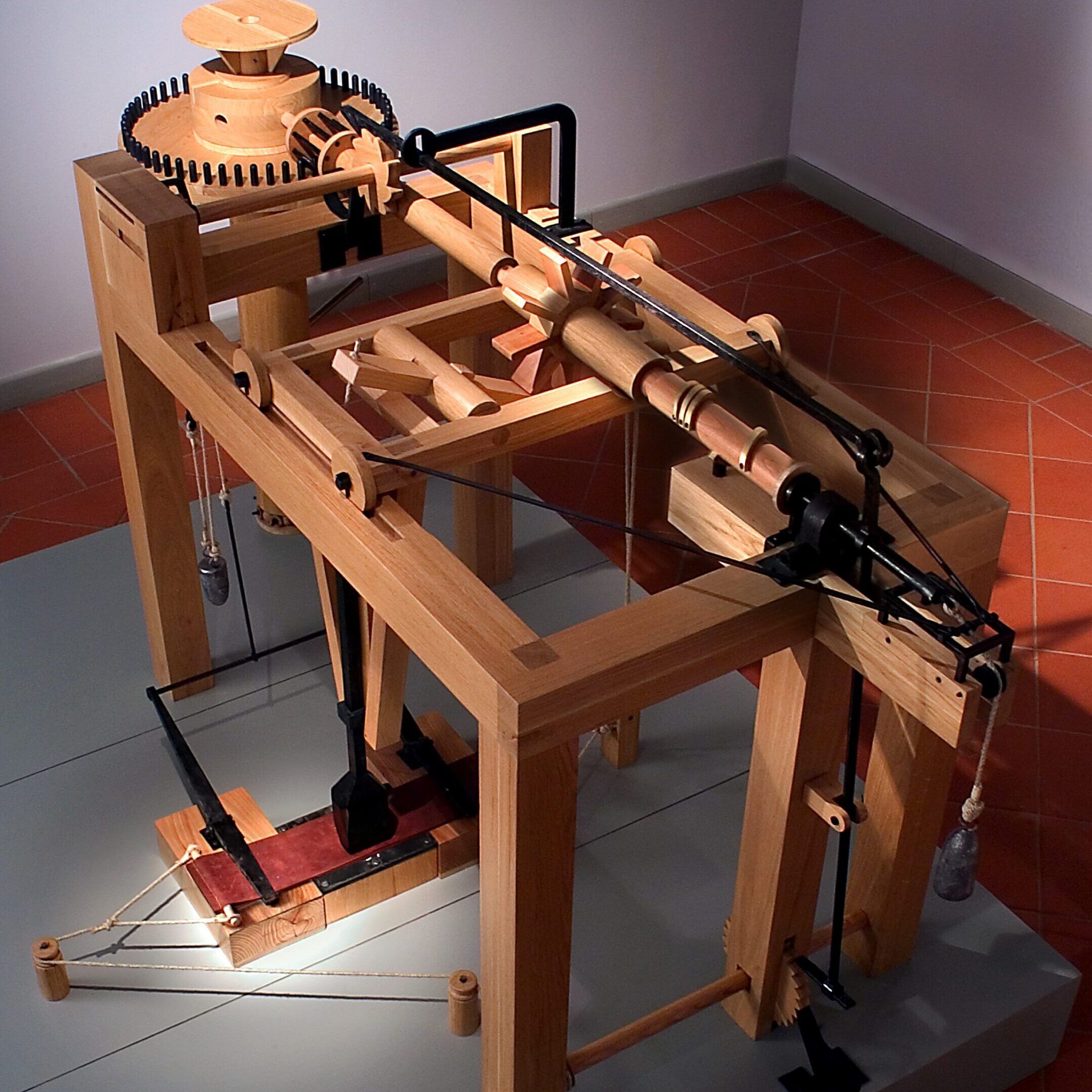
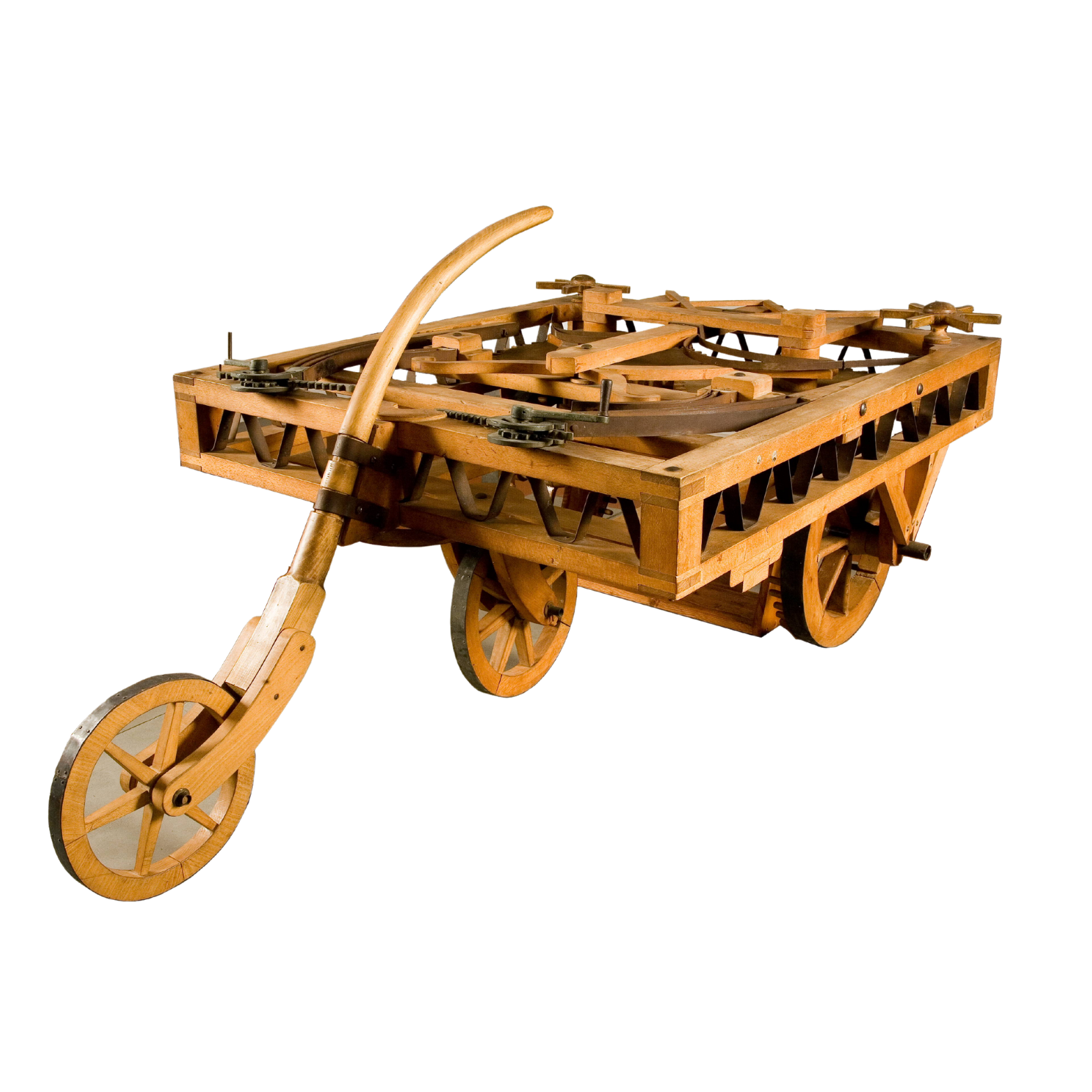
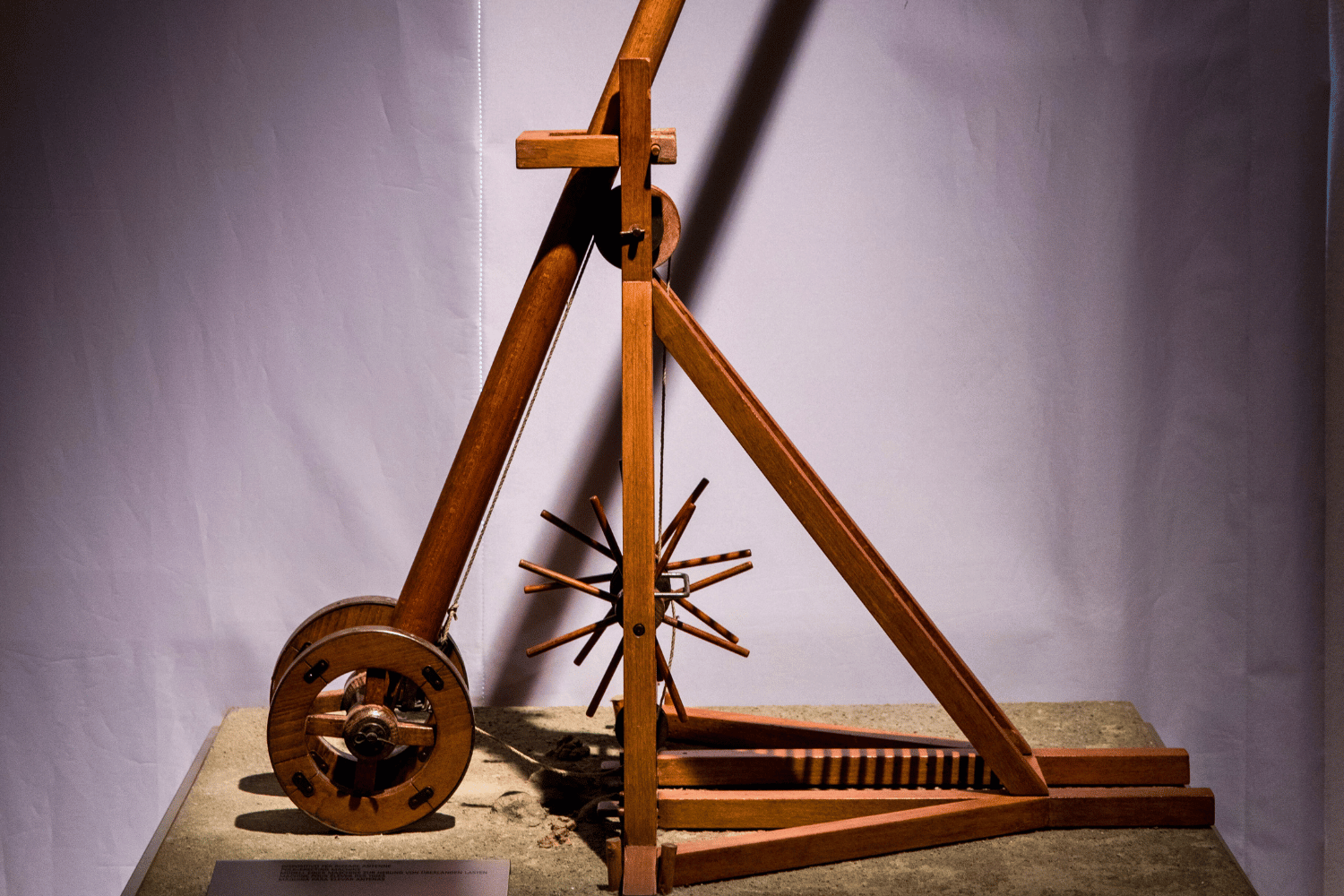
Among the pieces of construction site machinery probably designed by Brunelleschi for the construction works for the Florence Cathedral dome, and drawn by Leonardo, we also find the swivel crane, reconstructed in 1966 by the engineer Boldetti.

Consisting of a fixed base and a rotating vertical mast, the crane is powered by two teams of workers: the first, on a platform situated halfway up, has the task of maneuvering a wheel with radial handles connected to a system of pulleys, making it possible to raise the load. The other team, on a platform at the top, at the center of the horizontal crosspiece, actuates a “reversing” screw for shifting the load transversely, again by means of a wheel with radial handles.

Technical informations

Type of exhibit
Model
Material
Carved wood, wrought iron, cotton rope, granite
Measures
Width: 101 cm, Length: 72 cm, Depth: 43.5 cm
Storage location
Relationship with the original work
Source: Leonardo da Vinci, Codex Atlanticus, f. 105 v
Inventory number
Object Record No.: 00000024
Location
Museo Leonardiano, Palazzina Uzielli, first floor
Last update: 19 September 2025, 11:52

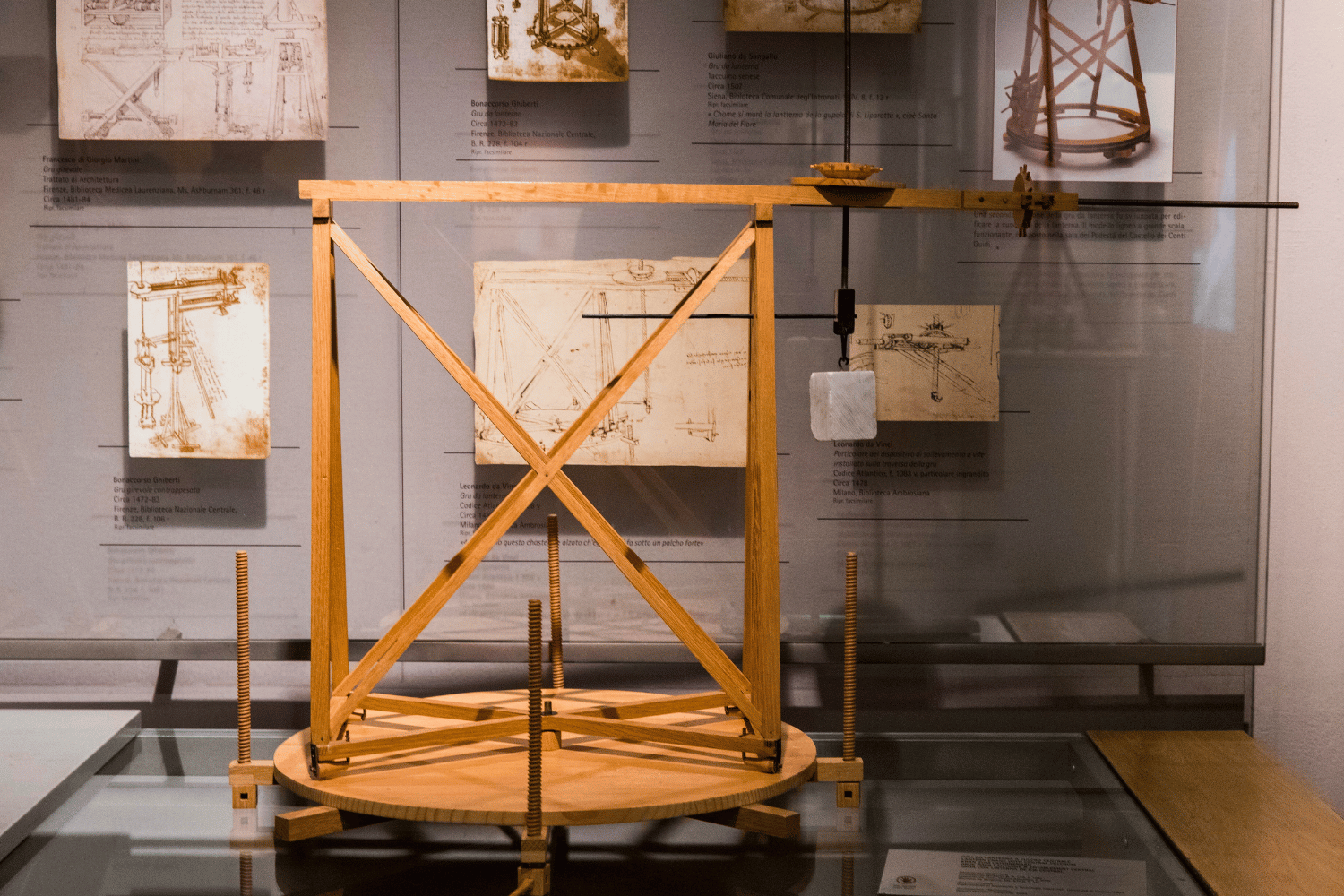
Rotating central-fulcrum crane for the cathedral lantern

Made by
Università di Firenze, Facoltà di Ingegneria, Dipartimento di Meccanica e Tecnologie industriali

2004

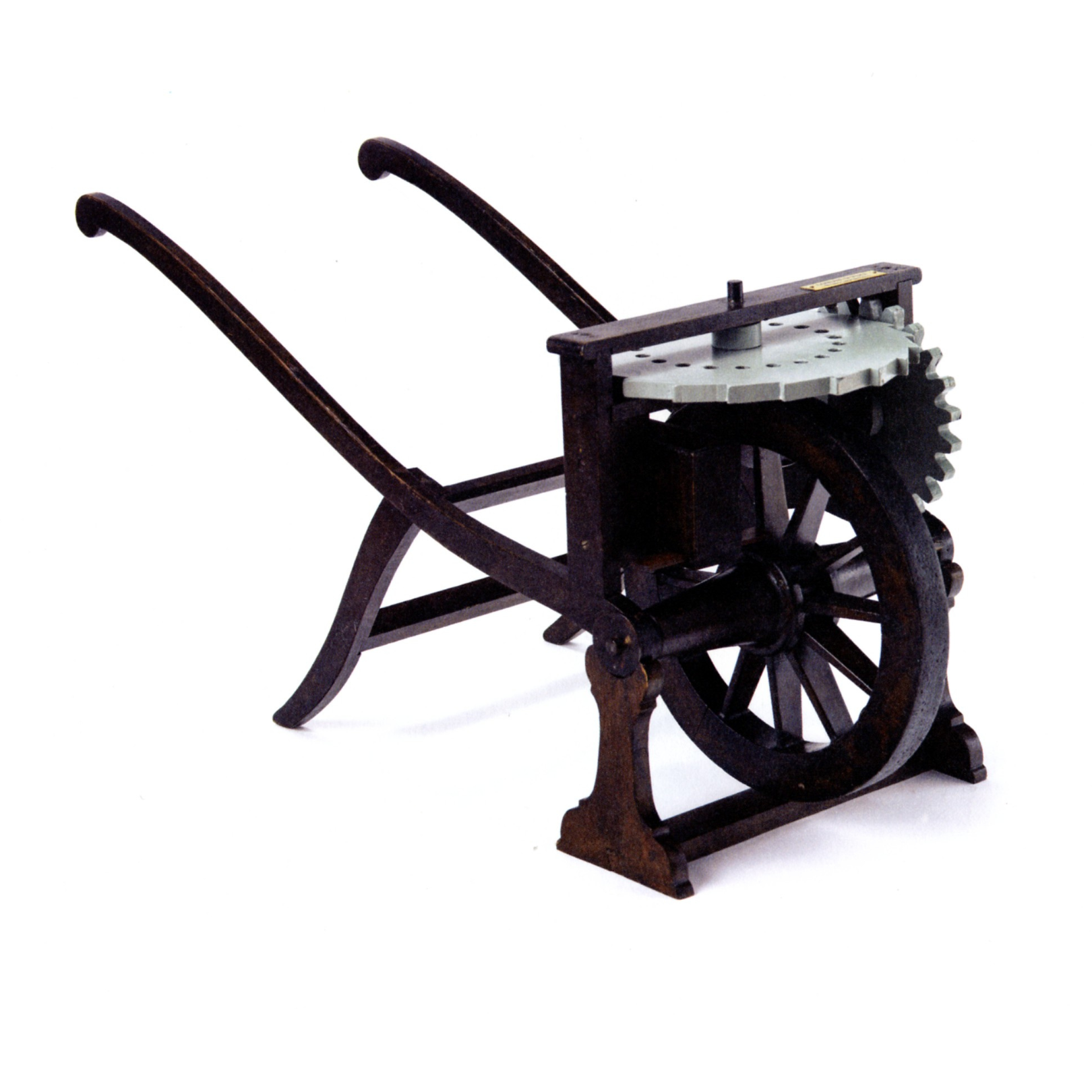
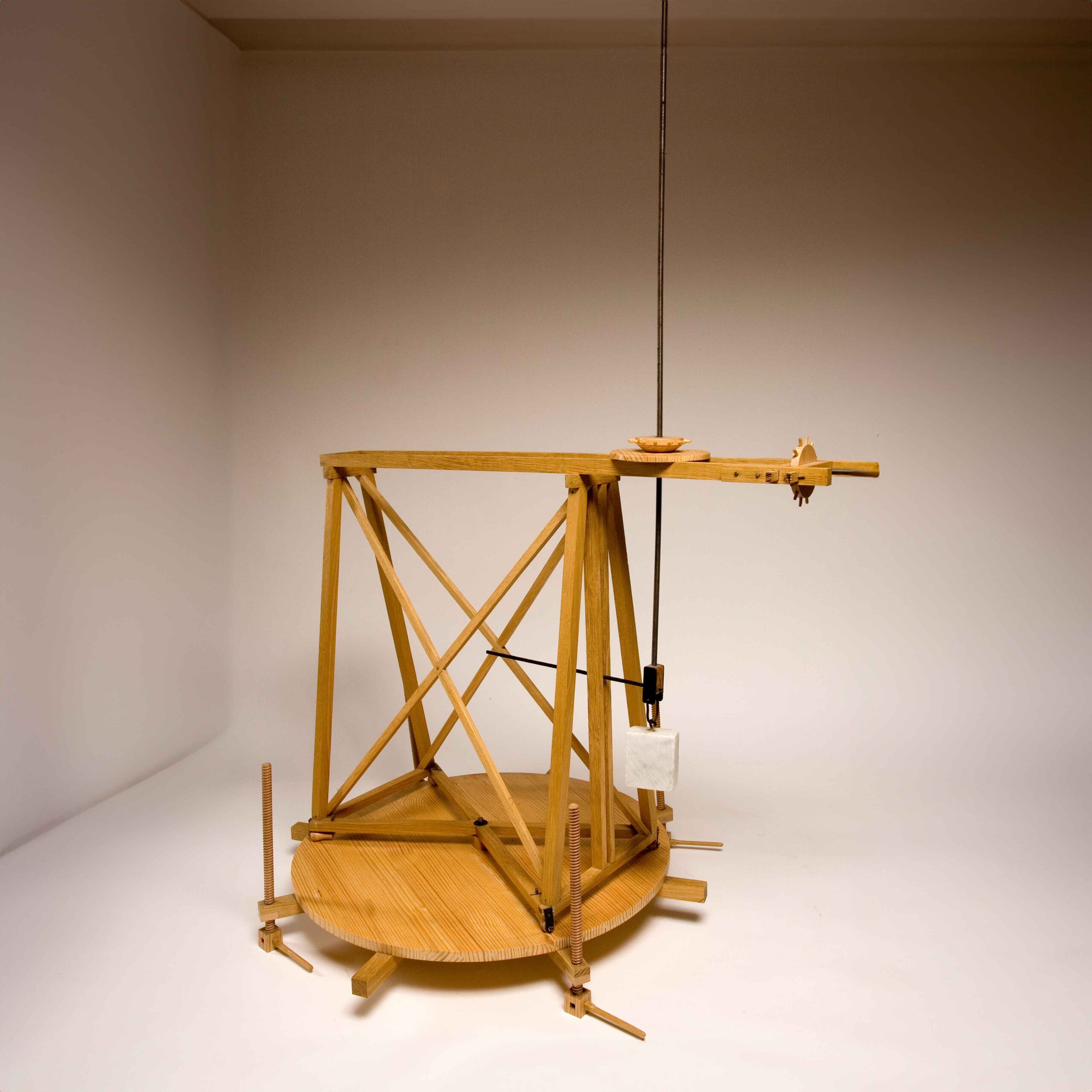
Designed by Filippo Brunelleschi, but put into use only after his death in 1446, this crane was used for the construction works for the lantern of the Florence Cathedral’s dome. The machine was mounted on a circular, rotating platform and positioned at the center of the eye of the dome, that is, inside the perimeter upon which the walls of the lantern were to be erected. As the walling gradually mounted in height, the platform was raised by means of screws. In order to lift and horizontally shift the marble blocks, the crane made use of an arm that could swivel 360°, with a system composed of two endless screws, driven by two wooden disks acting as screw bolts. A second version of this crane was also developed, reproduced in 1:2 scale, which can be viewed in the Hall of the Podesta in the Castle of the Counts Guidi.

Technical informations

Type of exhibit
Model
Material
Wood, iron, marble
Measures
Width: 100 cm, Length: 83 cm, Diameter: 47 cm
Storage location
Relationship with the original work
Source: Leonardo da Vinci, Codex Atlanticus, f. 808 v
Location
Museo Leonardiano, Palazzina Uzielli, first floor
Related exhibits

Last update: 19 September 2025, 11:56

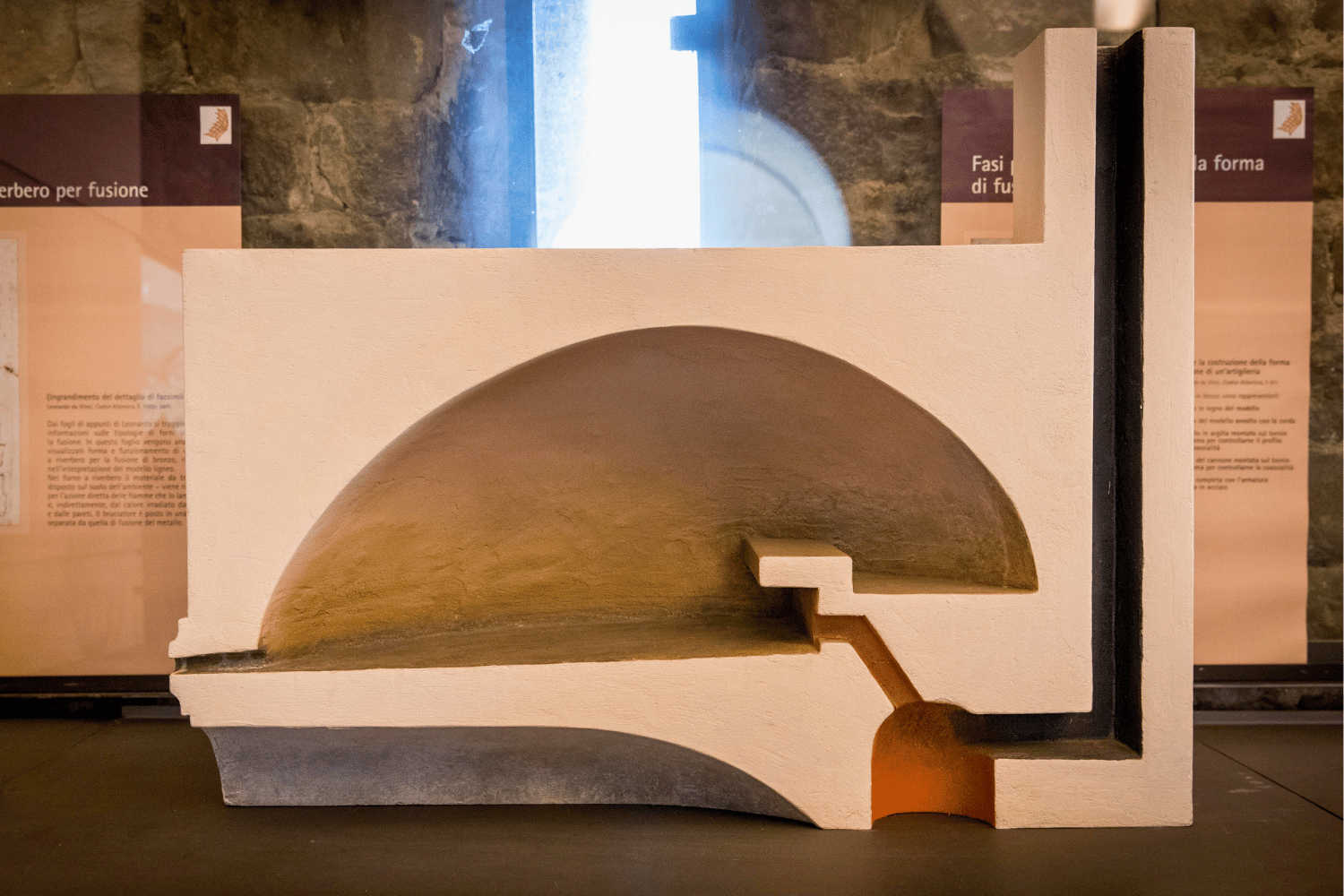
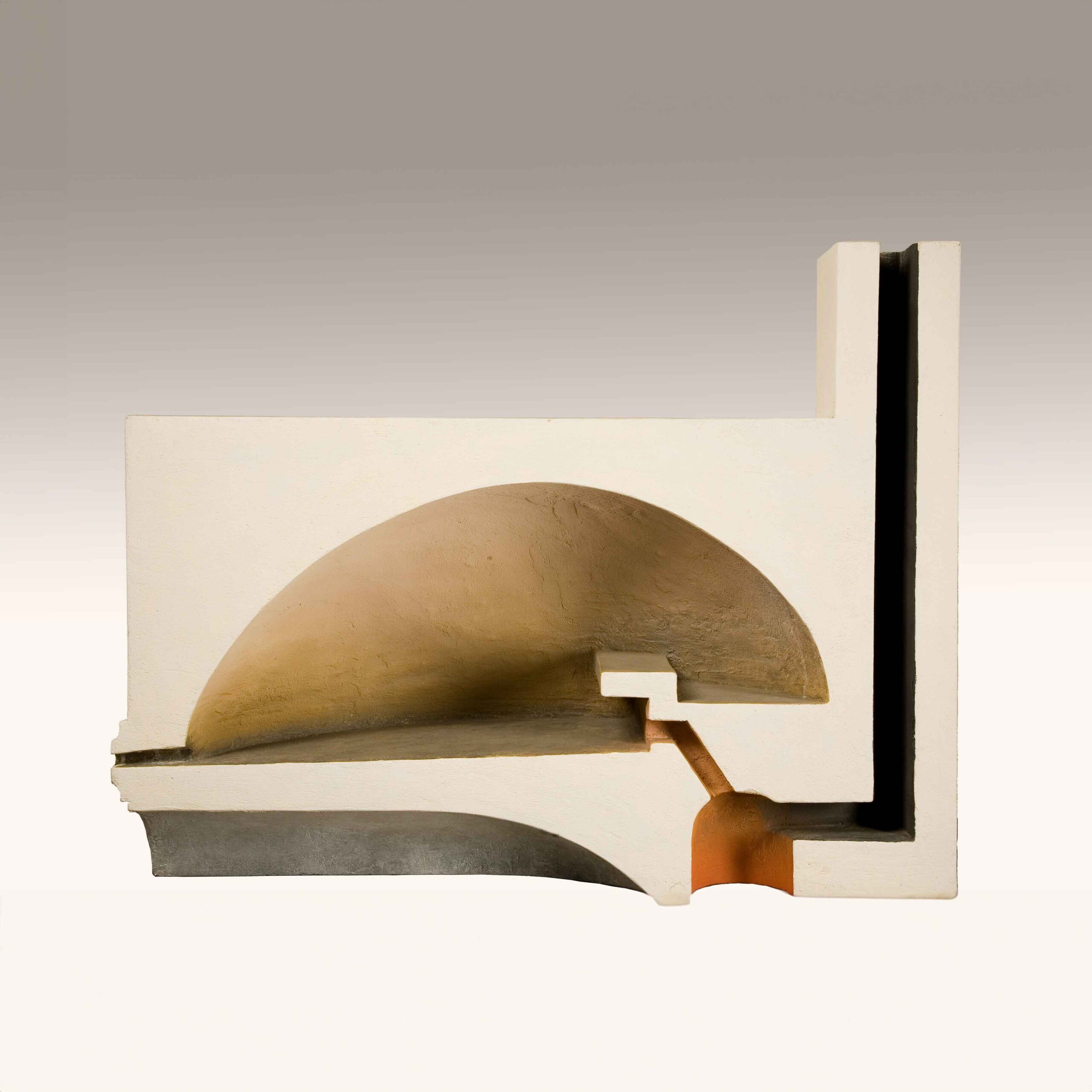
Furnace for melting bronze

Made by
IBM Italia

1953

Among Leonardo’s interests, we also find the art of foundry. His manuscripts, in fact, display drawings of various typologies of furnaces for founding metals. The model represents a sectional view of an open-hearth furnace for founding bronze. The metal was placed on the pavement of a broad vaulted chamber, called the founding chamber, and heated to liquefaction by means of the heat radiating from the chamber vault and walls. The furnace is separated from the melting chamber and is equipped with a smokestack for expelling the smoke generated by combustion.

Technical informations

Type of exhibit
Model
Collection
Material
Carved and painted wood, plaster.
Measures
Width: 79.5 cm; Length: 103 cm; Depth: 37.2 cm.
Storage location
Relationship with the original work
Source: Leonardo da Vinci, Codex Atlanticus, f.1103 R
Location
Museo Leonardiano, Counts Guidi's castle, ground floor

Related exhibits

Last update: 10 November 2025, 12:32

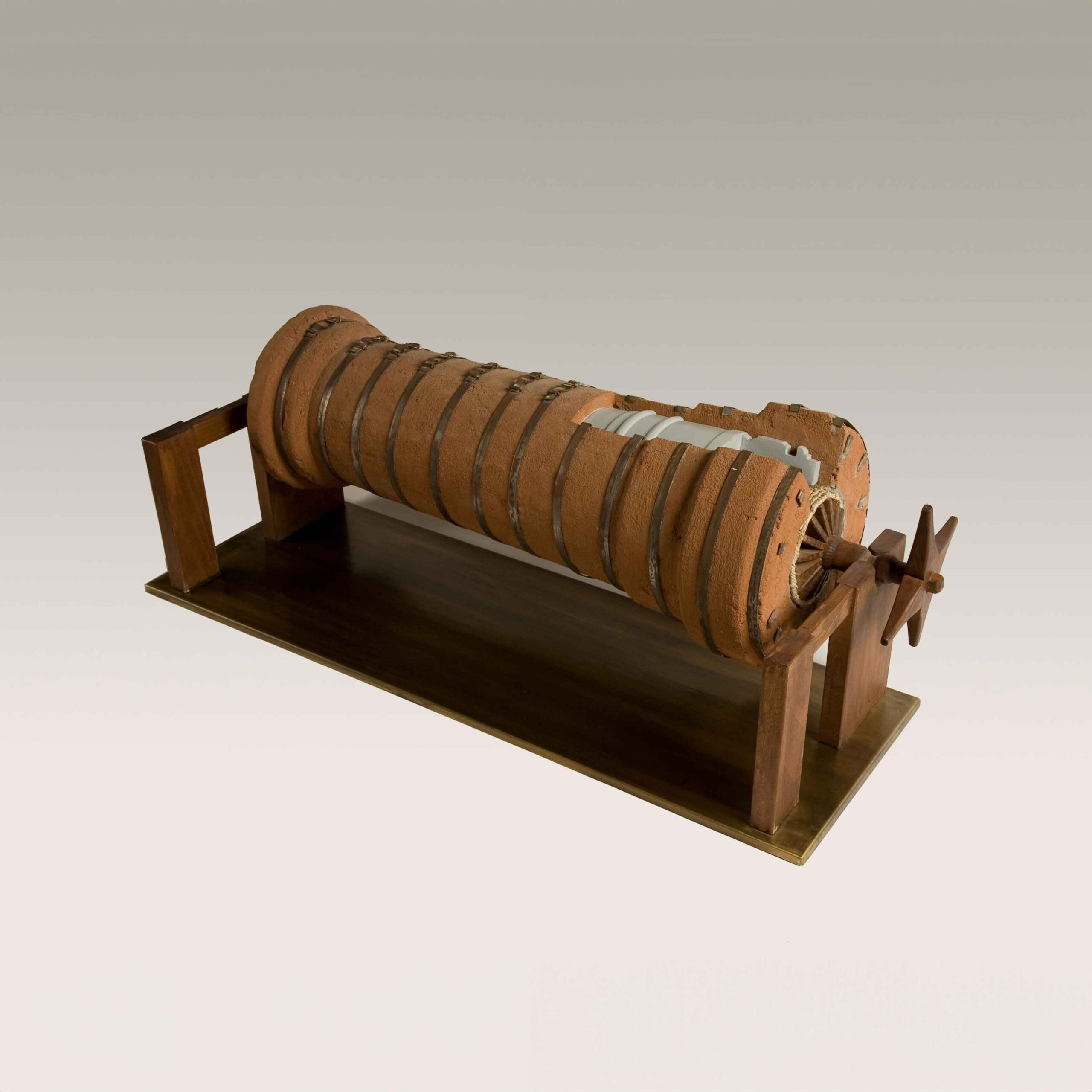
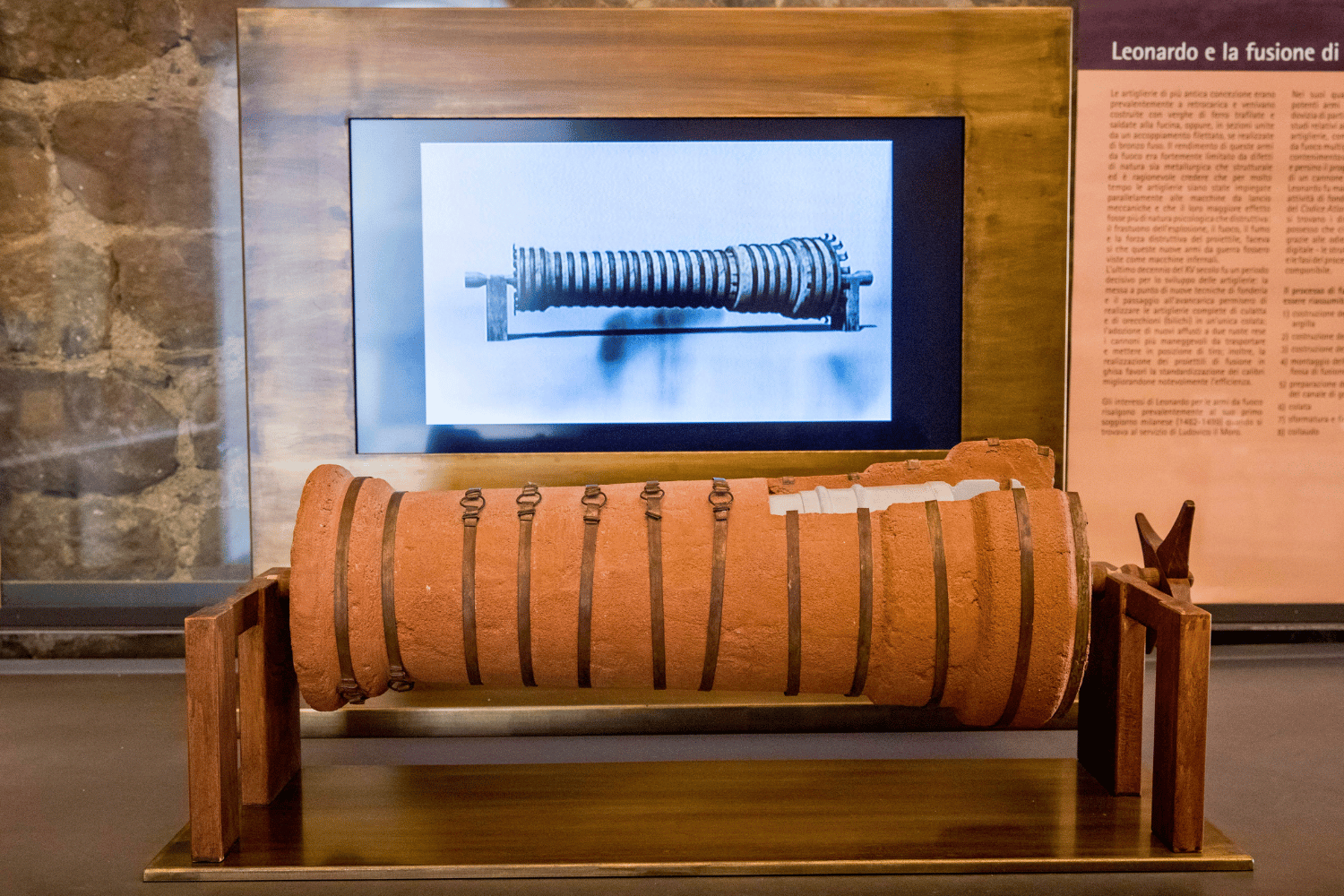
Form for casting a cannon

Made by
Etruria Musei

2008

As evidenced by numerous drawings and notes, Leonardo knew well the whole process for the production of modular artillery. This model replicates the form for casting a cannon, obtained through a series of passages clearly illustrated in Leonardo’s drawings: the core of the form, consisting of a wooden rod, is mounted on two stands and wound with rope.

Upon this are applied various layers of clay, until achieving the desired shape and size for the cannon. The model is then lubricated and sprinkled with ashes, before applying layers of clay for construction of the counter-form, or the negative, which is then dried and reinforced with steel bars. Lastly, the reinforcement is covered with a layer of clay, and a further binding is applied in alternate manner with the preceding.

Technical informations

Type of exhibit
Model
Collection
Material
Beech wood, hemp, fibre cement, iron
Measures
Width: 34 cm; Length: 85 cm; Depth: 30 cm.
Storage location
Relationship with the original work
Source: Leonardo da Vinci, Codex Atlanticus, f. 61 r
Location
Museo Leonardiano, Counts Guidi's castle, ground floor

Related exhibits

Last update: 10 November 2025, 12:21

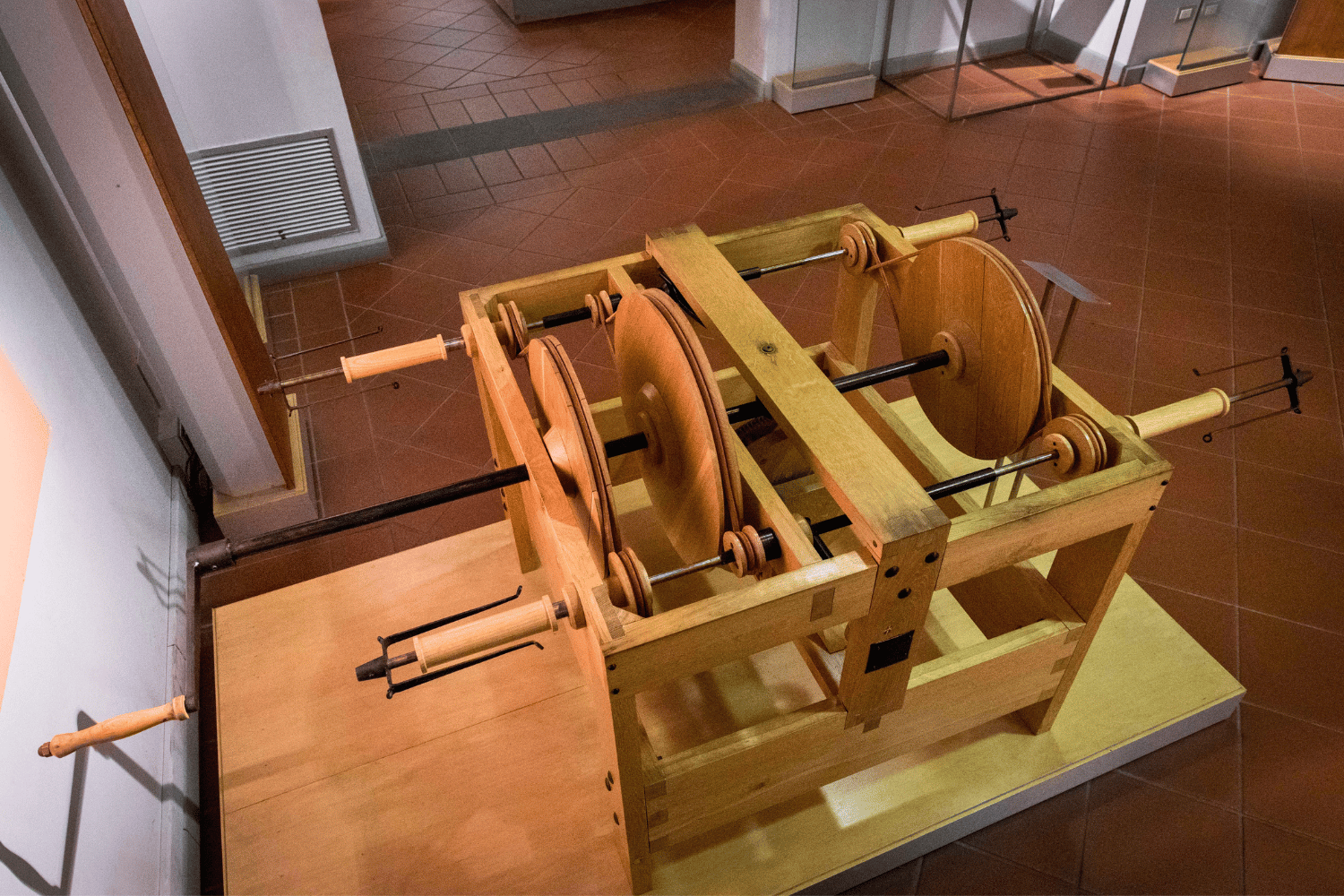
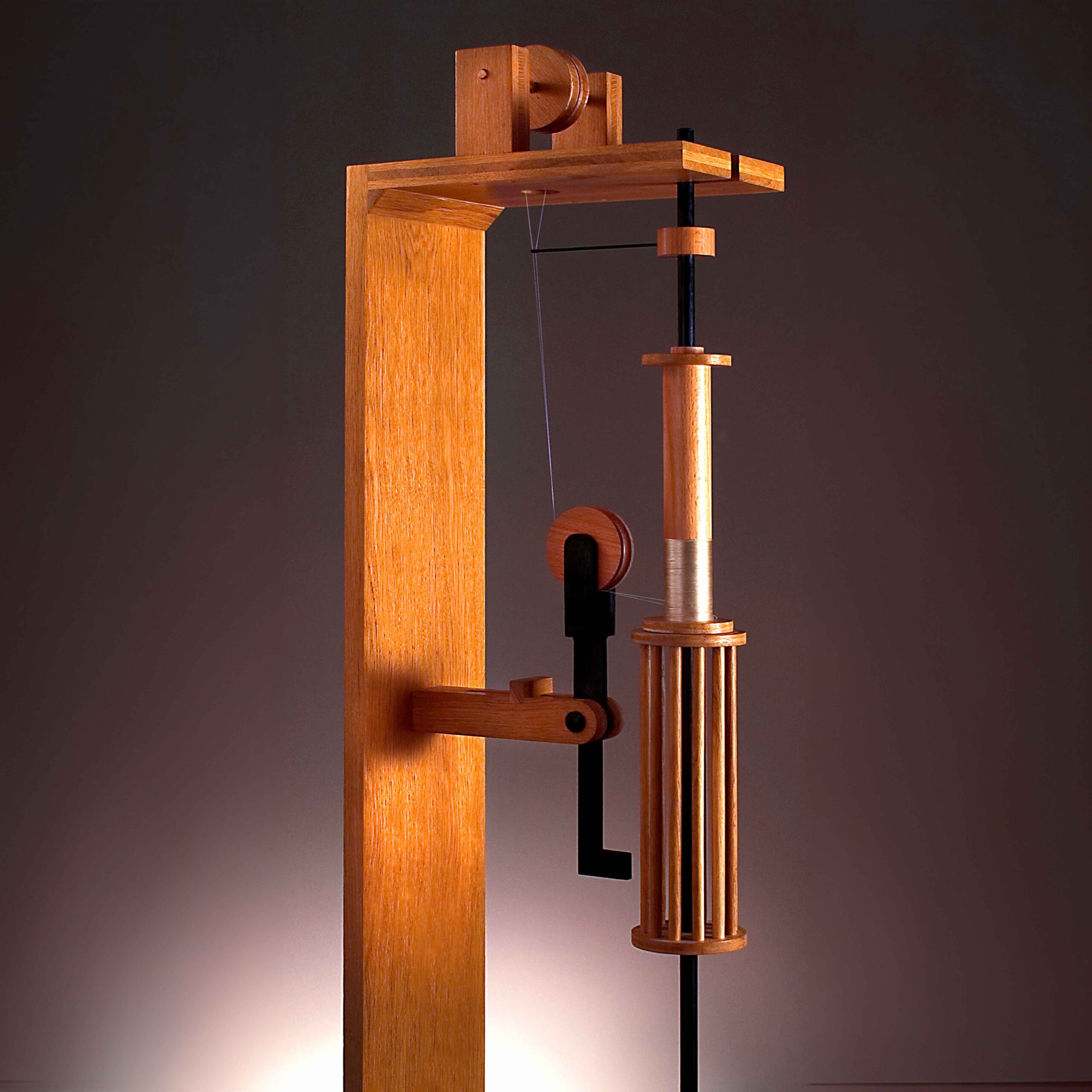
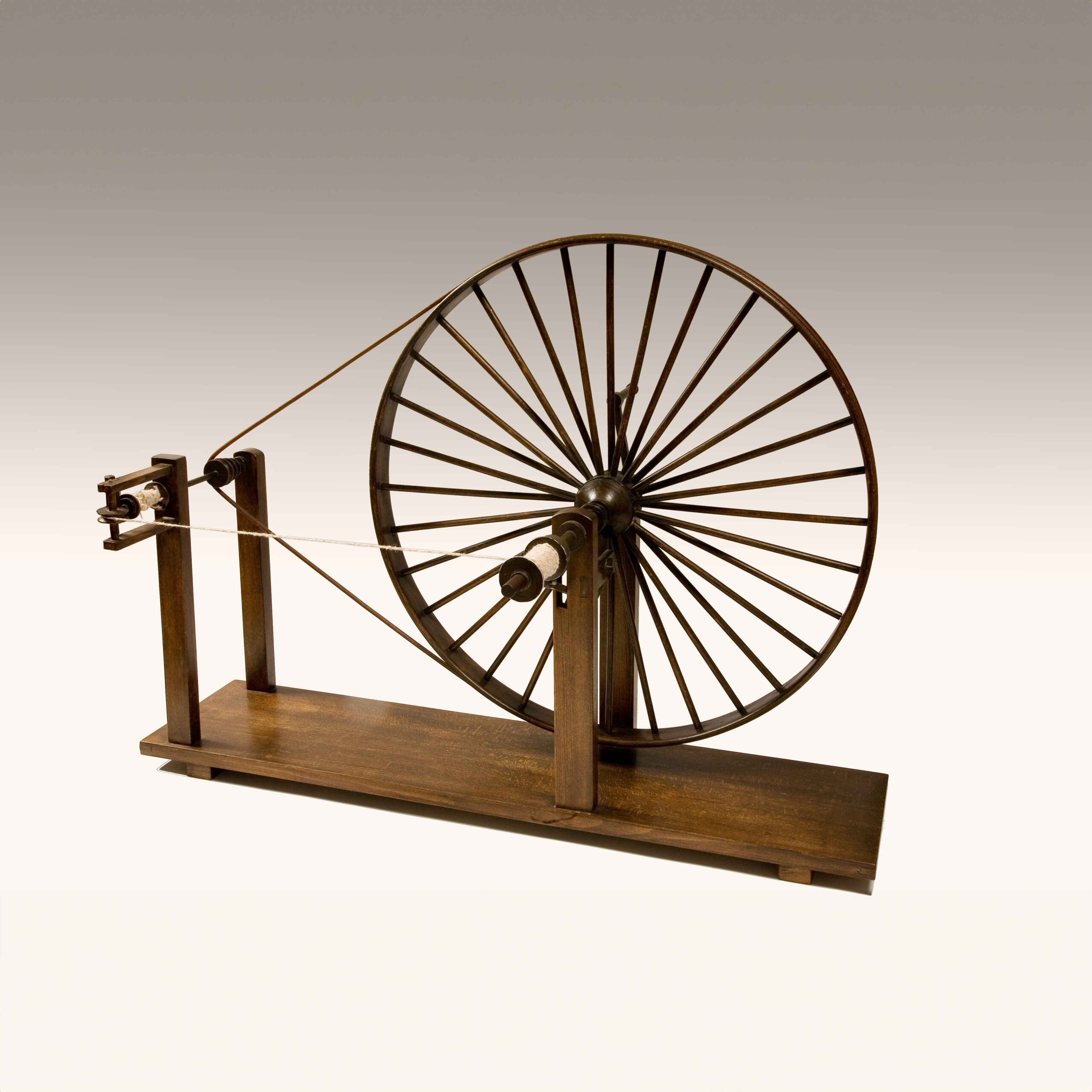
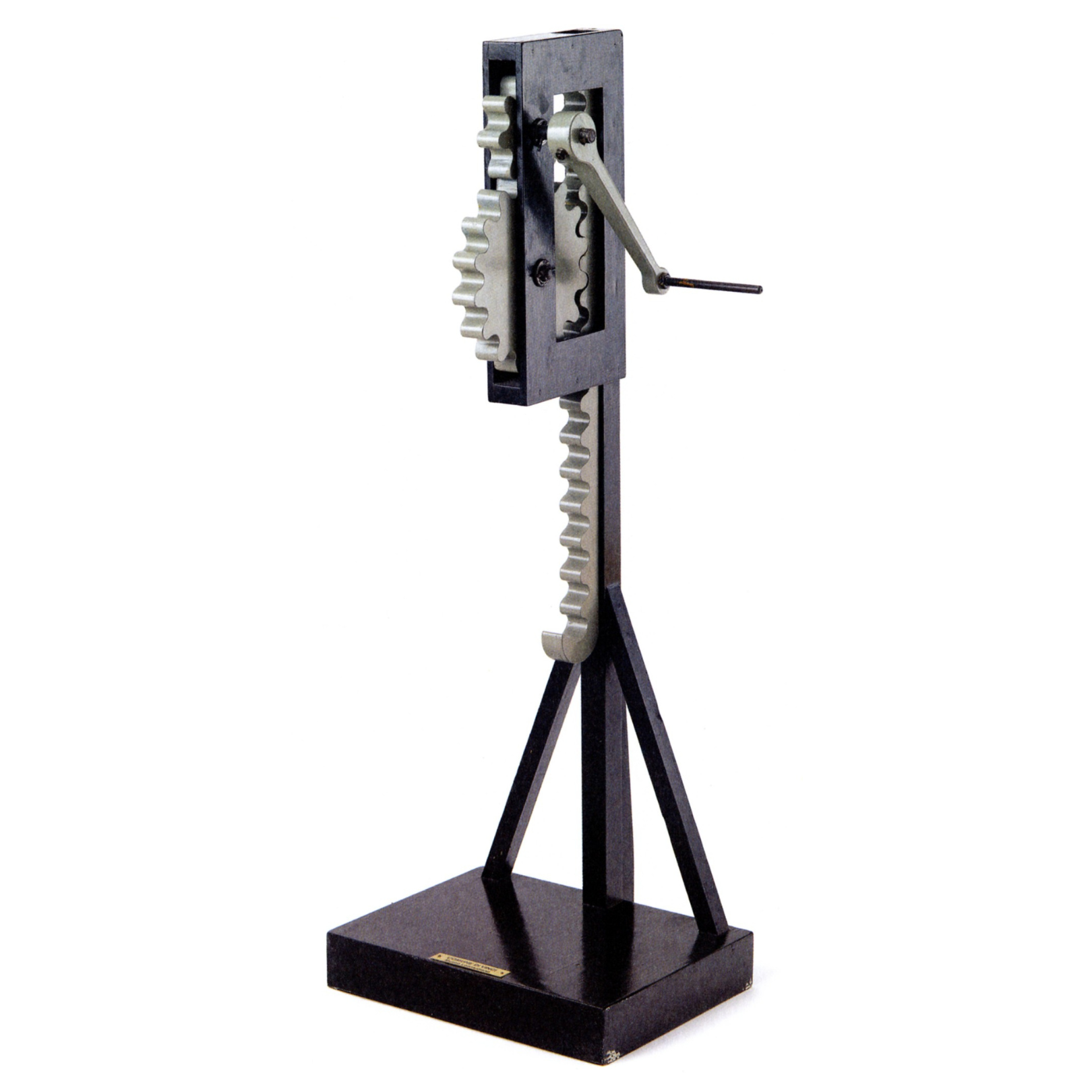
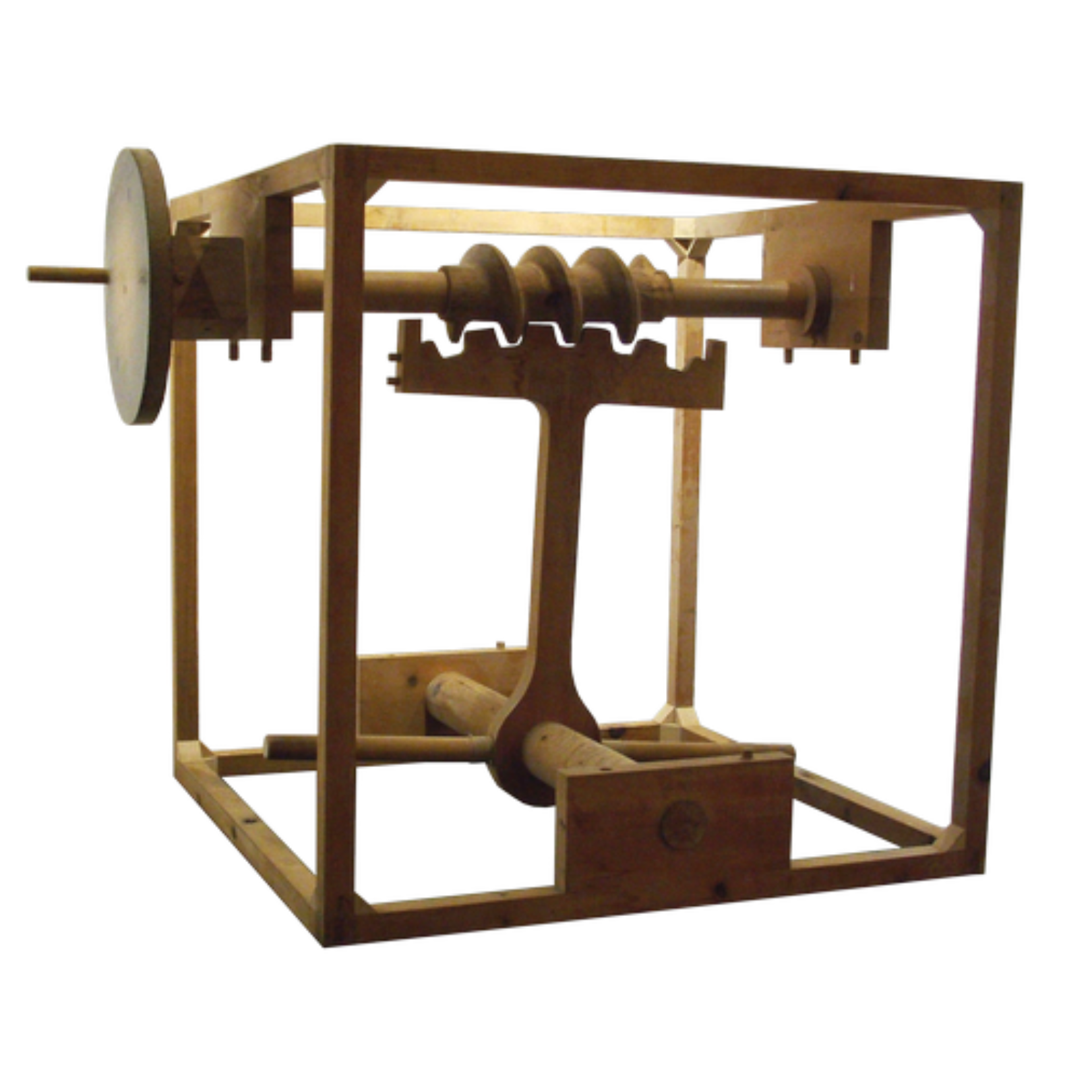
Among the solutions for mechanizing the spinning process, Leonardo conceived a multiple-spindle spinning machine, capable of twisting the thread and at the same time wrapping it on the bobbin, a system that anticipated the one introduced in England during the Industrial Revolution.

The machine is equipped with a series of mechanisms that transform circular motion into rectilinear alternating motion. The flyer-driven spindle performs a back-and-forth movement that ensures an automatic and uniform distribution of the spun thread on the bobbin, and a rotary motion that ensures that the thread is twisted.
The innovation can be seen in the back-and-forth movement of the spindle, which avoids interruption of the work due to manual passage of the thread from one hook of the flyer to another, allowing the spinners to have both hands free to perform other operations.

Technical informations

Type of exhibit
Model
Collection
Material
Wood, iron, and leather
Measures
Width: 102.5 cm, Length: 213 cm; Depth: 100 cm.
Storage location
Relationship with the original work
Source: Leonardo da Vinci, Codex Atlanticus, f. 1050 r
Location
Museo Leonardiano, Palazzina Uzielli, first floor
Related exhibits

Last update: 19 June 2025, 14:08

Excavating machine

Made by
IBM Italia

1952

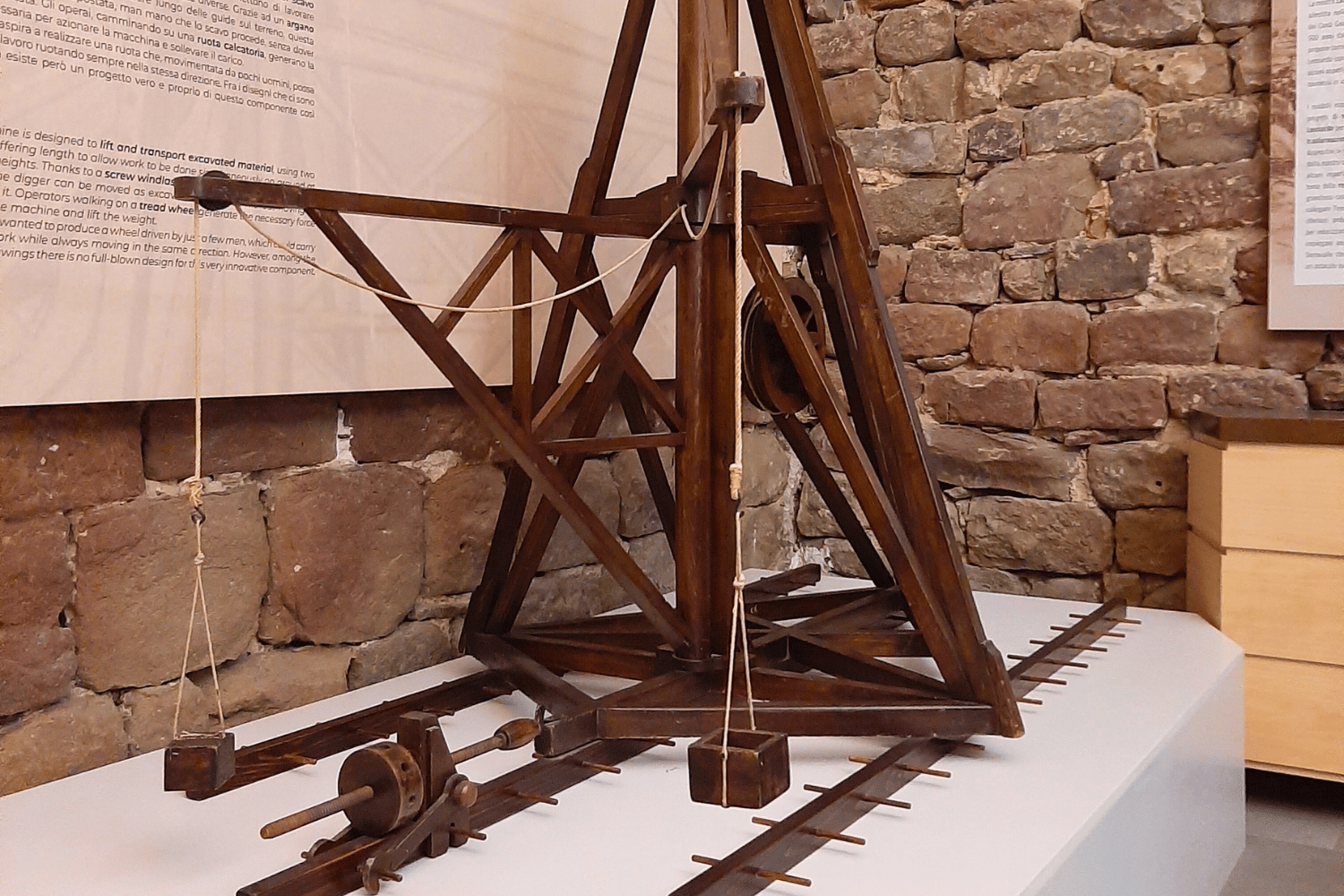
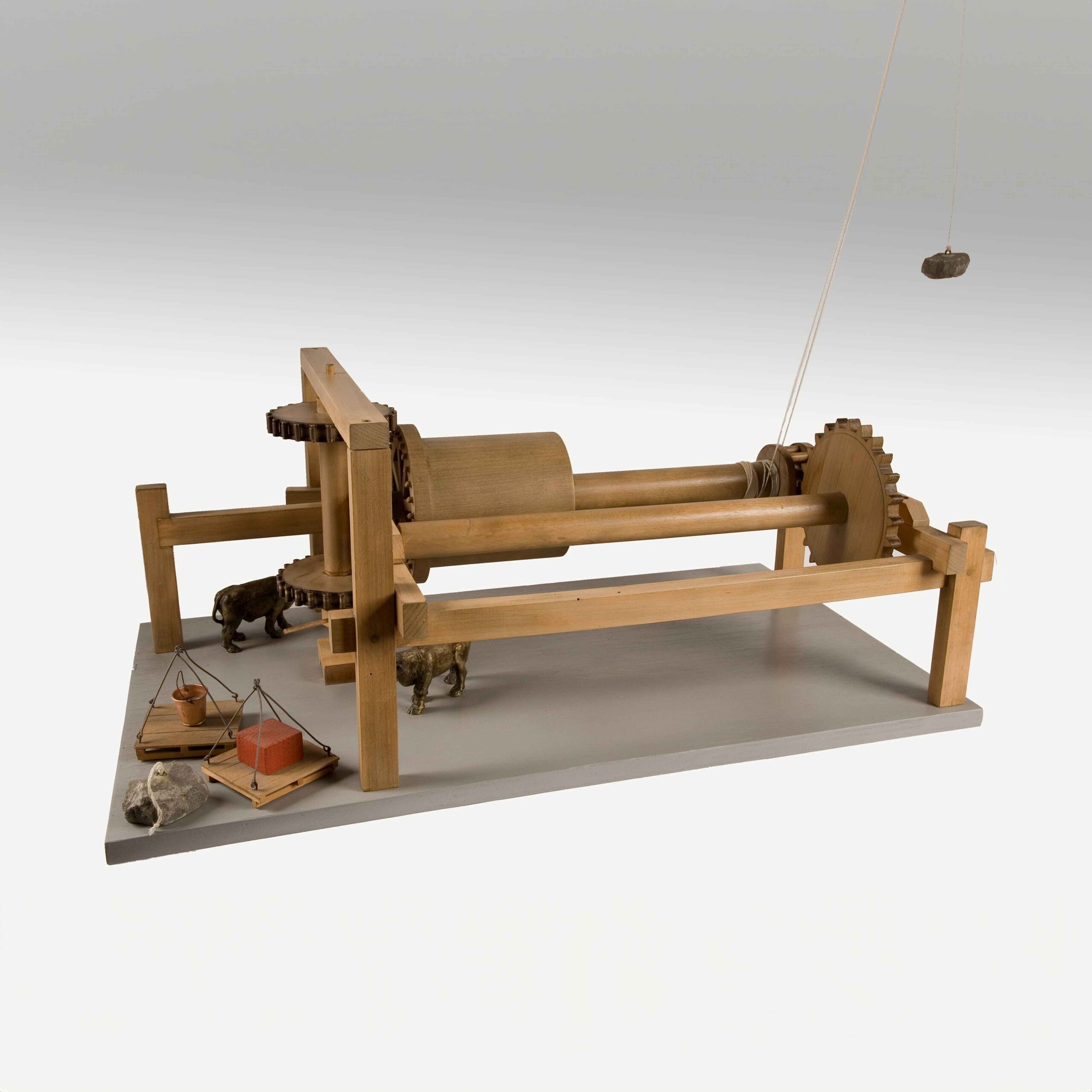
This machine was used to lift and transport excavation material using two or more arms of different lengths, which allowed work on multiple levels simultaneously.

The model features a vertical axis around which the horizontally positioned arms rotate; at the ends of these arms are pulleys that enable the raising and lowering of containers used to transport the excavation material. The movement of the containers is controlled through ropes passing over a central control pulley. The containers are shaped like rectangular boxes, and their bottoms are divided lengthwise into two free segments held along the central axis by metal hinges or leather strips; they are also equipped with legs for resting on the ground, positioned to extend beyond the width of the bottom segments.

The outer ends of these segments are connected by cords passing through specific holes to a hook that suspends the container. The cords, kept taut by the weight of the container itself, keep the two bottom segments closed, holding in the material placed inside. When the containers descend and rest on their legs on the ground, the tension in the cords is released, and the weight of the material causes the two bottom segments to automatically open downward, emptying the containers. When the containers are lifted again, the bottom automatically closes.

The machine, pulled by a rope connected at a distance to a horizontal winch with a screw and worm gear, could move forward over the ground by sliding along special “guides”; in this way, it did not need to be dismantled as the excavation progressed.

Technical informations

Type of exhibit
Model
Material
Wood, rope
Measures
Width: 148 cm, Length: 214 cm; Depth: 110 cm.
Storage location
Relationship with the original work
Source: Leonardo da Vinci, Codex Atlanticus, f. 4 r
Location
Museo Leonardiano, Counts Guidi's castle, ground floor

Related exhibits

Last update: 1 July 2025, 11:12

Endless screw elevator

Luigi Boldetti

1973

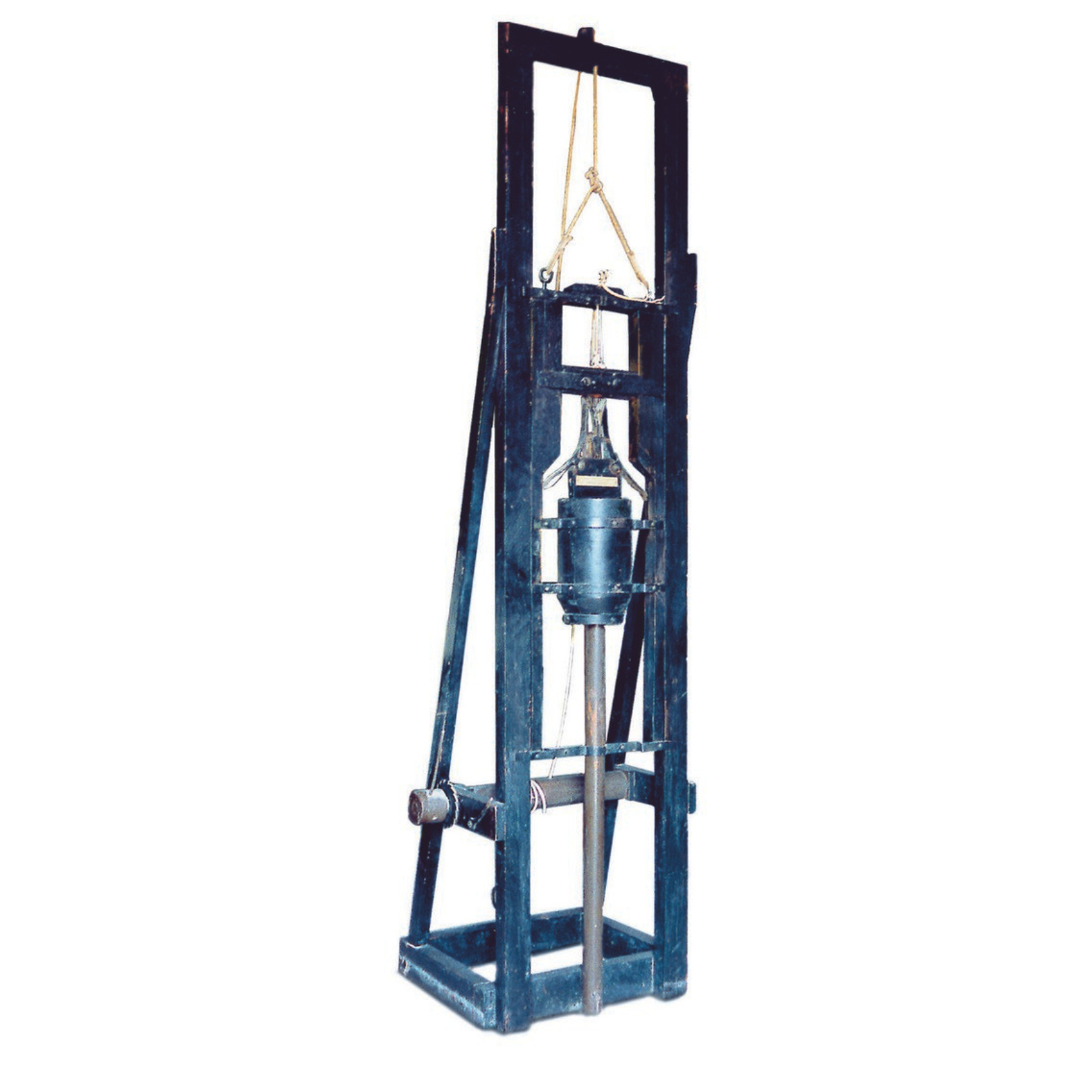
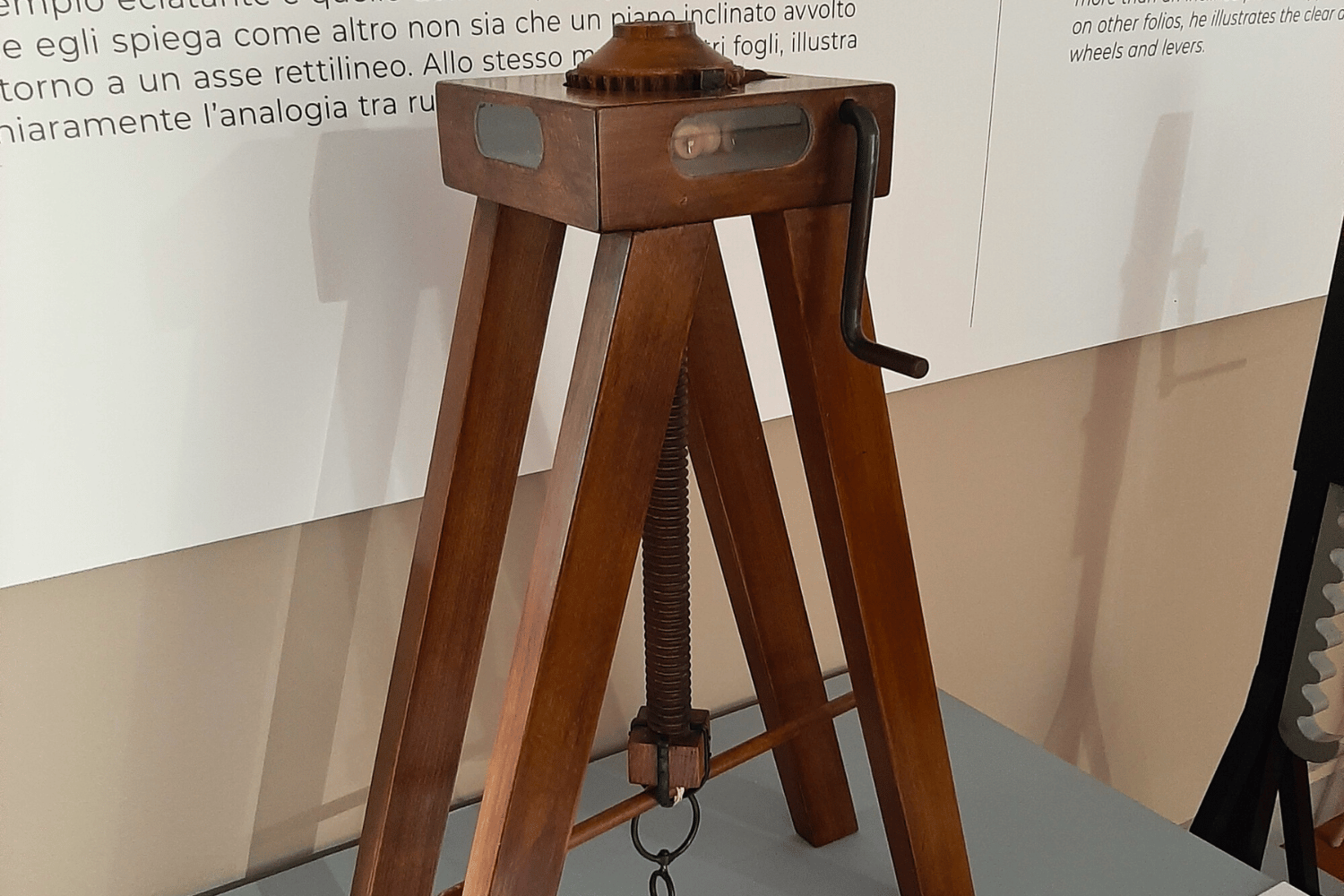
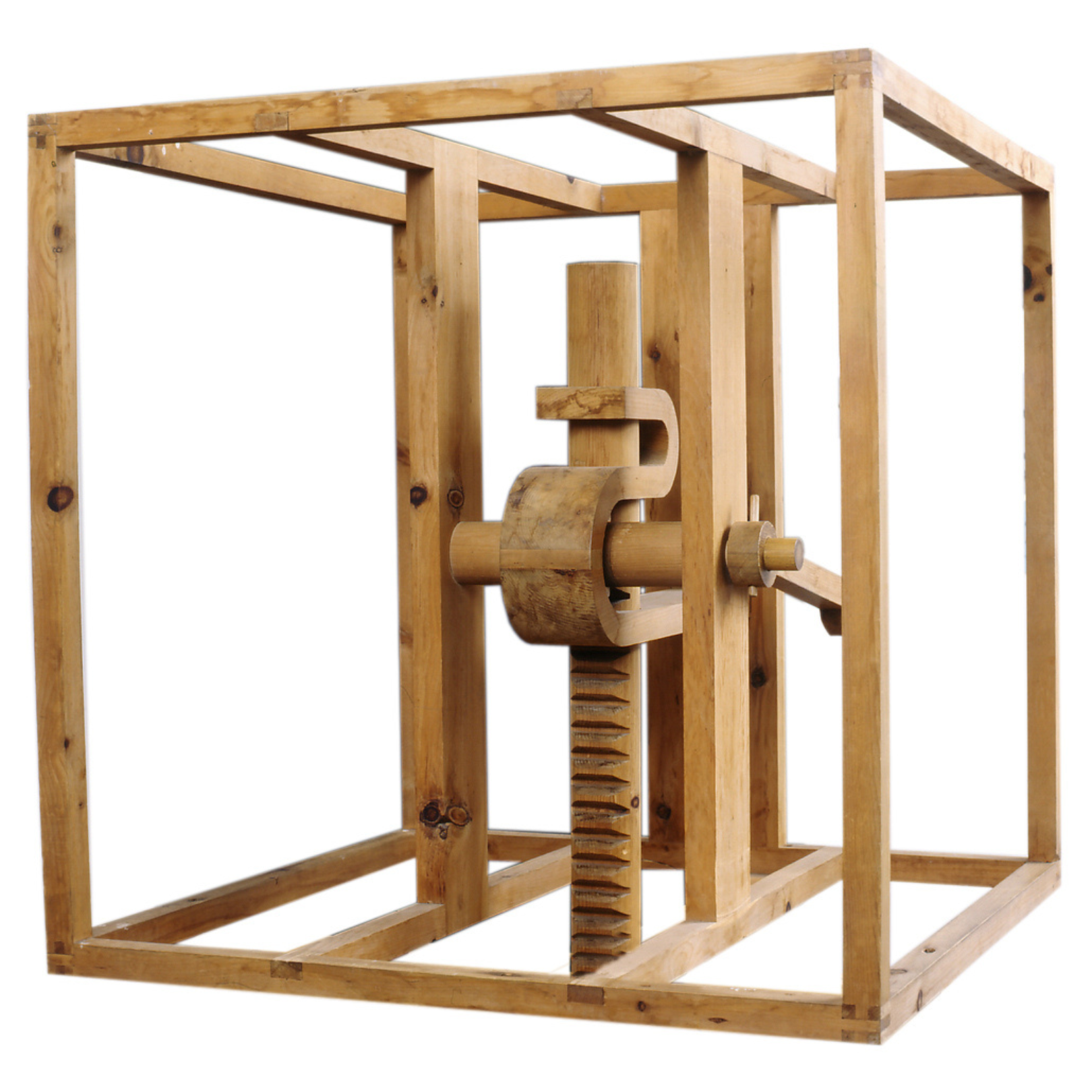
In designing this lifting system, which employs an endless screw, Leonardo incorporated a ball bearing to reduce friction. Friction was indeed one of the major challenges faced by machine builders of the time, as it negatively affected both the functionality and the longevity of the machine.

The weight to be lifted is applied to the large vertical screw, which moves within an annular horizontal nut. When the nut is rotated by a crank, it forces the screw to rise along with the weight.

Technical informations

Type of exhibit
Model
Collection
Material
Wood, iron, rope
Measures
Width: 86.5 cm, Length: 49.5 cm, Depth: 28 cm
Storage location
Relationship with the original work
Source: Leonardo da Vinci, Madrid Codex I, f. 26 r
Inventory number
Object Record No.: 00000025
Location
Museo Leonardiano, Palazzina Uzielli, second floor

Related exhibits

Last update: 22 September 2025, 09:31

Chain element

Fausto Colombo, Giorgio Valentini

1991

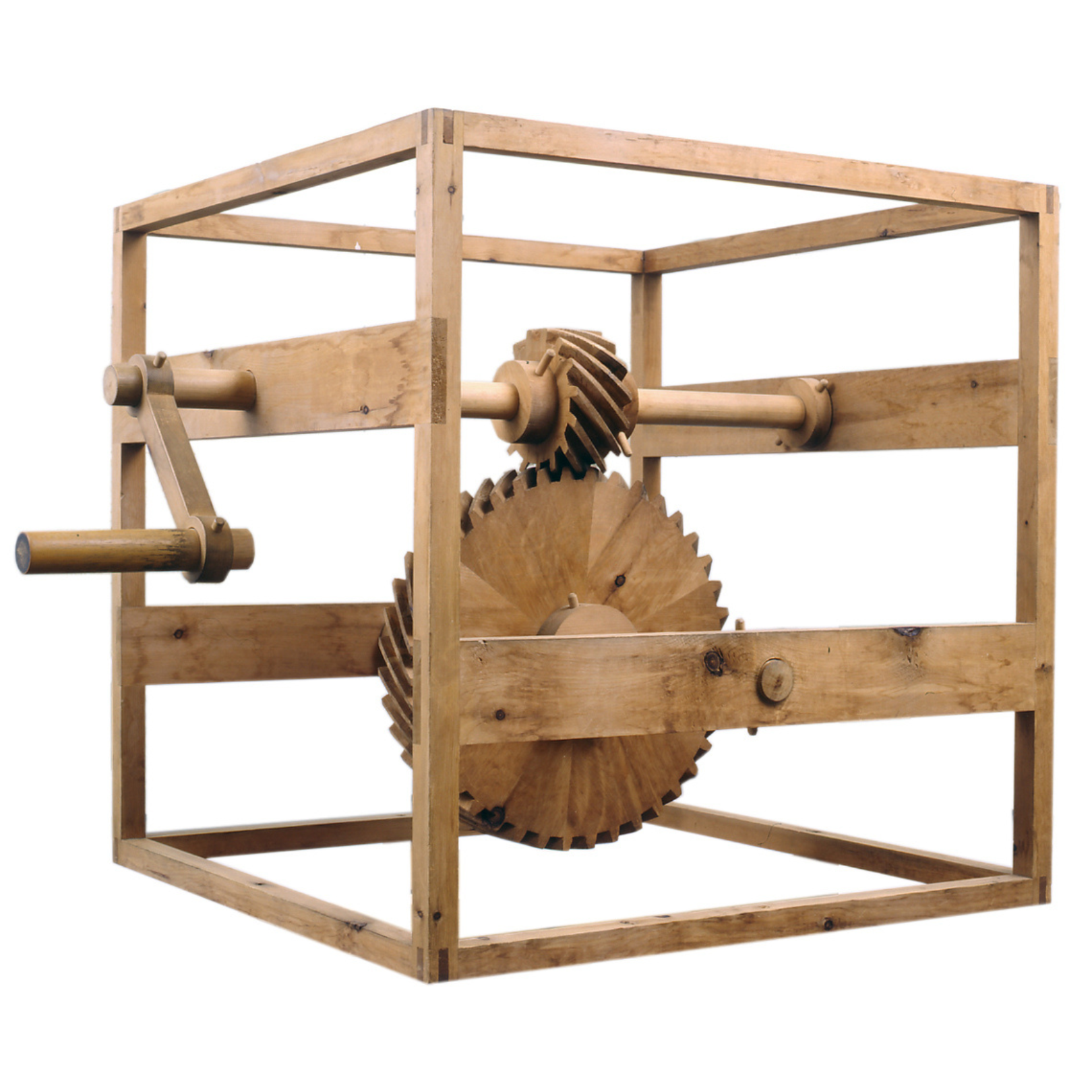
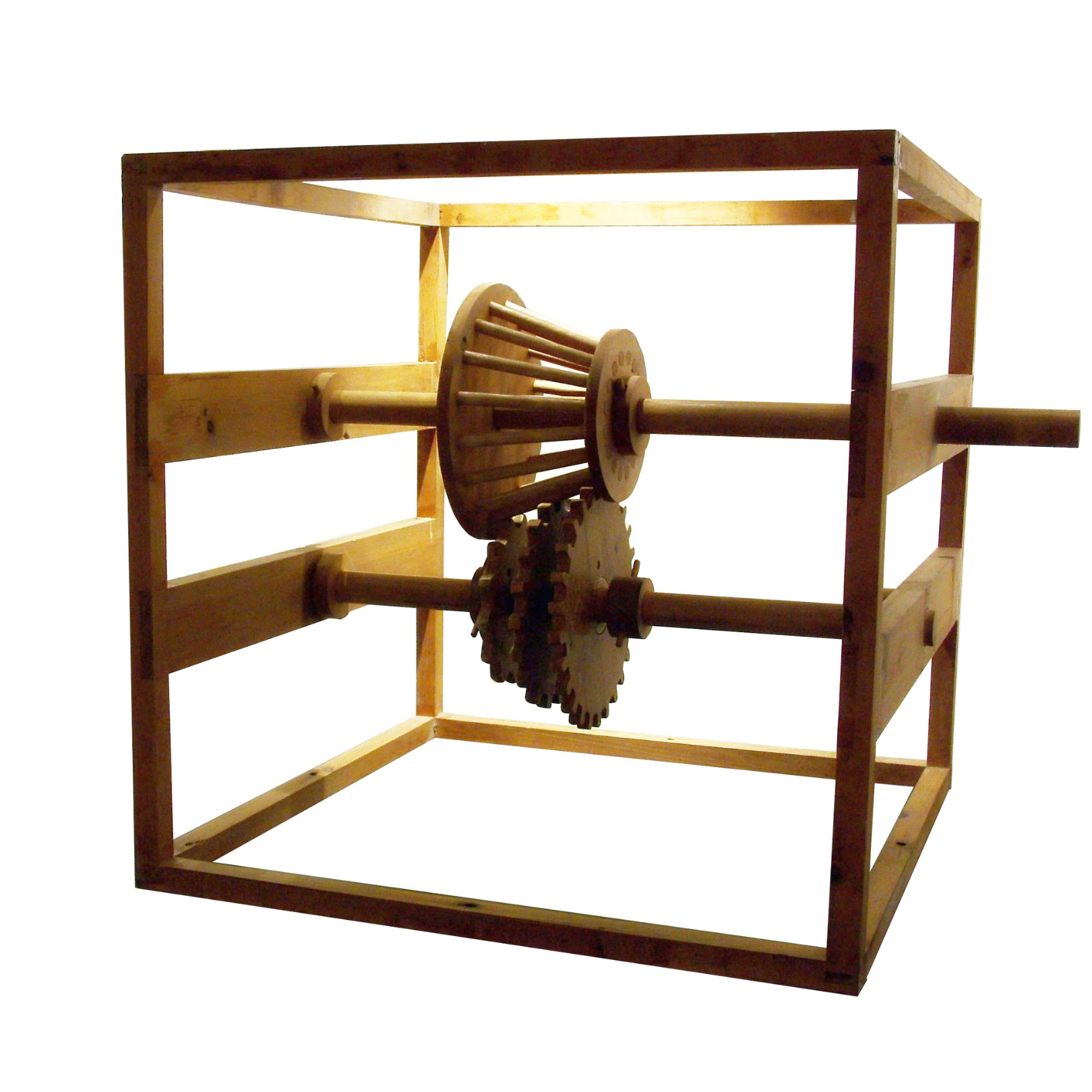
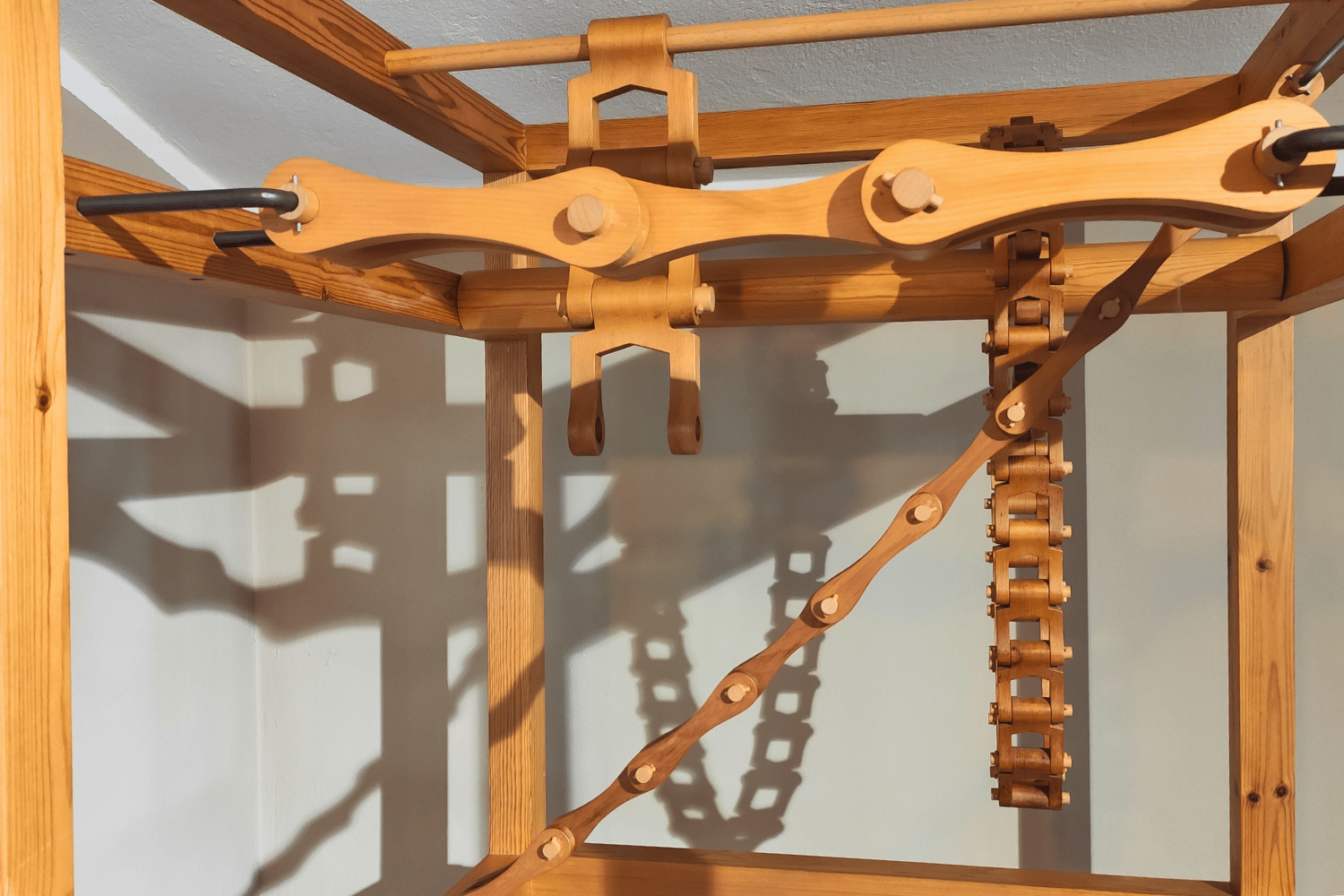
Inspired by drawings in the Codex Atlanticus and Madrid Codex I, two different types of chains have been reconstructed within a wooden frame.

Enlarged reproductions of the chain links show that both are made up of a series of elements connected by pins. When used in a pulley for lifting weights, the chain is stronger than a rope, as it can be engaged by the teeth of a gear.

Sometimes Leonardo depicts weights attached to the ends of the chain, suggesting its use for transmitting intermittent motion to a single gear wheel; this solution could be applied to ratchet mechanisms, such as those in clocks.

Technical informations

Type of exhibit
Model
Collection
Material
Carved wood
Measures
Width: 80 cm, Height: 160 cm, Depth: 80 cm.
Storage location
Relationship with the original work
Source: Leonardo da Vinci, Codex Atlanticus, f. 987 r
Location
Museo Leonardiano, Palazzina Uzielli, second floor

Related exhibits

Last update: 29 September 2025, 11:55

Solid stellated dodecahedron

Fausto Colombo

1983

The model is based on the illustrations made by Leonardo for Luca Pacioli’s treatise De divina proportione, published in Venice in 1509.

Technical informations

Type of exhibit
Model
Material
Carved wood
Storage location
Solid stellated dodecahedron
Location
Museo Leonardiano, storage

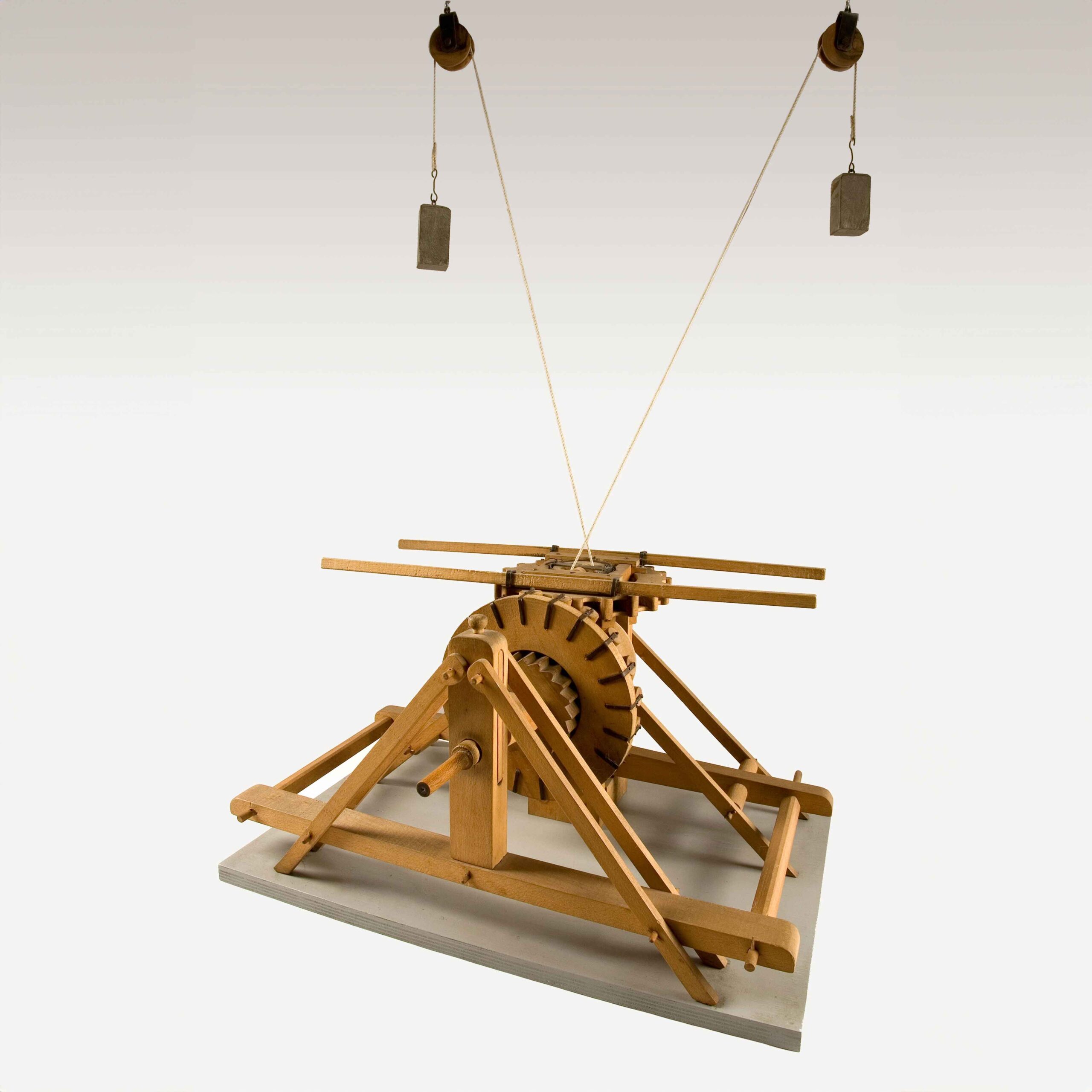
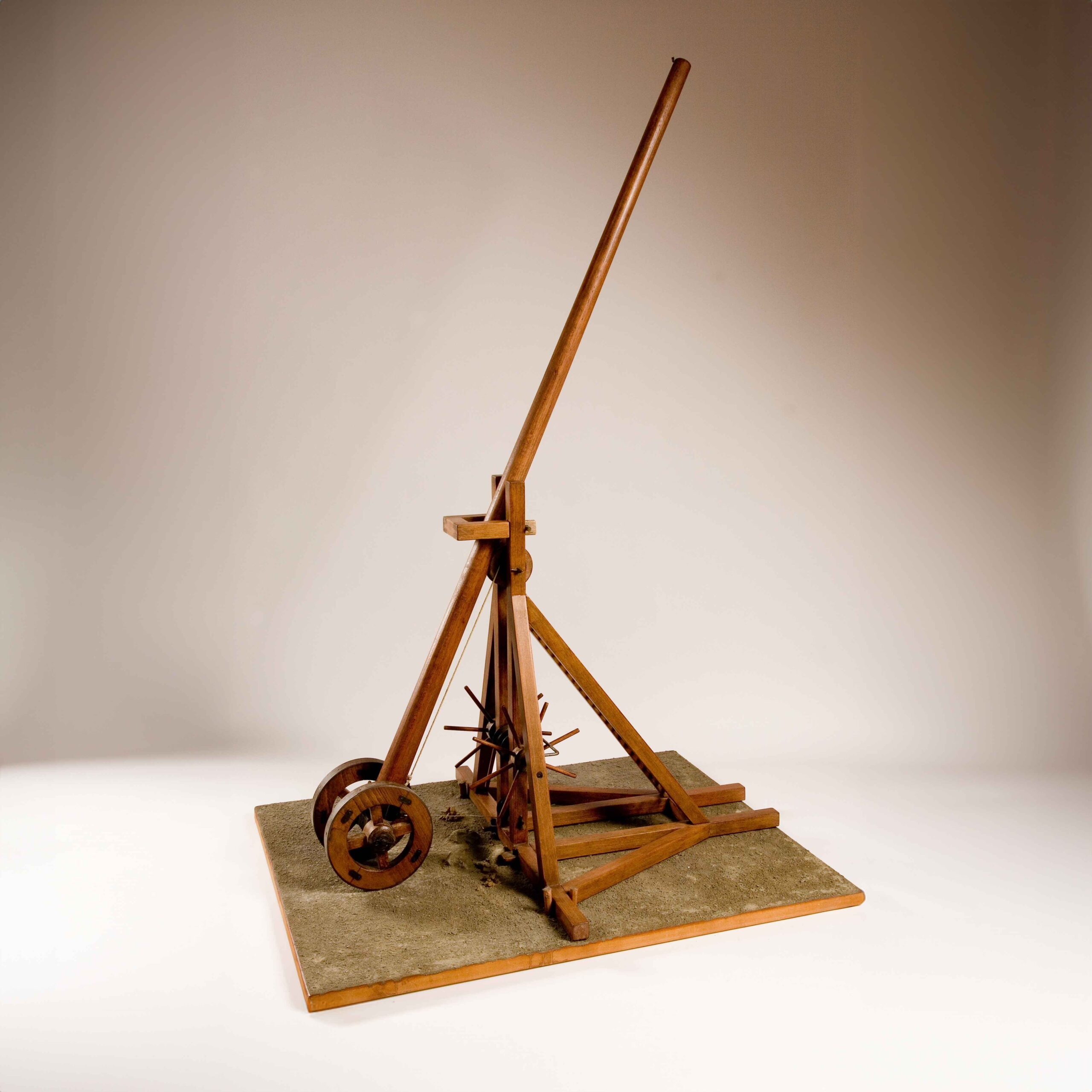
Device for raising poles or posts

Luigi Boldetti

1978

This device designed by Leonardo was used in Renaissance construction sites for pulling, lifting, and vertically positioning posts or poles utilized for building scaffolding or large lifting machines.

The pole is first moved on wheels and then hoisted with ropes connected to two winches. When designing this machine, Leonardo was considering whether it was preferable to use oblique or horizontal traction for lifting a post. He finally decided on horizontal traction, which requires a constant and lesser effort.
 
We do not know whether Leonardo actually invented this device or merely perfected it, but in his notes accompanying the drawing, we can clearly see his constant research for solutions capable not only of optimizing machine operations, but also of reducing human effort.

Technical informations

Type of exhibit
Model
Material
Carved wood, iron, and cotton thread
Measures
Height: 80 cm.
Storage location
Relationship with the original work
Source: Leonardo da Vinci, Codex Madrid I, f. 43 r
Inventory number
Record no. OA: 00000031
Location
Museo Leonardiano, Palazzina Uzielli, first floor
Related exhibits

Last update: 19 June 2025, 13:26

How clear is the information on this page?

Thank you, your feedback will help us improve the service!

What were your favorite aspects?1/2

Dove hai incontrato le maggiori difficoltà?1/2

Do you want to add more details?2/2

Enter a maximum of 200 characters

This website is protected by reCAPTCHA. Google Privacy Policy and Terms of Use di applies.